New 2026 unknown will be a curveball at F1's Austrian GP
While Formula 1’s battle for engine supremacy could be swung by potential upgrades for this weekend’s Austrian Grand Prix, there is going to be an extra curveball thrown into the mix at the high altitude Red Bull Ring circuit.
Most of the talk pre-weekend is about an ADUO-assisted step from Ferrari that could be potentially pivotal in its fight with Mercedes if the Maranello squad can get it signed off in time for the power-sensitive circuit.
But the contest at the front may not just be about development, with the form book potentially set for a bit of a shake-up anyway because of the track’s location.
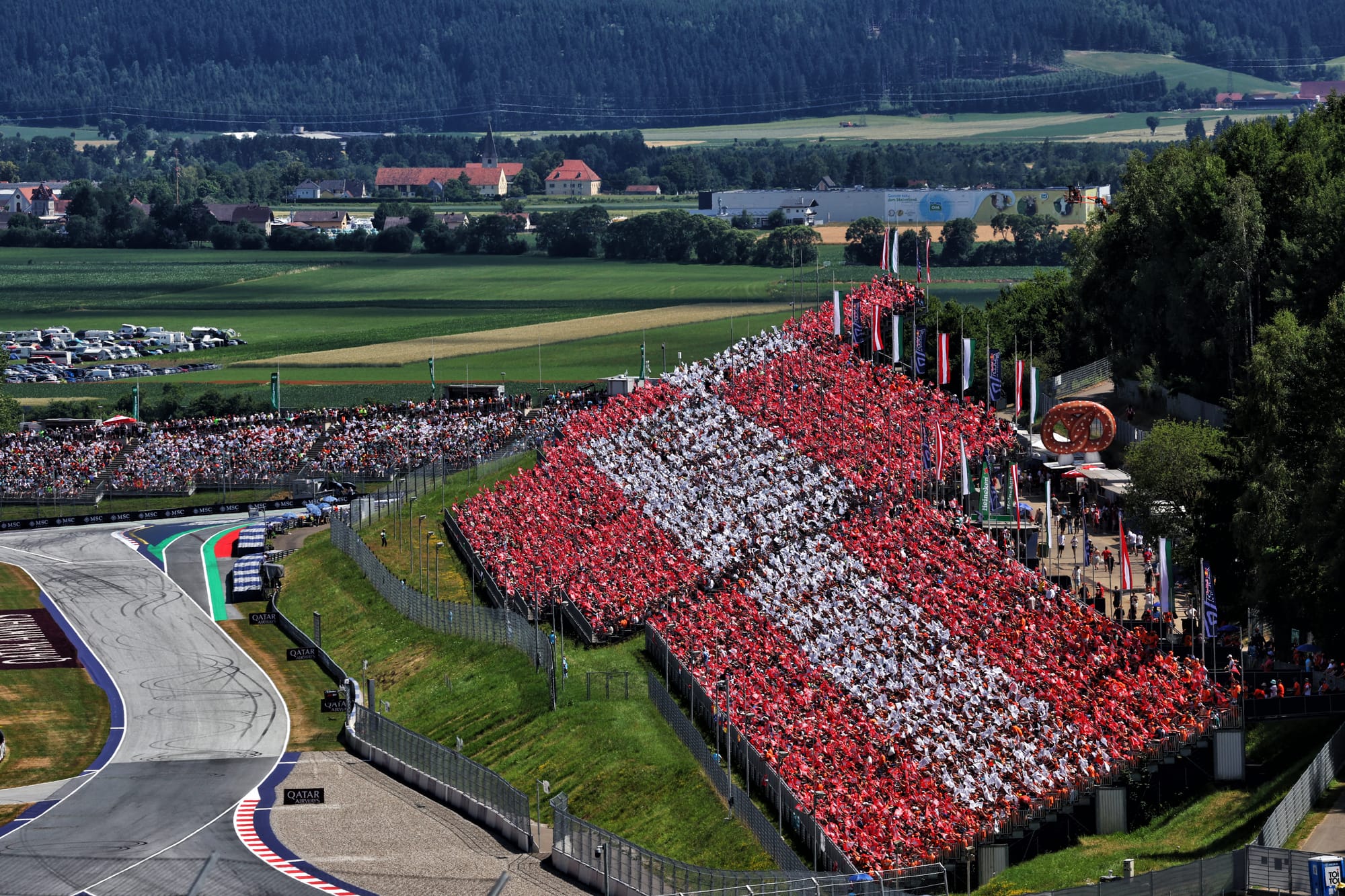
Situated in the Styrian mountains at an altitude of 678 metres above sea level, the thinner air is going to provide a bigger challenge than at lower altitude tracks when it comes to the way the turbo hybrid power units work.
At the altitude the Red Bull Ring is at, air pressure and density is around 92% of what it is at sea level - meaning the air is 7.5-8.5% thinner.
This drop in density means fewer oxygen molecules per volume, so the turbos are going to have to compensate by spinning compressors faster to try to force more air into the engine.
And this is something that the new 2026 power units have not experienced so far.
As Williams chief trackside engineer Paul Williams said: ”It is the first time the new PUs will be taken to a high-altitude.”
The consequence can be more turbo lag, or turbos that have to work harder and get hotter to achieve the same results - which can have reliability consequences.
What makes things uniquely challenging this year is that F1 has lost one of the best tools it had to fill in for such turbo lag - the MGU-H.
As Honda’s trackside general Shintaro Orihara explained: “As this component is no longer part of the 2026 regulations, we no longer have the MGU-H to assist the turbocharger, which may make it more challenging to operate both the turbocharger and the engine correctly at high altitude.”
The result is that teams are going to have to weigh up whether or not to fill in any turbo gaps with using some of their limited battery power.
This will help them get off the corners quicker but could result in running out of energy sooner down the straights.
Austria is already one of the more energy-starved tracks of the year with a limit of just 6MJ allowed to be used in qualifying.
Uneven impact
The impact of the high altitude across manufacturers is not likely to be equal, thanks to the variety of turbo sizes in use - but it is not clear who stands to benefit or lose the most.
The smaller turbo engine manufacturers - which include Ferrari - should suffer less turbo lag as they should be able to spool things up much faster compared to those manufacturers like Audi that have a bigger turbo.
The kind of differences we have seen this year in responsiveness off the line could become the story of how strong each manufacturer is at corner exits at the Red Bull Ring.
But less turbo lag may not be the key to overall laptime - as the real question is whether or not the smaller turbos are going to run out of puff and max out too quickly.
A smaller turbo has a limited flow capacity and, if it reaches this limit without having forced enough air into the engine, then it could bring downsides - which includes superheated air getting into the engine - that could trigger a loss of power.
A bigger turbo on the other hand, may take more time to spool up, but it will be able to deliver a larger volume of air once at its peak - maximising the cooler and denser air charge, which should bring power benefits.
The performance implications of turbo size in the fight - both at the front and in the midfield - will not become clear until the cars are running against each other out on track.
But the potential is there for a shake-up of the order as teams try to work out how best to overcome the challenge of racing the new power units at high altitude.