Where Ferrari stands ahead of highly anticipated engine upgrade
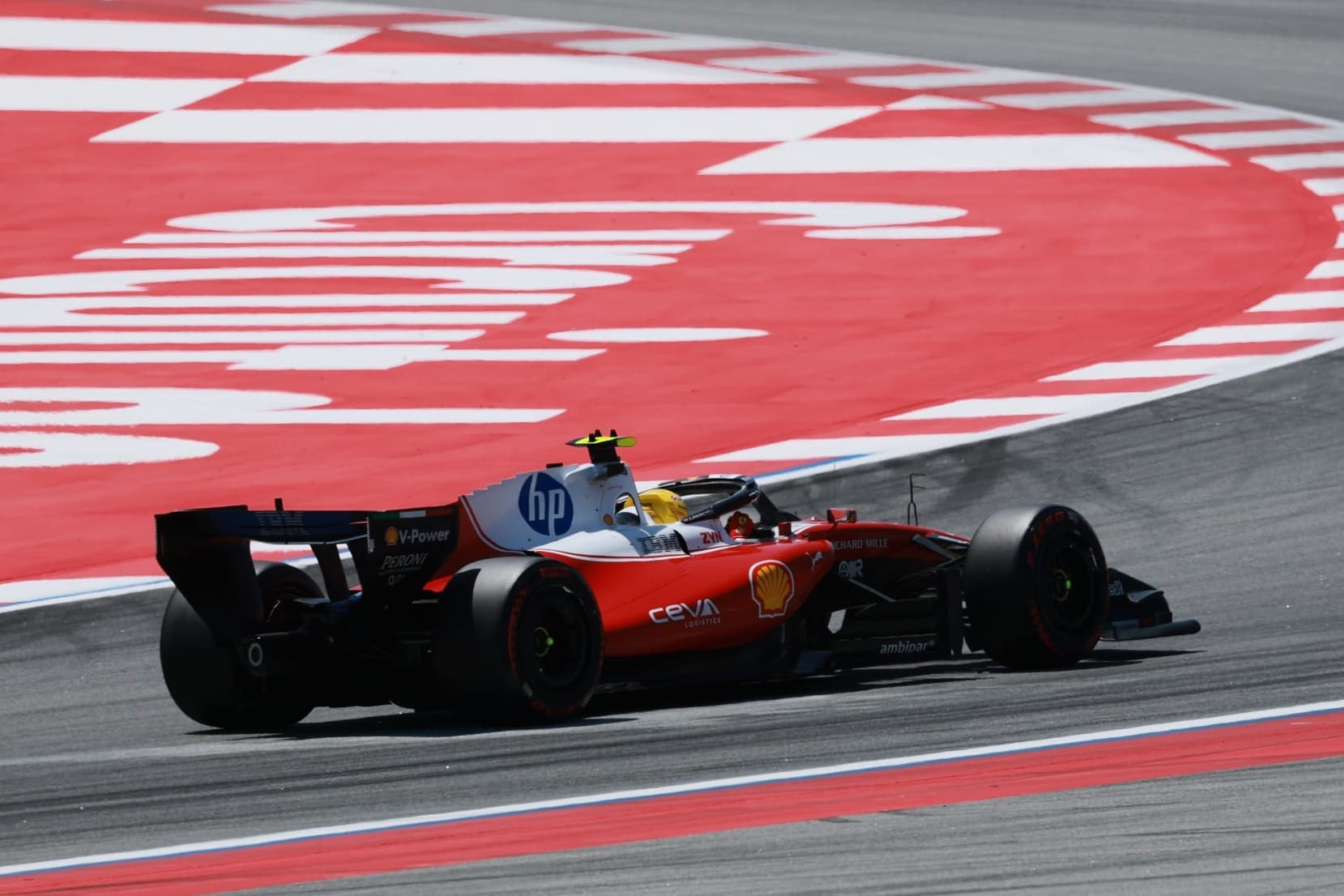
Ferrari arrives at the Austrian Grand Prix buoyed by its first victory of the 2026 Formula 1 season in Spain, where a substantial upgrade package helped transform the competitiveness of the SF-26.
The Red Bull Ring will now provide an important validation test for those developments on a very different type of circuit, one where power unit performance is expected to play a much greater role than it did at Barcelona.
Lewis Hamilton's victory there was not simply the result of a successful three-stop strategy or Kimi Antonelli's retirement. From Saturday morning onwards, the upgraded SF-26 displayed a level of performance that had not been evident during the opening stages of the weekend, allowing Hamilton to become a genuine contender for victory.
Austria will offer Ferrari another opportunity to assess the effectiveness of its latest aerodynamic package away from the characteristics of the Barcelona circuit. An initial comparison between the pre-upgrade specification and the fully updated SF-26 was already conducted during the Barcelona Grand Prix weekend, when Ferrari's rookie driver Dino Beganovic ran a dedicated test programme in FP1.
Ferrari will use another rookie session in Austria, with Charles Leclerc this time handing over his car to Beganovic for the opening practice session.
But there's a far more significant in-weekend test for Ferrari to conduct at the Red Bull Ring.
Ferrari's - and F1's - first ADUO engine evolution
Beyond the aerodynamic developments, Austria will also mark the debut of Ferrari's first ADUO-related internal combustion engine upgrade.
Following confidential communications from the FIA between the Miami and Monaco Grands Prix regarding engine performance measurements across the field, Ferrari received confirmation that it qualifies for two in-season engine development tokens.
According to information gathered by The Race, the performance deficit assessed by the FIA places Ferrari within a window believed to be between 6% and 8% off the benchmark, deemed to be Red Bull, granting Maranello additional development opportunities.
The significance of this goes beyond the two upgrade tokens themselves. Ferrari is also entitled to additional dyno hours and extra development budget, resources that can now be directed towards a more comprehensive engine evolution planned either immediately before or shortly after the summer break. The exact timing has not yet been finalised, as Ferrari now has greater flexibility to maximise the development programme following confirmation of the available concessions.
The specification introduced in Austria, internally referred to as "ICE ADUO 1", represents a different approach. Rather than spending both development tokens together later in the season, Ferrari has chosen to introduce an initial upgrade that has been under development since the winter months, while preserving scope for a more significant evolution later on.
The revised combustion engine specification will also be accompanied by an updated Shell biofuel blend. The package will be introduced alongside Ferrari's third power unit allocation of the season, still within the four units permitted before grid penalties are triggered.
An additional advantage lies in operational flexibility. The introduction of the updated power unit as a result of the Additional Development and Upgrade Opportunities system will allow Ferrari to rotate between older and newer specifications depending on the circumstances, helping manage mileage more effectively during race weekends before parc ferme conditions come into force.
Major upgrade phase complete
With the substantial packages introduced in Miami and at Barcelona now on track, Ferrari's primary development phase for the SF-26 is effectively complete.
Those two upgrade steps are estimated to have delivered a combined gain worth approximately seven to eight tenths of a second compared to the car's launch specification. As things stand, Ferrari appears to have extracted more performance from its development programme than its direct rivals, McLaren and Mercedes.
A significant portion of Ferrari's aerodynamic development budget has already been invested under technical director Loic Serra. That was partly a consequence of the conservative approach taken when the original SF-26 was signed off, with Maranello opting to freeze much of the concept early in order to better evaluate the project's potential before committing to more aggressive changes.
Future updates are therefore expected to be smaller in scale and increasingly circuit-specific. Ferrari is already working on adaptations for medium-to-low-downforce venues such as Silverstone and Spa-Francorchamps, while further refinements to the "Macarena" rear-wing concept are also expected to arrive in the coming races.
But the next major evolutions of the SF-26 will not arrive before the summer break.