Moto3 to become one-make Yamaha series
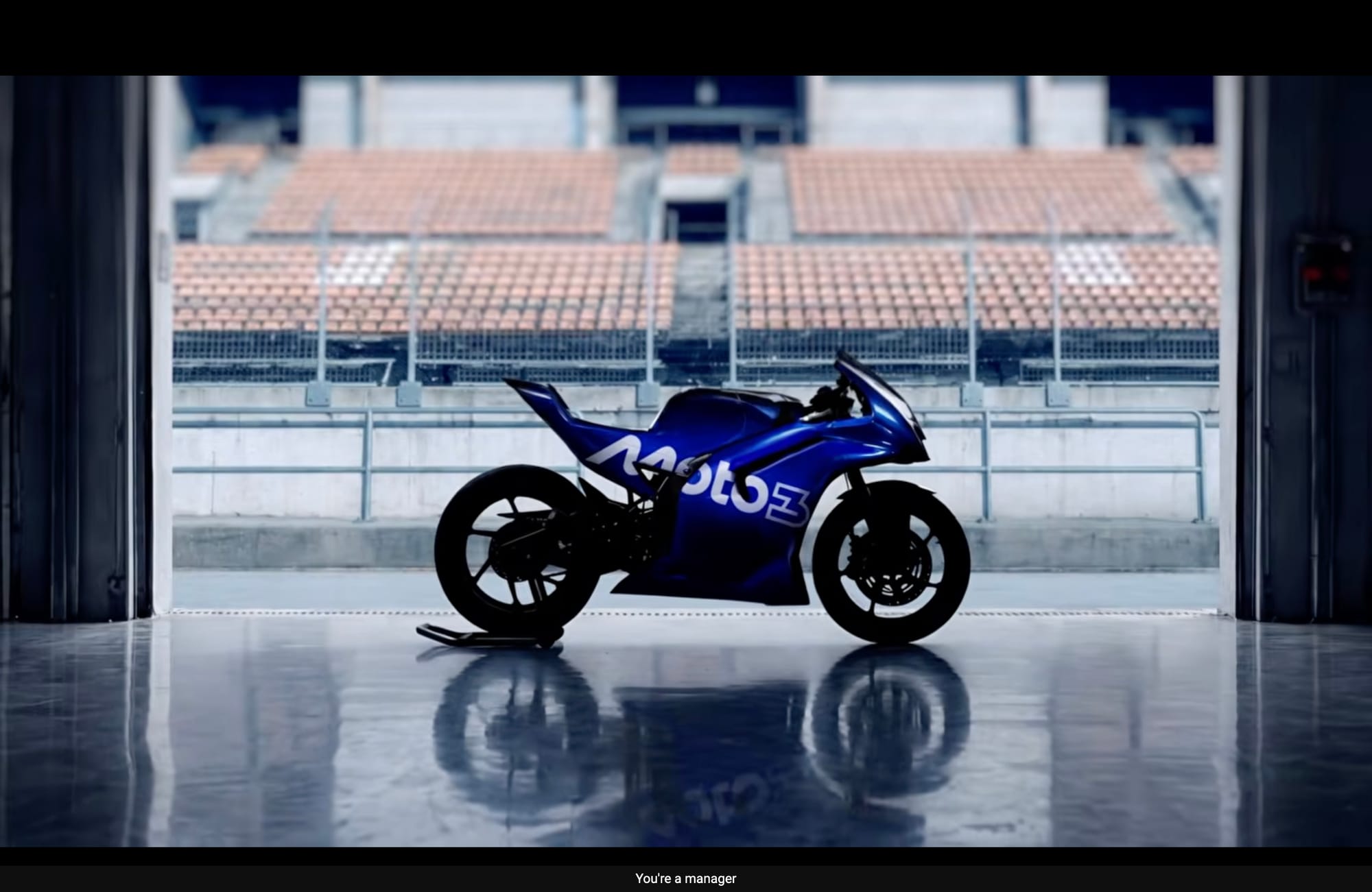
Moto3 will switch to being a Yamaha one-make series from 2028.
The new bike will use an “extensively re-engineered” version of Yamaha’s CP2 production engine, with MotoGP and Yamaha’s announcement saying “the ultimate objective is to achieve a superior power-to-weight ratio compared with the current Moto3 machines, while introducing a full-size motorcycle better suited to the physical characteristics and riding style of the next generation of riders”.
Though Moto3 began life with 11 different manufacturers on the grid when it replaced 125cc in 2012, it is currently monopolised by Honda and KTM.
Asked by The Race why MotoGP had decided to go completely one-make for the new Moto3 rather than taking the compromise approach used in Moto2 - where chassis competition is open but Triumph supplies all engines - MotoGP’s chief sporting officer Carlos Ezpeleta said the stricter approach was necessary to achieve cost control goals. A 50% cost reduction is the target.
“This has also been done with not just the direct involvement of the teams, but with a lot of input from the teams,” Ezpeleta replied.
“And then understanding that right now Moto2 and Moto3 are really here as one, a fantastic product on track for all of us, but two to develop the talent and the pipeline to go into MotoGP.
“And the best way to do that is in a controlled cost environment. And the only real way to do that is with a single supplier.
“Experience proves that when there's competitive tension between manufacturers - and it doesn't really matter the size, if it’s the biggest manufacturers in the world or smaller chassis manufacturers - the costs continue to escalate.
“And that's why the decision was quite clear for us from the beginning.”
The new bike will be faster than the current machine, which Ezpeleta hopes will spread the current tight slipstreaming packs out and lead to safer racing.
“I think to a certain degree, speed and safety are not always parallel,” he explained.
“The target is that the machine will be faster than the current Moto3 machine, which to a certain extent you could say is not safer.
“But I think what is clear is the dynamics of racing right now in Moto3 where the slipstream is so, so, so important. That should be significantly reduced from the studies that we've done.
“In MotoGP the runoff areas are not really the problem, it's sort of the multiple rider accidents that are unfortunately the problem. This should help that to a certain extent. That’s why we feel confident this is a step in the right direction.”
While the engine in the new bike will start from a production base, Yamaha MotoGP managing director Paolo Pavesio was keen to make clear that it will effectively be a fully prototype machine with enough adjustability to train engineers for MotoGP futures as well as riders.
“This is not a production bike spin-off,” Pavesio insisted.
“The engine is a production engine which will be highly modified. We are massively reducing the weight by a lot of magnesium. We will have power up, we will have a complete racing gearbox.
“So the engine is the only production part of the bike. All the rest is a complete prototype. So the frame, the swingarm, the complete rolling chassis, it's targeting to be a prototype racing machine as it is.
“The bike is somehow a training bike for young engineers which will work in Moto3 maybe to grow, and for the riders to grow. It will be a natural first step towards Moto2 and towards MotoGP, also technically.”
After its introduction in Moto3 in 2028, the aim is for a lower-spec version of the bike to be used in the Moto3 Junior World Championship from the following year. There are also hopes that it can become the basis for regional series feeding into grand prix racing too.