A sport insider's perspective on F1's commercial revolution
At the grandly titled Cannes Lions International Festival of Creativity held in the South of France this week, Formula 1 was seemingly the only sport anyone wanted to talk about commercially.
Sure, the overly branded watch parties for World Cup games were well attended and the beach-front bars were full of national shirts replacing the de rigueur daytime linen shirts, floaty dresses and oversized sunglasses but the only real game in town was Formula 1.
F1 itself took over the most prominent bar opposite the main events hub. At least six teams were in attendance with Mercedes even bringing a Monaco Grand Prix spec yacht to entertain and woo. Accompanying current world champion Lando Norris, Carlos Sainz, George Russell and Liam Lawson were a full squad of senior commercial, communications and marketing personnel.
F1 was in town mob-handed, leading and teaching. Newly minted expert hosts at oversubscribed panel events asked repeatedly about the ‘Netflix effect’ and went little deeper.
Which is a real shame. Because the transformation of F1 commercially and beyond is a hugely insightful case study. And the world is certainly wanting to learn.
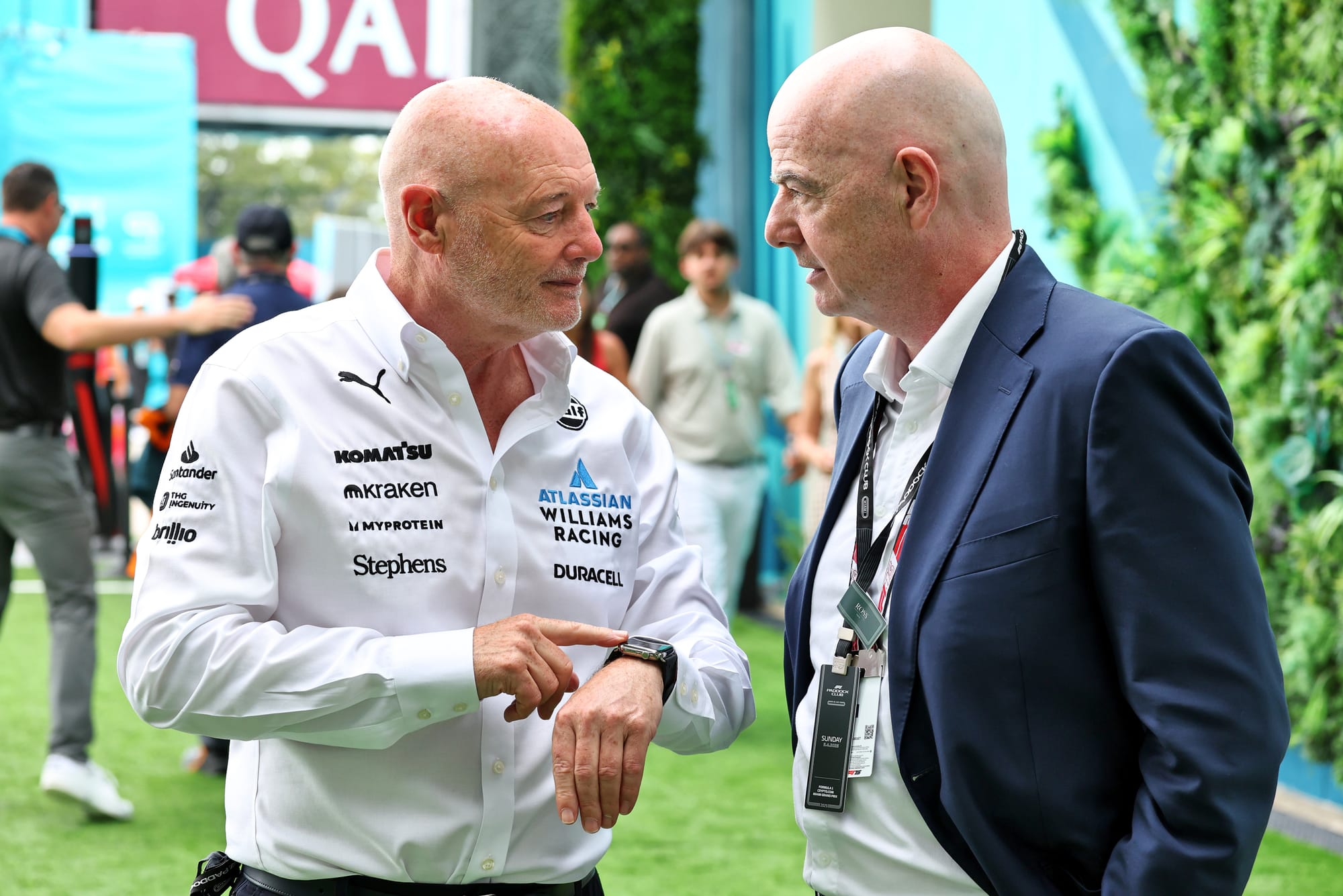
Williams board advisor, commercial and marketing, Peter Kenyon and I discussed this transformation during his flying visit to the Axios yacht that The Race called home during Cannes.
Peter has one of the more unusual perspectives in sport, having spent years building commercial operations in football at Manchester United and Chelsea before arriving at Williams to rebuild one of Formula 1’s most iconic brands. Seemingly from the ground up.
“When I joined Manchester United, it was in exactly the same place,” he says. “The commercial aspects were underutilised.
“Building the United brand was very akin to what we’re doing here. The great thing here is we had this wonderful Williams brand with great history, multiple world championships and an independent identity.
“When you look at the quality of the brand and what we walked into, it was just an underutilised asset.”
For years, Formula 1 looked enviously at football commercially. Today, according to Peter, the flow of strategy, best practice and ideas is flipping.
He adds: “When I was in football, we looked at Formula 1 and thought, ‘What are they doing?’ Then Liberty reignited it. Netflix has brought in new audiences, 18-to-35-year-olds, 50% female. Those are really important shifts.”
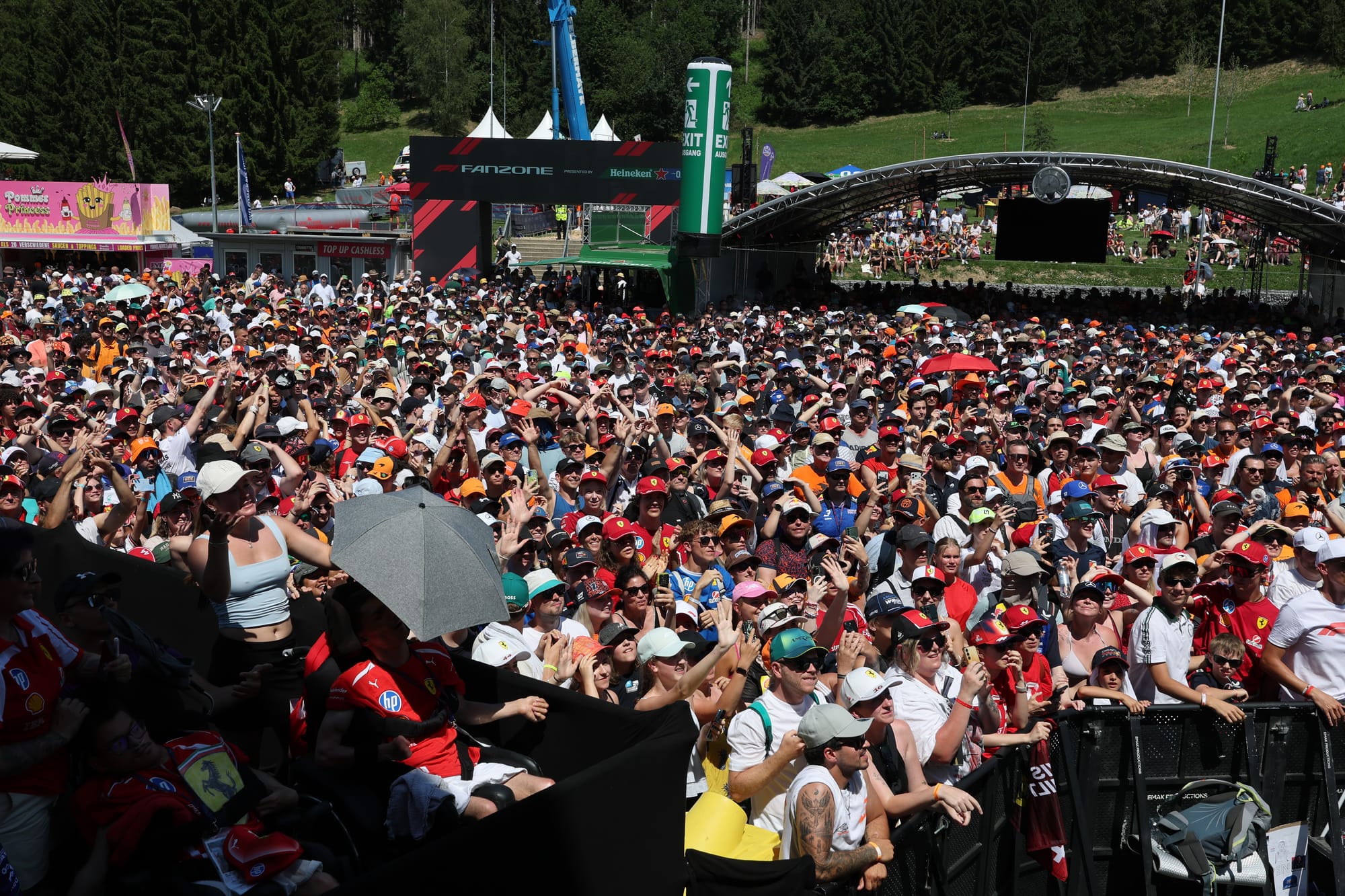
Those inputs and outputs are repeated ad infinitum in sponsorship decks and LinkedIn posts to the extent that we in the sport have started to become blasé about them and their impact. But in Cannes, which is the self-styled centre of marketing excellence, the journey to those numbers is of great interest.
So it is unsurprising that Peter and his peers at other F1 teams were in great demand on the stages of all the big media brands and agencies jostling for relevance and leadership in Cannes.
Peter has experienced the transformation whilst rebuilding Williams off track as much as team principal James Vowles has had to on track. Unlike his race team colleagues, Kenyon’s ambitions are not about benchmarking against the best on the grid but the best in the world.
With that ingrained competitive nature the sport has, added to a perception of headroom still remaining commercially, it’s impossible to think F1 will stop growing revenue anytime soon.
“We’ve got to become one of the top commercial marketing teams in sport,” Kenyon says. “It’s not just about Formula 1. We spend a lot of time looking at the top 50 teams in sport as our benchmark, not just the other 10 teams in Formula 1.”
Despite all his previous success and high profile roles Peter is very humble, passing on huge credit to his universally liked (unusual in the F1 commercial paddock) commercial director James Bower and wider team. He is also very softly spoken but raised the volume significantly when reminding me how the commercial teams in F1 are no longer blunt sales people but have to have huge awareness of the marketing discipline as well.
“It’s not a sticker on the car. If you want a sticker on a car, there are cheaper ways than Formula 1. What we’ve really specialised in is authenticity of the relationship and integration of their business into ours.”
Away from F1 in Cannes there was lots of ‘logo slap’ going on and a lack of authenticity in places. It showed how far F1 has travelled in the last half a decade.
To be able to sit in front of the great and the good of the world’s marketing community, including Peter’s old colleagues in football and be the experts is not something Peter and I ever thought we’d see. But at the International Festival of Creativity 2026 F1 was being hailed as among the most creative commercially.