'Quite crazy' - Verstappen baffled by crash response
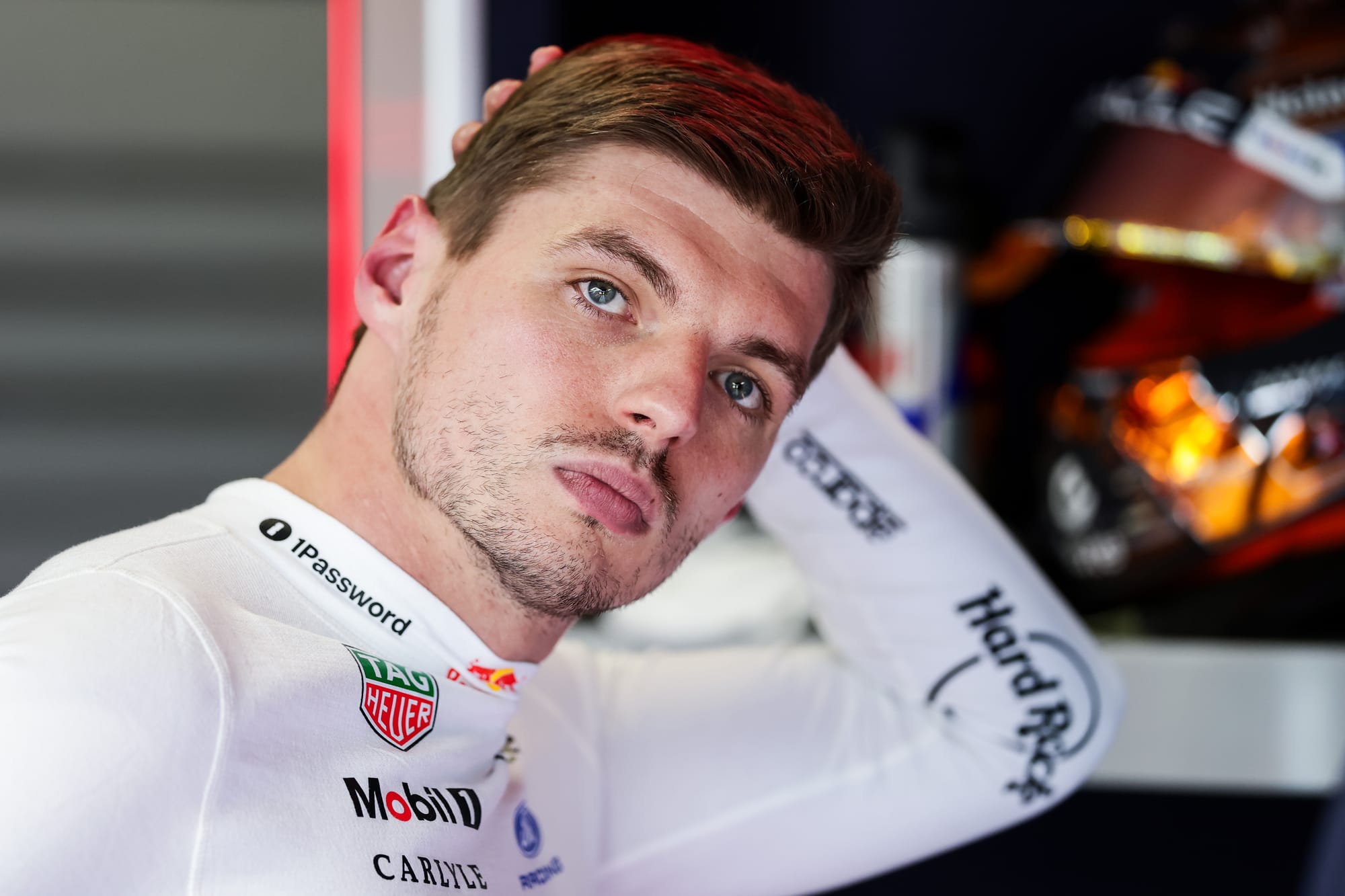
Both Kimi Antonelli and Max Verstappen were left bewildered that Verstappen's crash at the end of Formula 1's Austrian Grand Prix qualifying session was covered off by a single yellow flag.
The distinction between a single yellow flag and double waved yellow flag was crucial to the outcome of the Austrian GP pole fight after Verstappen crashed at the penultimate corner of the lap, with the Mercedes drivers coming up behind him.
Antonelli erroneously aborted his lap, believing the incident was covered by double waved yellows, while Russell lifted but completed the lap at racing speed.
He had enough margin to propel himself to pole position as a result, while Antonelli dropped down to fourth on the grid.
Curiously, the site of the incident switched to 'double waved yellow' conditions 22 seconds after the initial yellow flag, according to race direction messages. But by the time that happened Russell had just passed the double yellow zone, as he completed his lap three seconds later.
Both Verstappen and Antonelli were incredulous that a single yellow flag was deemed sufficient initially.
"I mean, I only heard about that now. That's quite crazy," said Verstappen.
"There was a car in the wall in a fast corner," mused Antonelli.
"So I think in this situation- I don't know why it didn't go double-yellow straight away, because it's a super quick corner, and if you go off at the same time, it can end up very badly. That was a bit confusing, but it's what it is.
"For sure it's something that needs to be reviewed, especially when it happens in a high-speed corner. If it's a slow-speed [corner], single yellow can be OK but fast corners should be double yellow straight away."
Appendix H to the FIA International Sporting Code prescribes that a driver is to abandon the lap under double-waved yellows (the lap is struck off the timing screens anyway) and also prescribes that this type of flag signifies that "there is a hazard wholly or partly blocking the track and/or marshals working on or beside the track".
Asked by The Race about his take on the treatment of the incident, both as the beneficiary of the events and as a director of F1's driver union Grand Prix Drivers' Association, Russell backed the initial decision.
"As I said [prior] I didn't even see the [crashed] car, because the run-off is so far. In that instance, a single yellow was correct," he insisted.
"Double yellow is [signifying] immediate danger. Lifting 100 metres before a corner or lifting off with a single yellow, you're never going to lose control of the car.
"Verstappen, the only reason he was in the wall that far away is because he was attacking and lost the car. So the single yellow was correct, I think I did everything right to be very much under control. Different story to a double."