The 'suffering' that will make repeat Ferrari masterstroke difficult
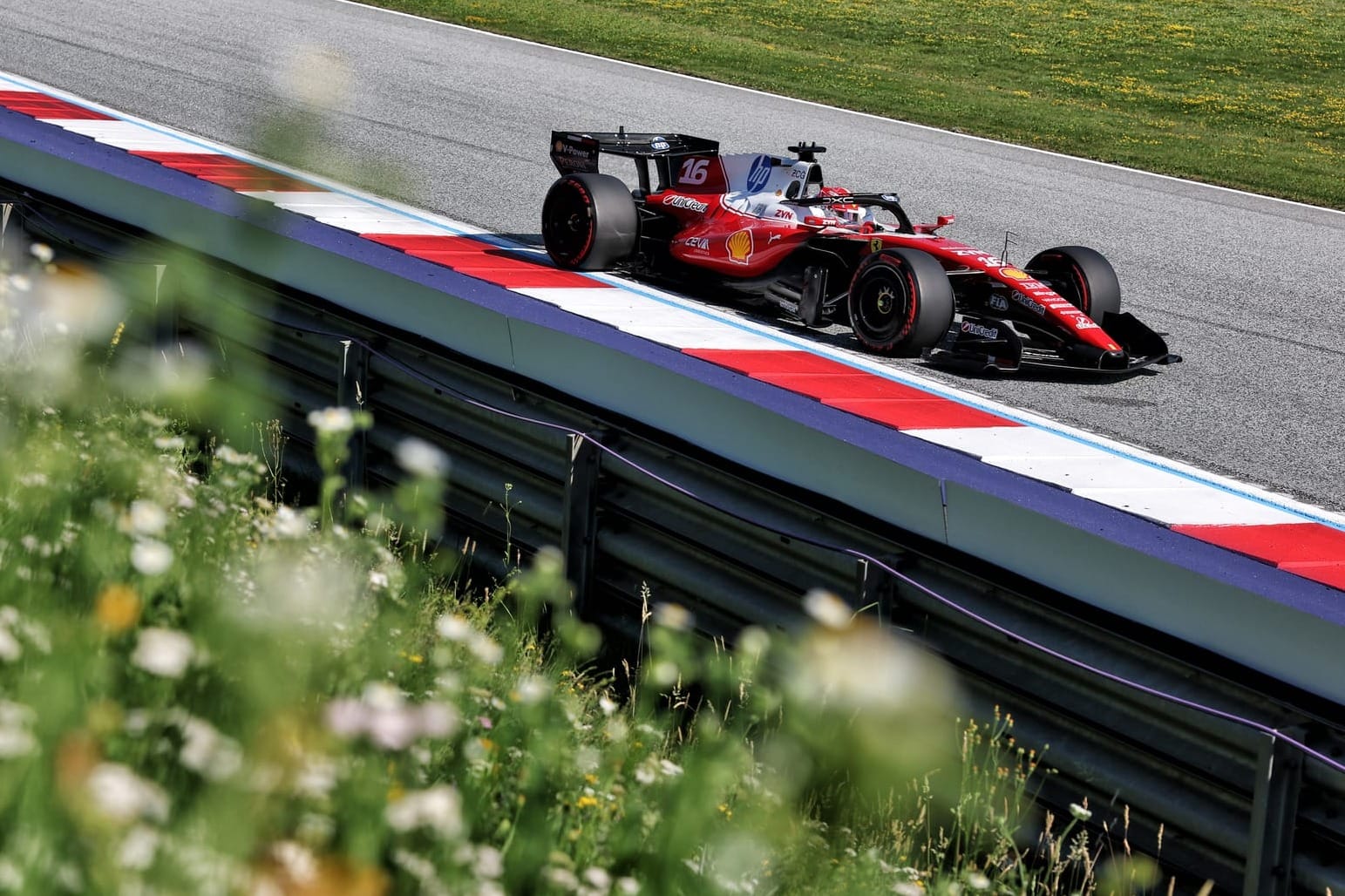
Ferrari's front row slot and the high tyre-degradation scenario in play for Formula 1's Austrian Grand Prix has inevitably triggered intrigue about whether it can pull off another strategic masterclass to beat Mercedes.
After all, two weeks on from Lewis Hamilton's three-stop charge to overcome Mercedes' George Russell on a two-stop in Spain, the fight for the victory is once again going to all be about tyre management.
But while it was Ferrari's aggressive choice at Barcelona that pushed Mercedes out of its comfort zone, the reality of the demands of the Red Bull Ring means that such an approach may not work this time.
Yes, the tyres are suffering in Austria from a high level of degradation as they were in Spain, and yes it is going to be another blisteringly hot day, but there are some key characteristics of the Red Bull Ring track that means the route to doing something different is not as easily in play.
So while a three-stopper is on paper a few seconds faster, based on degradation being 0.1-0.2 seconds per lap, in reality when battling other cars it falls out of favour.
Run through the infamous Monte Carlo simulation that factors in strategy against other cars on track, the three-stopper ends up five seconds slower.
Key to the three-stopper not really working is that overtaking is so much harder at the Red Bull Ring than it was at Barcelona when there is a tyre offset.
The current generation of cars seem to be easier to race closely through high-speed corners than the low- and medium-speed turns that make up much of the Red Bull Ring.
Furthermore, the ways that boost has been tamed to pull back on excessive overtaking means that diving past on the straights is not as easy as it was earlier in the year when the rules were untamed and yo-yo racing was the norm.
As Pirelli chief engineer Simone Berra said: "Here, compared to Barcelona, you can suffer a little bit more with traffic management.
"If you go for a three-stop, so quite aggressive, then you have to overtake more cars on track if they are on the two stops already. In that case I think it could be less effective."
The fundamental technical demands for the best management of tyres is also different in Austria compared to Spain, which means the characteristics of the different cars may see things play out in an alternative way.
Fewer high-speed corners means less lateral load punishing the tyres that way, with the Red Bull Ring being much more about acceleration and traction demands.
Berra said: "In Barcelona you have more high-speed corners, so basically while the rear axle was critical, the front axle was important as well.
"Here there are fewer high-speed corners, so in general it is more high-traction demand - so it's more the rear axle that you have to protect. So I think it's slightly different compared to Barcelona."
So with overtaking harder, the risk of being on the three-stop and coming through traffic is that if you get held up, you slide more, the rear tyres get even hotter, and the degradation is worse.
Berra added: "Compared to a car that is in front of you, you are not able to extract your full potential on traction. Then you start losing more performance on the rear and start sliding more."
Clean air is going to be king here, which may mean the strategy battle is not about the number of stops but more about gunning for the undercut or being aggressive from the start in going for the soft.
Pace advantage
But there is another factor that is going to be influential, and it is that Mercedes appears to have a bigger pace advantage against Ferrari than at Barcelona.
As Hamilton - who starts third, with team-mate Charles Leclerc on the front row alongside Russell - said after qualifying: "I think this weekend we've not been confident that we could fight for a win.
"These guys [Mercedes] have been six tenths quicker than us most of the weekend. We closed the gap overnight three tenths, but we still are three tenths down, or two-and-a-bit tenths down. It's going to be very tough to challenge them."
But despite the pace deficit and the three-stopper not appearing to be in play, the one difference Ferrari has compared to Spain is that it has two cars up in the fight at the front.
And that opens options to try different things - such as aggressive undercuts or a compound offset with the soft, medium and hard compounds all in play - which could force Mercedes to make some tough decisions about which car it covers.
And if it ends up reacting to the wrong Ferrari, then it could be powerless to stop the other one.
As Hamilton said: "It's great having Charles here as well, because we can hopefully work together in a strategy and try to apply pressure to them."