What's changed one year on from F1's biggest team boss bombshell
Exactly 12 months ago, Laurent Mekies found himself thrust into the most difficult days of his job so far as he took over from Christian Horner at the head of Red Bull's Formula 1 team.
When the energy drink company's senior management sacked Horner after more than 20 years at the helm, Mekies was barely given time to catch his breath as he was pulled across from Racing Bulls.
The rushed transition was hard in itself, with zero time to properly prepare for his new environment.
But added on top of the complexities was the shellshock from the factory floor in dealing with the departure of Red Bull's long-time leader.
"It was unexpected for the team, unexpected obviously for me," says Mekies, speaking in an exclusive interview with The Race to discuss his first year in charge at Red Bull.
"I'm not going to lie. If you have somebody you know driving a company, like Christian has been for 20 years, it's a big shock for the people.
"Forget what you feel [yourself]. What you feel is nothing compared to what the people there feel, because if you think you don't have much certainty, they have a lot less certainty than you at the stage.
"So, certainly thinking back to the full year, day one, day two, day three, were probably the most difficult ones."
Protector rather than disruptor
While Horner's dismissal came because Red Bull's bosses wanted things run in a different way, it would be wrong to say Mekies was brought in to rip everything up and start again.
In fact, when you step back and analyse how Red Bull has evolved under Mekies' leadership, the direction of travel is not radically different to what would have been expected under the previous regime.
And, as he says, the job description was not to rip up everything Horner had done.
"I've never felt I had to unpick things," says Mekies. "The priority was really in front of the fact that you have to get into somebody else's shoes.
"It was how can you meet the people and build your own picture as quickly as you can?"
Mekies' conclusion from this was that there was not much wrong with what he found at Red Bull; there was plenty of talent on board and it was certainly not lacking in any area that needed some urgent addressing.
Instead, it was more about playing around the edges and making sure that nobody was unnecessarily distracted by such a big change.
"When you have the raw material, the talent, you try simply to reduce the noise around them so that they can really focus on what they are good at," he says.
"The feeling is there was nothing to unpick. It was increase the empowerment.
"I'm not here to change Red Bull Racing DNA. I'm here to protect it. That's really how I felt through the months."
What has Mekies changed?
Mekies says the focus for him has been in following a simple principle: that if the car is quick, then every other problem that impacts an F1 team falls away.
"We do things if it makes the car faster," he says. "If it doesn't make the car faster, we are not interested in it, because we believe that if you make the car faster, everything that is surrounding it will get sorted automatically."
To achieve this, Mekies' approach has been very much about enhancing what is already in play rather than trying to do things in a different way.
Success rests on letting his staff shine and freeing them up from complications.
That is what formed the basis of some repeated claims last year that his own impact on the success the team was achieving was 'zero'.
"All you do is try to put your people in the best possible conditions," says Mekies. "They are the ones making the car fast. They are the ones making the PU. [power unit] fast. That's what I mean by zero impact. Our people are the ones chasing laptime.
"It is their talent making the car faster. What we do is work on the environment, work on the flow, keep the company without noise, keep the company simple, direct. As a pure racing team should be: try to keep it on pure racing."
A different style
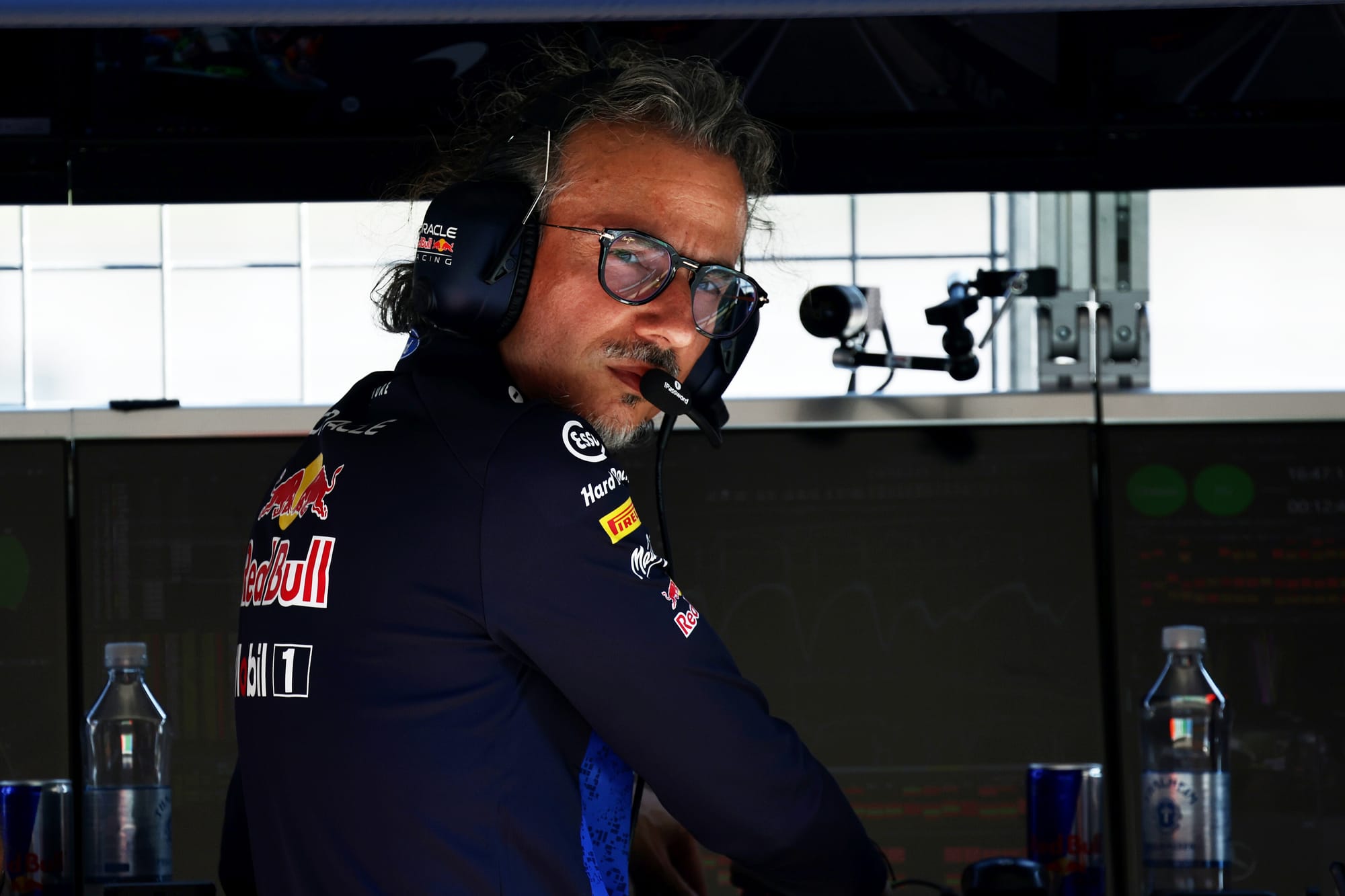
There is little doubt that Mekies' management style is different to his predecessor's.
He seems more collaborative than confrontational; he is not as outspoken in public, he does not appear on the TV cameras as much; nor does he seem to enjoy playing the paddock politics game to try to destabilise rivals.
Mekies suggests, however, that some of this impression of being more reserved comes simply from him having been head down in getting up to speed with his new role.
"In that first year, certainly the priority is to look toward our people, [offer] the support toward our people, compared to the outside world," he says.
"If that means spending more time with them - chassis side, PU side - as opposed to perhaps time available to the rest of the ecosystem, then it's probably a fair reflection of the first 12 months."
But he also offers a fascinating insight that perhaps too much is made by outsiders of the impact of different management approaches.
"I always thought, right or wrong, that management style did not matter," he argues. "I've been extremely lucky in my life to work with incredible leaders with completely opposite management styles, and this somehow made me feel that leadership style was irrelevant.
"Leadership was what matters. So I'm really not attached at all to a given style or another.
"What I think we are measured by is how much our people are able to express themselves at their very best under your clock. How you achieve that, with what style you achieve that, doesn't matter."
Mekies also suggests that what is seen on the outside, and in front of the media, is not necessarily a full reflection of what is going on behind the scenes.
"The 'reduce the noise' approach means that we want our people to be concentrated on getting the car faster," he explains. "Of course you can be very vocal out there, and get a lot of good or bad publicity. But ultimately you must not underestimate the impact it has on your own people.
"We think we have the best talent, we think that if they have a chance to concentrate on making the car faster they will be very, very competitive out there, and that's the priority we have chosen.
"So you can do all of the same meetings and alliances and brainstorming and arguments in the public eye or outside of the public eye. You decide if you want to make them public or not.
"So, ultimately, I don't think there is a shift there in terms of the interactions you have. It's just whether or not you want to make them available to the media or not...which is a shame for you!"
Dealing with the bad and the good
Despite six wins under his tenure, and taking last year's championship fight to the finale in Abu Dhabi, Mekies has had his share of difficult challenges as well.
One has been the inevitable consequence of a team losing an established leader; in that it becomes a reflection point for all staff to decide if they stick it out for the future or it becomes a good time for them to leave as well.
But while there have been some high-profile figures who have decided to step away - including Gianpiero Lambiase (heading to McLaren), while more recently Paul Monaghan has been linked to Cadillac - the churn has not been as great as some have suggested.
And from Mekies' perspective, while the exits are not great, equally there is no sense of panic.
"We had very, very little to deal with in terms of do people want to be on board for these two cycles?" he explains.
"People wanted to get the car back to [a place where Red Bull can] win, that's the only thing that they were interested in.
"So you are completely right in saying that these sort of nearly unavoidable moments are where you have chapter changes.
"In our case, looking back into it, it has been different. It has been about, we want to focus on getting that car back on the pace, and that's ultimately what happened."
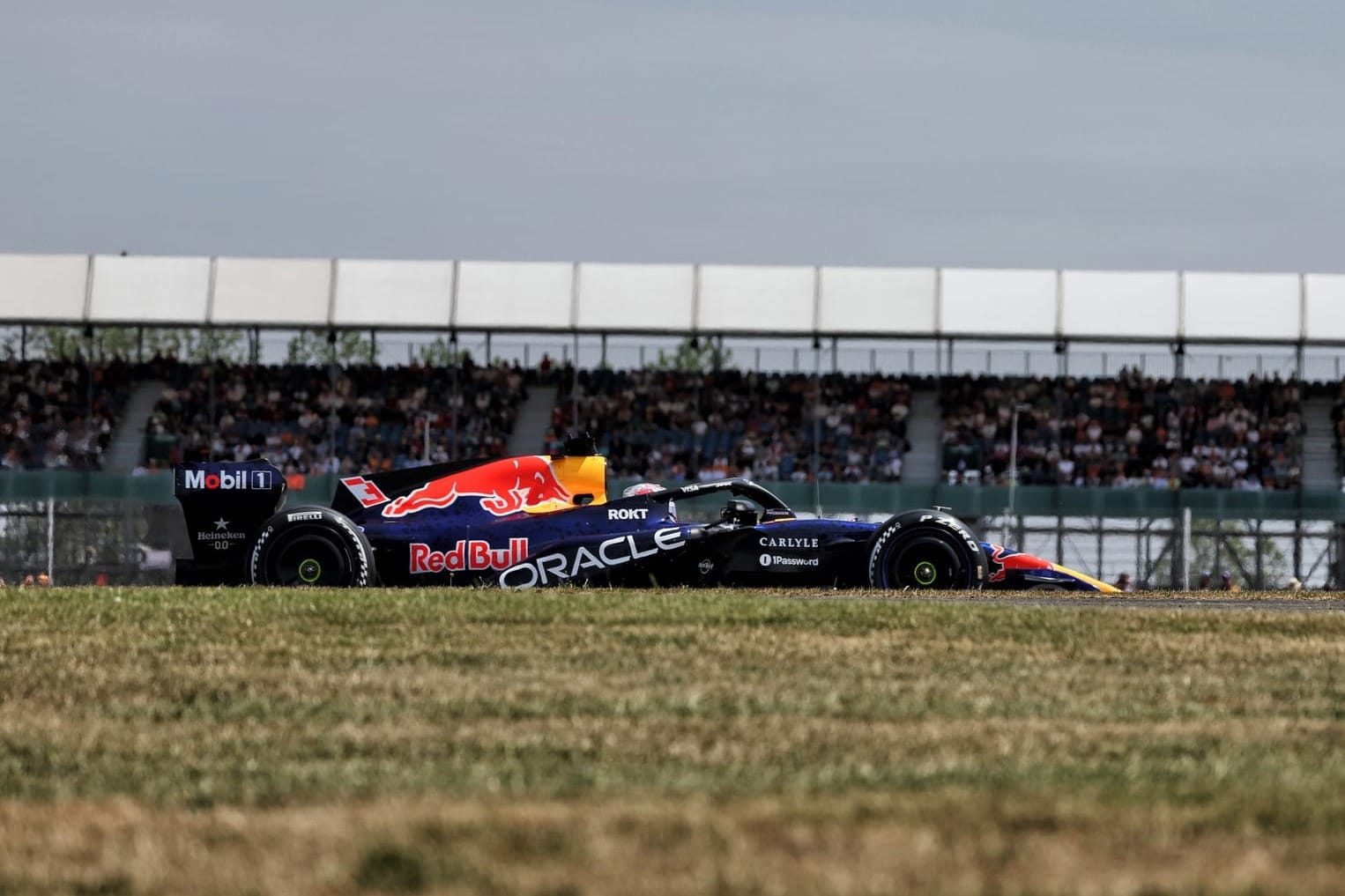
Beyond any staff upheaval, there are also the current competitive struggles; Red Bull's RB22 hasn't proved to be the platform that the squad (and especially Max Verstappen) would have wanted as it remains winless so far this year.
Is Red Bull in the place that Mekies wants it to be? Certainly not.
And is that is triggering some external headaches, including convincing Verstappen to stay? Absolutely.
But if there is one thing learned from observing Mekies throughout his F1 career, which began in 2001 with engine supplier Asiatech, it is that he understands outcomes have logical causes. So if things go wrong, blame only falls on the shoulders of those responsible.
"We are not a team that hides behind excuses, so nobody does that," he insists. "Pierre [Wache, technical director] doesn't do it, Ben [Hodgkinson, Red Bull Powertrains technical director] doesn't do it. None of our people do it, so I'm not going to do it."
Mekies sees a reality that with a power unit project that is in its first year, and the potential improvements coming from a new windtunnel being built at Milton Keynes, there is reason to feel that right now things are at the bottom of a performance curve that is only going to go up.
"What is very clear is that the power unit [programme] will develop into a further advantage for us, having gone through year one," he says. "What is very clear is that the new windtunnel will develop into a further advantage for us.
"These are the pillars of the future strength of the team. We certainly do not see them at all as an excuse for the present."
In fact, while it has been a mixed season so far for Red Bull in terms of overall results, Mekies says what is important to look at is the trend.
"We are chasing race-winning pace right now," he says. "The team has managed to erase the best part of a one-second deficit to start with, in eight races.
"So we are not looking for excuses. We are only interested in to getting that car fast."
The 30-minute rule
But even when success arrives, Mekies half-jokes about there being a mantra that he follows: the joy of wins is only allowed to last for a very short time.
"We all get up in the morning to feel that Sunday afternoon feeling," he explains, speaking about the highs of delivering victories when they come.
"We have a little joke between us, that a win is 30 minutes of enjoyment.
"When the car crosses the line, for 30 minutes you are going to enjoy it. So it's the time for the driver to get the lap, get the interviews, get onto the podium. By the time you finish the podium, you have done a couple of interviews yourself.
"So you are left with five to 10 minutes in the garage to say well done to the guys. And then 30 minutes, finished, turn the page, fight as hard as you can for the next one.
"You know there will be many things you haven't done or you have not done perfectly. So even if you won, you know the competition is going to react anyway."
For Mekies, 12 months in as team principal, the job never stops.