How McLaren's 2026 F1 car has ended up three months behind Mercedes
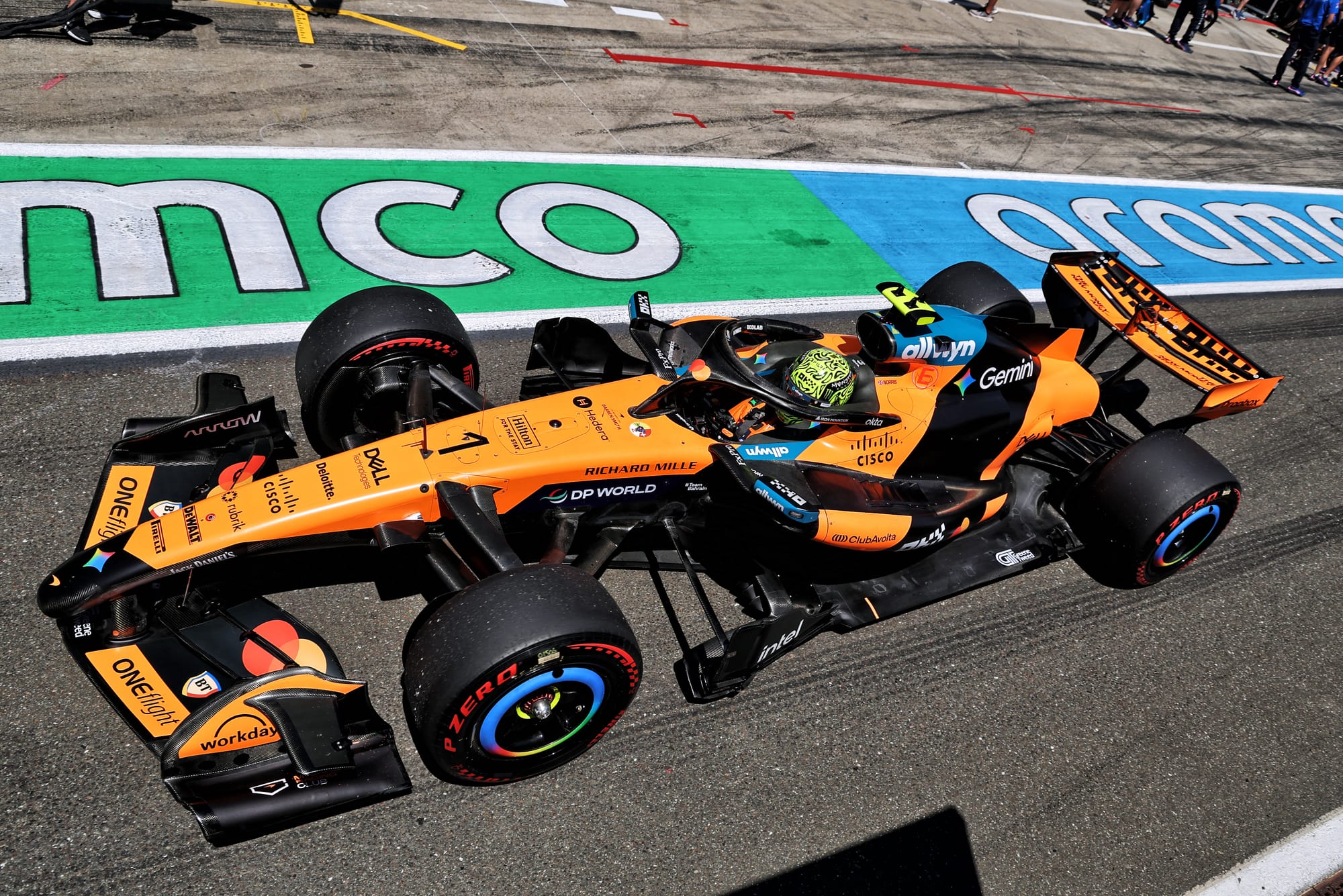
In just over half a year, McLaren has gone from having Formula 1’s benchmark car to lagging three months behind the development curve of the factory Mercedes team.
McLaren’s hopes of defending either of its championships are now slim without a serious turnaround, one that won’t start to arrive until just before the summer break.
So what exactly has gone wrong and when can McLaren recover?
Title fight impact and design errors
McLaren’s technical department was effectively walking on water in the second half of the ground effect era, having risen from being one of F1’s slowest teams at the start of 2023 to winning back-to-back constructors’ championships and the drivers’ championship last year.
But it was during that 2025 championship success that the seeds for McLaren’s 2026 deficit were sown.
“Definitely, I would say that having been in the championship so tight with Red Bull, and Verstappen in particular, in the drivers’, needed some of our attention in terms of keeping working on the car,” McLaren team principal Andrea Stella said.
“Even if we didn't bring big upgrades, we definitely needed to keep paying attention from a technical point of view at the MCL39 because we needed to make sure that we maximised our performance race by race, because the challenge from Verstappen was becoming more and more material.”
McLaren also made missteps with the early development choices it made for 2026 last year.
“During the [2026] development, I think we adopted some directions, from a conceptual point of view, that, as we learn more about the 2026 regulation, I would say that we are redirecting,” Stella said.
“And this, like everything, especially from an aerodynamic point of view, is not something that you can get to converge in the space of a week. It normally takes one or two months.
“This couple of months is the delay that we have at the moment. We see that it's probably two, three months, the space between which we see upgrades from the top teams.”
It’s put McLaren “out of sync” with its F1 rivals in terms of upgrades, meaning it appeared closer to the pace when it debuted a big upgrade across Miami and Montreal, but then fell back as the other top teams brought their own upgrades, with Stella estimating each big upgrade is worth three tenths.
And there were setbacks with what McLaren has brought as a new front wing debuted in Montreal didn’t race until two rounds later in Barcelona (with modifications). Plus it had to abandon plans to trial its version of Ferrari’s upside-down rear wing in Austria because it wasn’t confident it would work properly.
Every team is restricted to the same $215 million cost cap for 2026, so McLaren not only has to match its rivals in the development race, it has to out-develop them significantly to overturn that three-month deficit.
Where the car is lacking
Silverstone gave us the first proper hints of frustration among the McLaren drivers.
Having qualified nearly eight tenths off pole position on Saturday, twice the deficit he had in sprint qualifying, Norris said: “I'm not an engineer. I just drive the car,” when asked why the deficit had grown.
After finishing fourth in the grand prix, Norris said “everything but the result, pretty shocking. I don't know how we finished P4, honestly.
“A big part of it nowadays is just not making mistakes and reliability. We got that bit right today, but the pace was pretty poor.
“Not nice, not a nice car to drive, maybe one of the hardest cars I've ever driven in Formula 1. Many things we need to do better.”
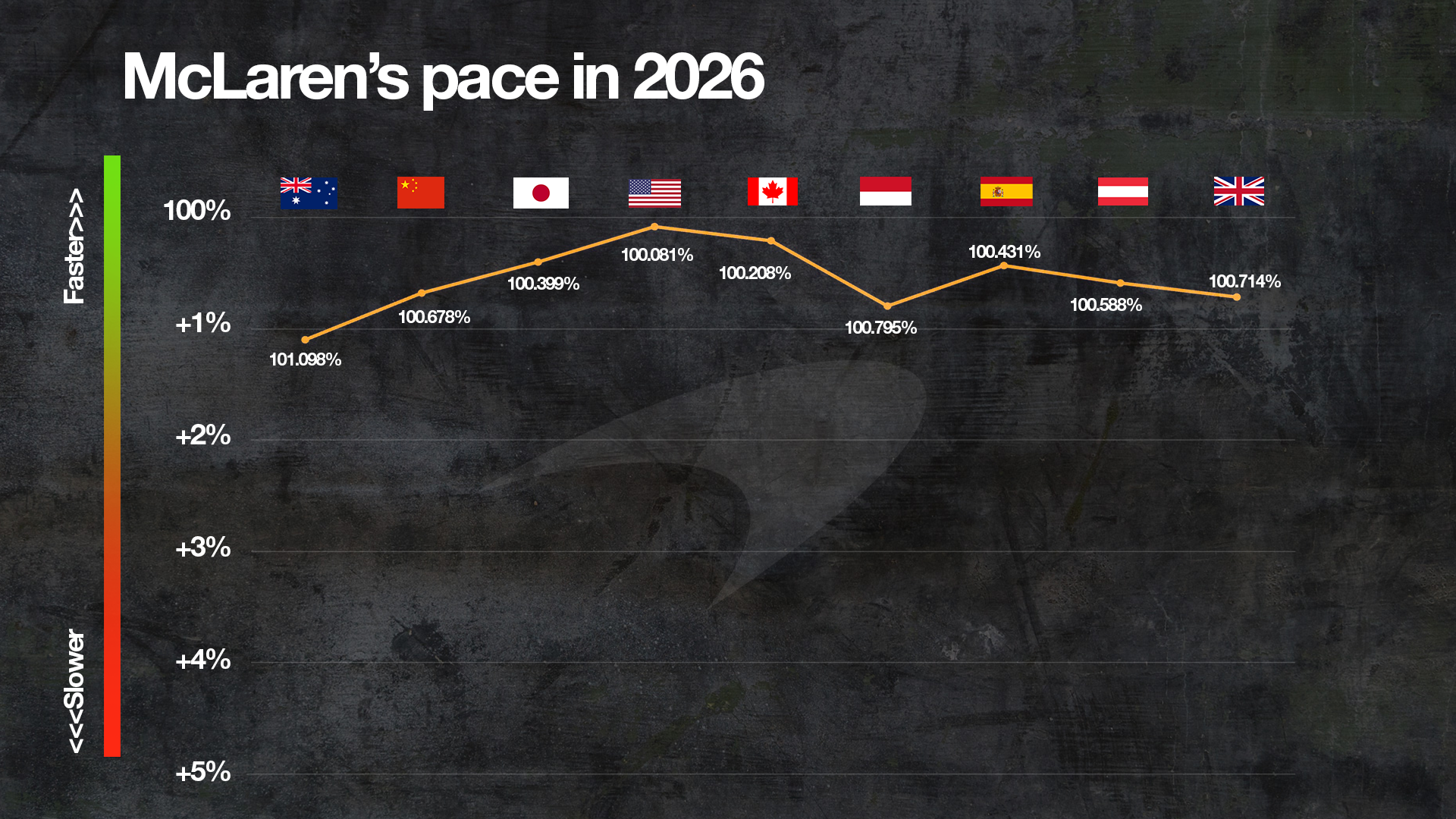
Asked by The Race how McLaren could be so competitive in Miami in early May but only fourth-best at Silverstone, Norris said: “I don't know why. Other people didn't do a good job, I guess.
“There's no way we can finish P2 in Miami and have a car like this today, you know?
“Other people have brought a lot of upgrades and updates since, and we kind of haven't. Nothing that's brought us that much performance.
“I don't know, the car was just undrivable, honestly.”
One of McLaren’s biggest weaknesses is that it has a really draggy car. It’s why it was so keen to deliver its own version of Ferrari’s upside-down rear wing that could help reduce the impact of it when in straight mode.
That draggy car will be feeding into its straightline speed weakness too, but McLaren has also been lacking downforce compared to the Mercedes since the start of the season.
It’s why Stella split the gap into “probably 70% in the corners and 30% in the straights”.
Silverstone “exposed” where McLaren is weak, according to Oscar Piastri, as McLaren’s more vulnerable than the Mercedes to tough conditions, such as unpredictable wind direction.
The car also struggles to generate temperature with harder tyre compounds on colder tracks like at Silverstone.
Piastri said: “We clearly seem to struggle when things are a bit more difficult, we saw in Canada and Monaco when the tyre temps were difficult and tricky to get in, we struggled, when the wind is high we struggled, when everything is just a little bit out of our comfort zone we seem to struggle a lot at the moment, so that's probably our biggest focus.”
McLaren even has to make improvements in how it estimates fuel consumption as it miscalculated the fuel Norris’s car needed for the Silverstone sprint, having done the same in Austria.
McLaren’s Mercedes power unit has proved thirstier than expected over the past couple of weekends, so it needs to get on top of what Stella admitted is a “relatively simple matter”.
McLaren’s knowledge gap
McLaren’s customer team deficit to Mercedes in terms of power unit exploitation was well-documented at the start of the season.
But much like car development, while McLaren has made strides to match where Mercedes started the season, the works team has continued to raise the bar.
The Race revealed during the British Grand Prix weekend that Mercedes had found a new legal way of utilising the benefits of an engine trick that had previously been banned by the FIA.
Mercedes was practising and perfecting this on the simulator ahead of the Silverstone weekend, but it came as a surprise to McLaren, which only found out when Mercedes started doing it on Friday at Silverstone.
McLaren’s also scratching its head around its straightline speed weakness. It’s partly explained by that draggy car but not solely.
Stella’s always very keen to complement the “brilliant” Mercedes product, but at the same time he said there are “question marks” over how exactly McLaren is so far off on the straights.
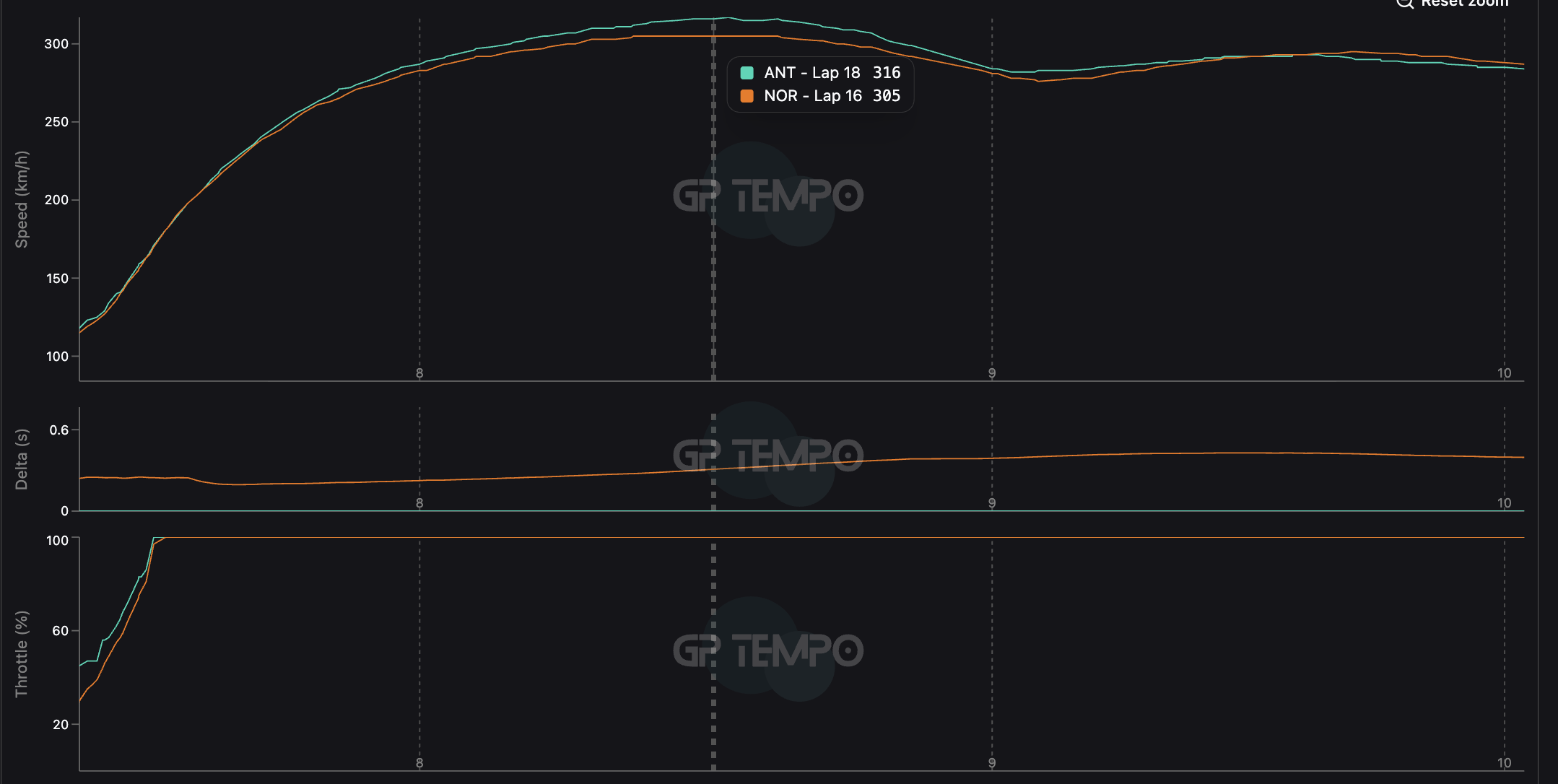
The data shows Lando Norris being 11km/h slower than Antonelli on the flat-out run to Copse corner in qualifying at Silverstone.
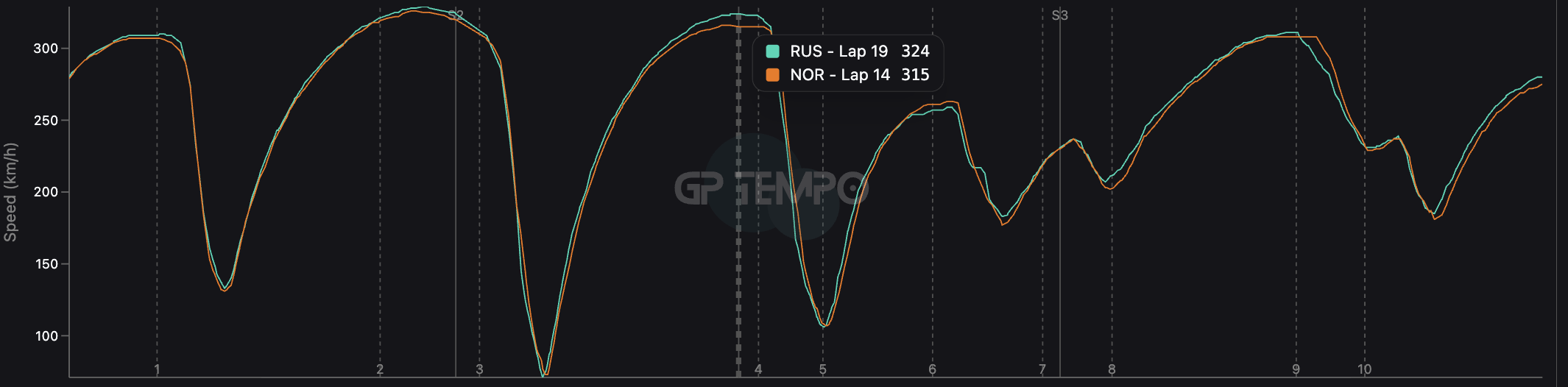
While Norris was 9km/h slower than Russell on the run to the Turn 4 right-hander in qualifying in Austria.
Stella wondered whether some of those gains could be explained by McLaren being on an older specification of power unit, as a consequence of the reliability problems McLaren suffered earlier in the year, including two different battery problems that left neither driver able to start in China.
A step behind
That upgraded Mercedes power unit - which both works Mercedes' drivers, the Alpine drivers and Carlos Sainz's Williams has, but McLaren's drivers don't (yet) - has added reliability improvements across a number of components.
It wasn’t a performance upgrade, but stronger reliability means Mercedes can run its power units more aggressively, unlocking an extra edge that McLaren currently doesn’t have.
Another element of the power unit that McLaren’s behind on is gear ratios.
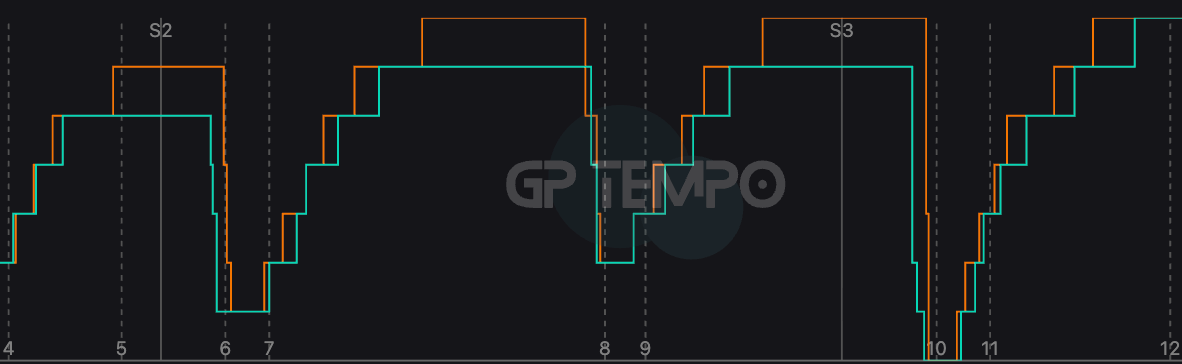
McLaren has opted for slightly shorter gear ratios than Mercedes this year, which means its drivers are reaching the higher gears more frequently and shifting up earlier than the Mercedes in many corners, as this example from Montreal clearly shows.
Those gear ratios are locked in before the season starts and are chosen based on the estimate of the expected power unit performance and energy deployment.
Again, Mercedes, as the engine constructor, will have the best idea of where to pitch their gear ratios; McLaren’s was a best-case estimate, but it’s proven to be sub-optimal.
Teams are allowed to use a joker and change their gear ratios mid-season, but we understand McLaren won’t do that because of the cost involved.
Changing the gear ratios would essentially cost McLaren some development budget that it then can’t put towards the car - and more development for its car is sorely needed.
Recovery timeline
Stella says the team now has a “clear development direction” to pursue, but it will take “a couple of months” to be realised.
It’s why the Belgian GP will likely be more of the same as McLaren’s Silverstone struggles.
The ‘first results’ of the redirected approach will appear just before the summer break at the Hungarian Grand Prix, but McLaren doesn’t expect the truly transformative upgrades to arrive until after the summer break.
Stella is also wary of how successful the upgrades of Mercedes, Ferrari and Red Bull have been, all instantly delivering an improvement in performance.
Stella even picked out new team Cadillac and its successful Austrian GP upgrade as evidence that F1 teams are “operating at a level that has never been the case before”.
So McLaren knows it has to be at the top of its development game if it's to have any hope of rescuing its defence of either championship.