Why F1 drivers are concerned Spa will be 'sad'
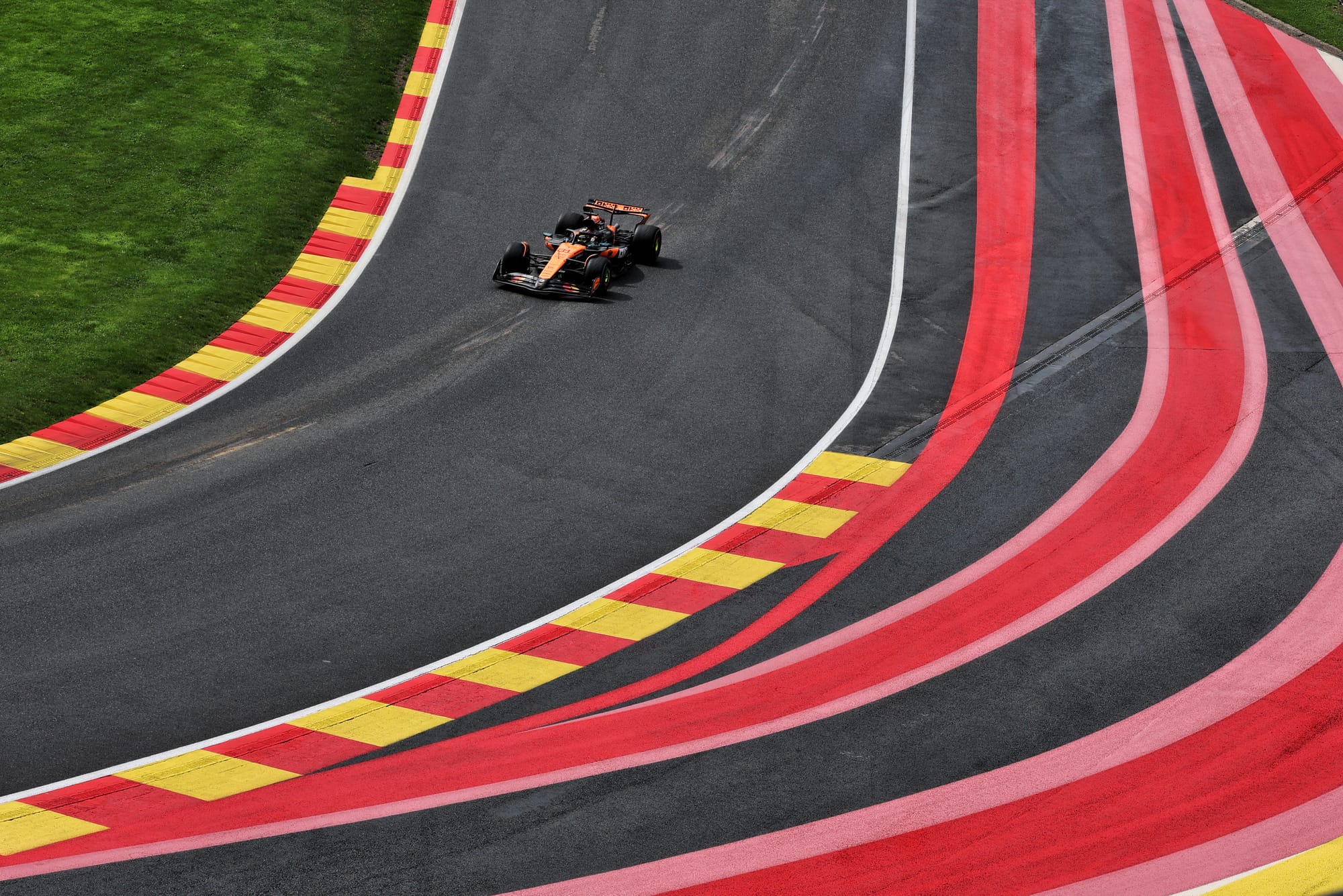
Many Formula 1 drivers have been raising concerns about how the 2026 regulations will affect the driving challenge at Spa-Francorchamps this weekend.
Spa is a concern partly because of its length as, at 4.352 miles, it's the longest track on the calendar. But its configuration is also a problem, with heavily power-dependent first and third sectors sapping the battery. It means that the middle sector, which runs from Les Combes to Stavelot, is effectively a part of the track where you will deploy little or no electrical power.
Accordingly, that's going to be a power-limited part of the track where the maximum 350kW electric power isn't accessible even if you wanted to use it.
"If you deploy in those two straights, which is the optimal deployment, then there is a one-minute sector two with no deployment at all," said Aston Martin driver Fernando Alonso.
"And with no deployment at all, we have significantly less power than last year, and less power than F2 [because] that is the case when you cut the deployment."
Max Verstappen said "I love Spa, but Spa is going to be another painful one just because of the energy", while Oscar Piastri predicted that both "Spa and Monza are going to be sad".
In particular, the no deployment concern is for Turn 10/11 - the famous Phouon double left-hander - which now creates an opportunity to harvest.
The impact on that corner could stand or fall on the overall downforce limits, and while there's a risk that drivers may end up sat within the limit of grip thanks to harvesting there, if the downforce levels are at the low end of what is expected at Spa, as has been the trend in recent years, then it's less of a concern.
However, the active aero package introduced this year may allow more downforce to be carried given the drag can be shed on straights.
Regardless, the fundamental problem is that there is, as always, not enough energy to go round. A fully charged battery is spent in 11.5s if deploying at the maximum 350kW, and this track is simply too long and power-sensitive to have the maximum power available for all of the lap. This was a known problem going into the season, but accommodations have been made to mitigate the problem.
First, the per-lap energy harvest limit in qualifying has dropped from the planned 8MJ to 7MJ. That should ensure that the amount of lift-off of superclipping charging is kept to a minimum, perhaps as little as two seconds. Around 12% of the lap is spent on the brakes, so dropping that limit reduces the deficit between the amount that needs to be harvested and how much of that can be done on the brakes.
It's a sensible move, one that has been made following feedback from teams, but it does sacrifice a little laptime with the pole pace expected to be up to four seconds slower than in 2025.
That limit increases to 8.5MJ for the race, meaning there will be more such harvesting in those conditions. That means there could be plenty of yo-yo racing on Sunday, with this track particularly punishing for anyone being too profligate in spending energy.
The second measure is the fact that there are five straight modes: the start/finish straight, the run from La Source to Eau Rouge, the Kemmel Straight, then two zones on the run from Stavelot to the Bus Stop with the Turns 16 and 17 - which encompasses the famous Blanchimont corner - separating those two zones. There had been talk pre-season about there being no active aero deployable on the run from Stavelot, which would have made that part of the lap particularly painful.
While none of this is ideal, the changes made for the Spa weekend do mitigate the problems. And longer term, the FIA has already put in place measures to change the balance of electric to conventional power in two distinct steps, with the potential switch to V8s for the next-generation engine, currently in 2031, offering the reset F1 ideally needs to eliminate all the limitations of the power units.
Audi driver Gabriel Bortoleto think it's time to move beyond the complaints when he was asked if the magic of special circuits had been lost.
"I don't think it lost the magic of the sport," Bortoleto said. "I think we should turn the page. We cannot spend three years talking about the same problem. The cars are still fun to drive. It's different. We need to adapt to that."
Ultimately, Spa won't be as painful as the worst predictions from teams and drivers would have it, even though it will be a race weekend where performance is dominated by energy management.