The 'significant' aero rule changes for F1 2027 explained
Formula 1 teams are bracing themselves for what has been called a “significant” change to car aerodynamics next year as a result of what initially appeared to be minor rule tweaks.
The revisions that are coming for 2027 are the consequence of a push by the FIA, and first revealed by The Race, to keep downforce levels under control in a bid to help minimise forces being put through the tyres as well as improve energy management.
Early analysis with the new 2026 cars has shown that how much energy cars have down the straights can be heavily influenced by how fast they go through corners.
So any progress being made by teams in improving downforce to lift speed through turns means more energy starvation to make the racing worse.
Following talks with teams over recent months, tweaks were approved to the chassis regulations that will go hand-in-hand with a shift away from the 50/50 split between internal combustion engine and battery power.
The changes are mainly in three key areas of the car – the floor edge, the plank and the rear wing – and all appear to be relatively minor in terms of a few dimensional changes.
But as teams have begun to dig into the details, they have realised that there are some wider consequences playing out.
Speaking to Sky F1 at the Belgian Grand Prix on Friday, Williams team boss James Vowles said the fallout from the rules was playing into his team’s consideration of its chassis design plans over both this year and next.
“They are fairly significant,” said Vowles about the rule tweaks.
“As a result of that, it isn't really as [much of a] carryover as I think everyone would like.
“We've already said we're doing a new chassis, and the purpose behind that is it will form part of next year's chassis allocation, but it's a very different way of doing chassis, a very different way of digging into the roots and getting into the performance of the car.”
What is changing
Several areas of the car have been targeted as areas where tweaks can be made.
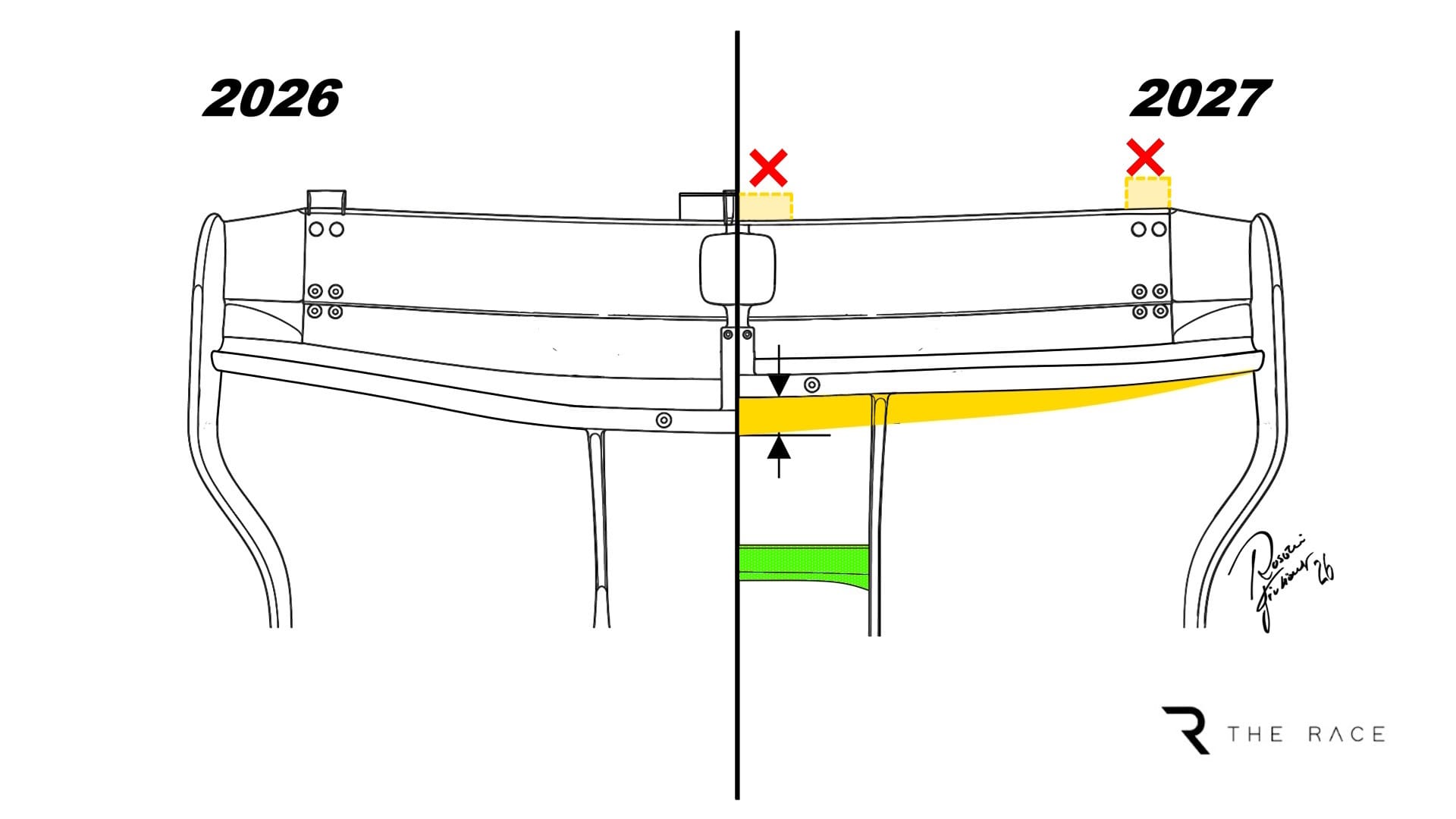
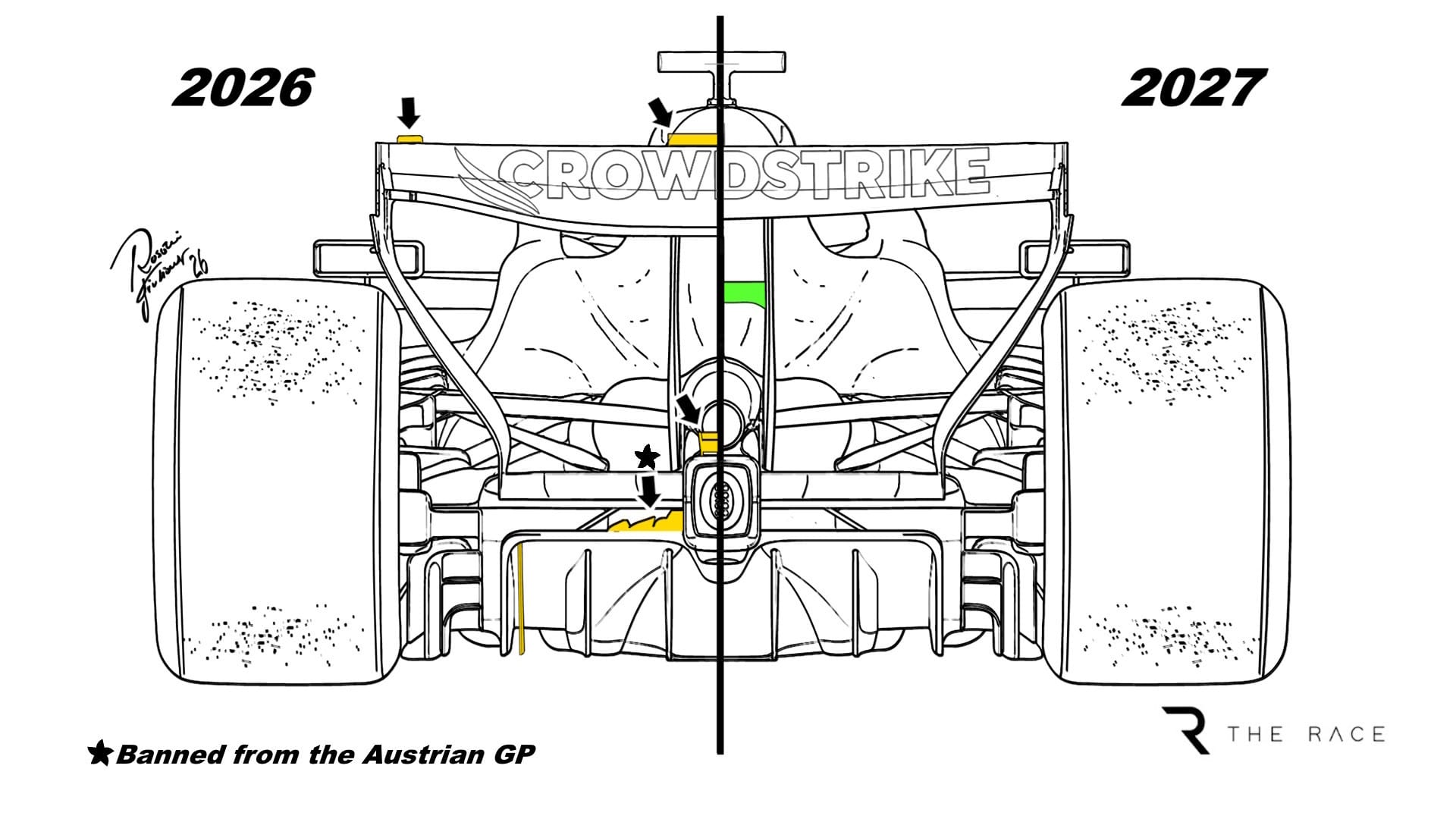
At the back of the car, the rear wing dimensions are changing to make them less effective.
The wing will be slightly shallower by around 20mm, while the ‘rotation brackets’ that a host of teams are running above the upper element will no longer be allowed.
Not everything is being taken away though, with a new rear wing pylon brace allowed for next year that will sit between the supports.
This will likely be used to create some monkey seat-style wings.
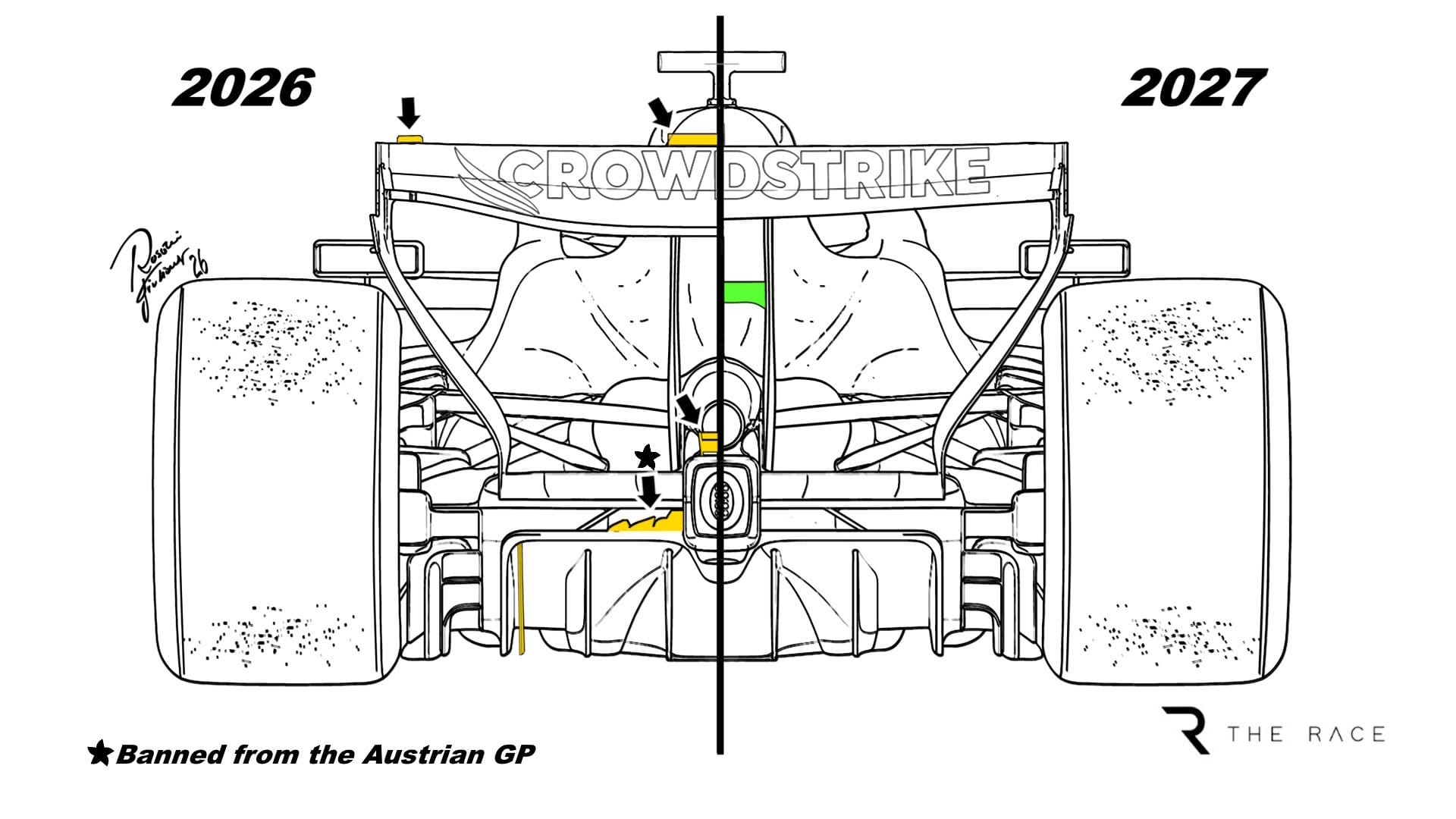
Included as part of the changes for 2027, although not directly related to improving energy management, is a ban on exhaust wings as well as some tidying up of the diffuser rules.
The exhaust wing concept was pioneered by Ferrari and copied in a different way by other teams over the course of this season.
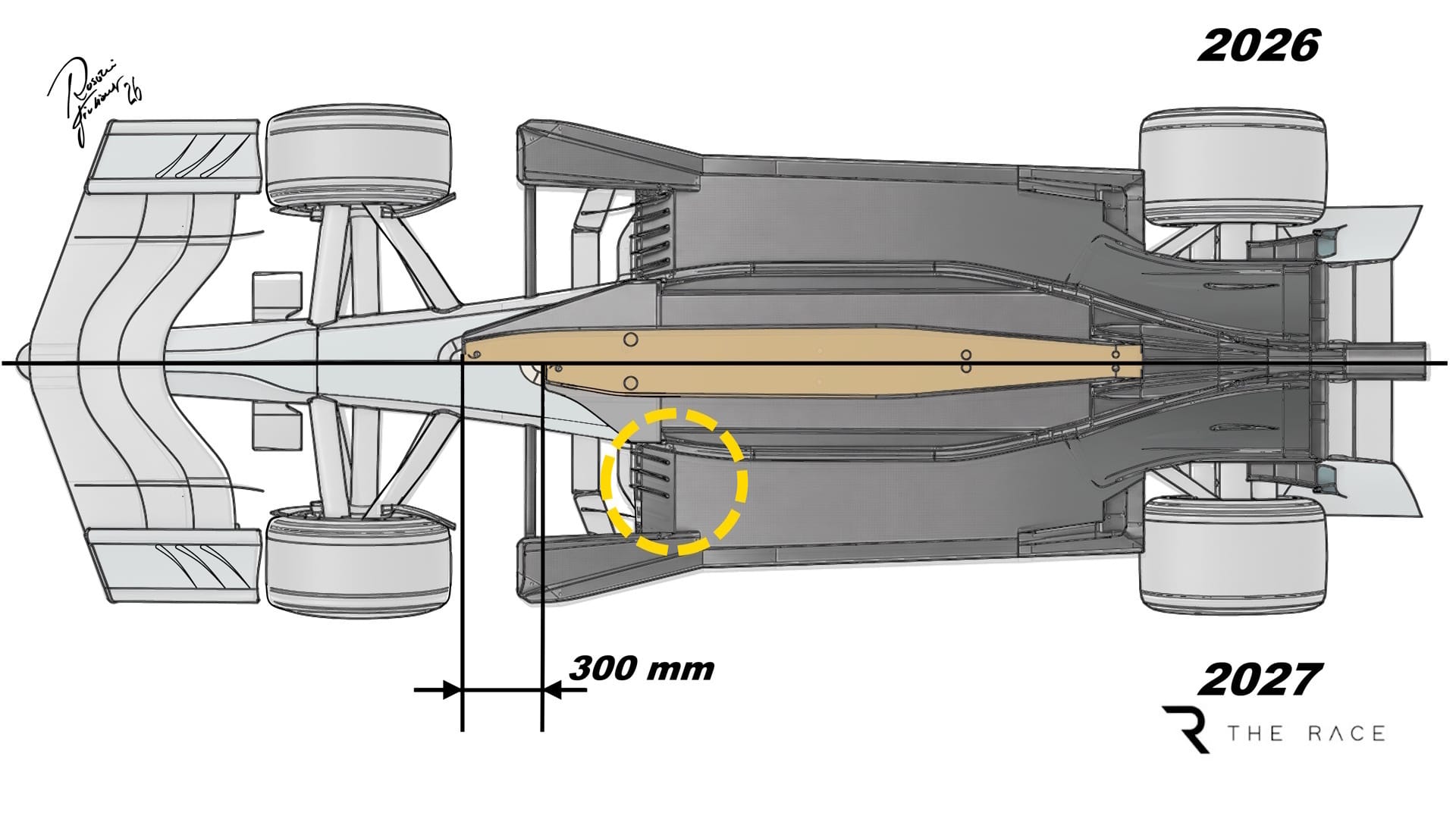
Towards the front of the car, the FIA is also reducing the maximum allowance of what is known as floor leading edge devices from five to three.
Underneath the car, there is going to be a big reduction in the length of the plank – with the front section being reduced from 900mm in length to 600mm.
This change has been partly fuelled by concerns the FIA had about the length of the bibs underneath the nose section this year, which it felt risked penetrating the area inside the halo if a car was lifted up in a crash.
Why the changes have such an impact
While the revisions to the rear wing and the floor leading edge devices will involve new design work, it is the change that cannot be seen – to the plank – that could trigger the biggest headache for teams.
The reduction of the leading area of the plank will result in the bib tray being pulled back – and that will have implications when it comes to ride height.
The plank is used as a means of dictating ride heights, as teams know they cannot run too low in case they risk wearing it out.
So under the current rules, with a long front plank area and bib tray, teams have to be relatively conservative in terms of how they pitch things.
That may not be the case next year when the plank is shorter and Aston Martin technical director Adrian Newey recently used the same “significant” word when referencing the rule change's impact.
“The leading edge has been moved by about 300 millimetres, which allows you to run the front of the car lower,” he said. “That brings a different set of aerodynamic characteristics.
"The key one for us is that front‑of‑floor change. It gives everyone a different aero challenge to solve.”
With Aston Martin not having got things spot on with its 2026 car, Newey sees some clear opportunity for his team in potentially exploiting a different aero window for next year.
“Because we've effectively been forced to grow up quickly as a team over the last 12 months, we're in a much better place to capitalise on the regulation changes than we would have been a year ago,” he said.