How Mercedes' qualifying trick exposes where Russell is losing
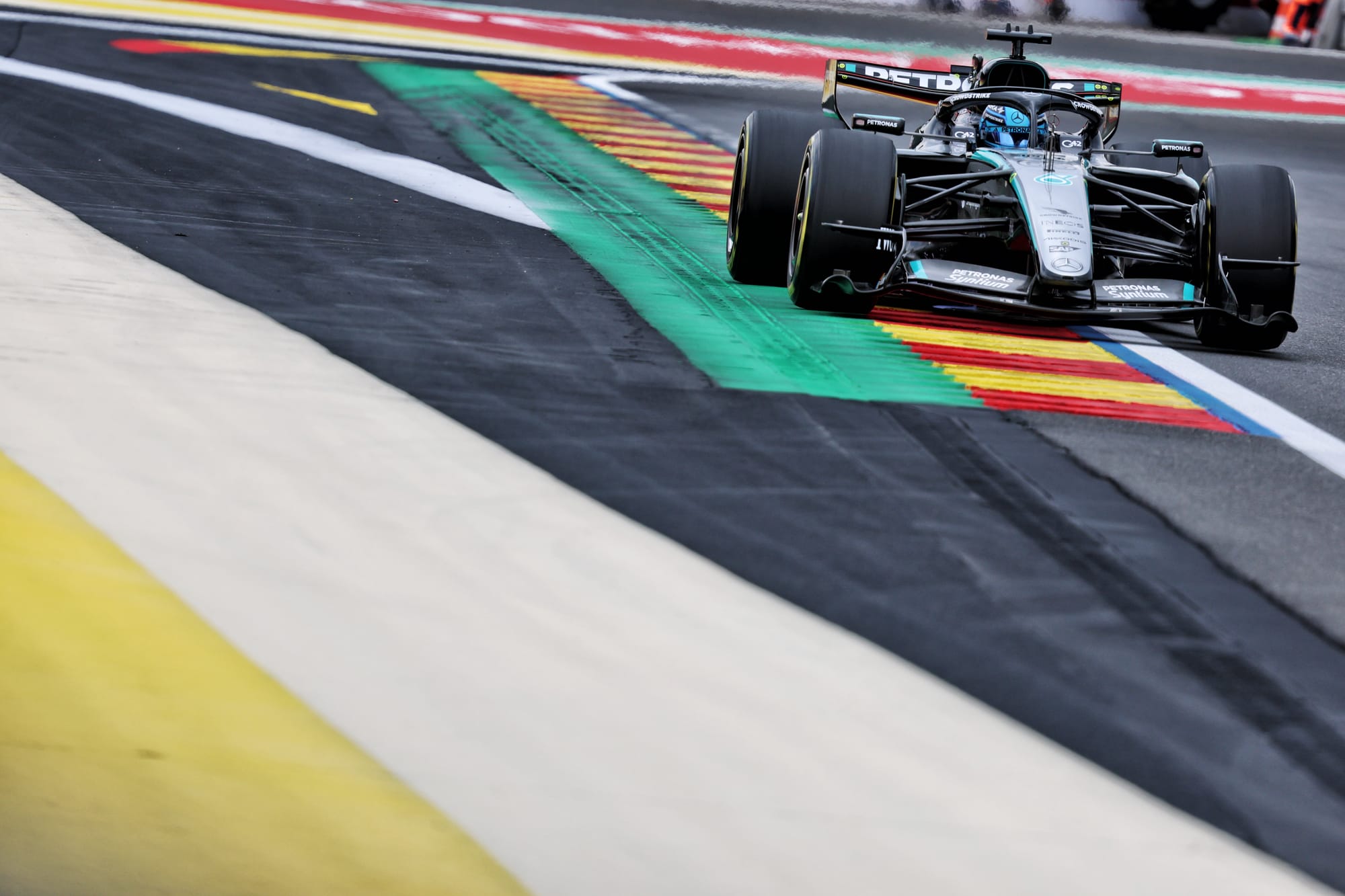
Even taking into account that the current generation of Formula 1 cars do not suit George Russell's driving style, the 1.285-second gap to Mercedes team-mate Kimi Antonelli in Belgian Grand Prix practice was unusual.
While Russell has benefitted recently from some misfortune on the other side of the garage to close the championship points deficit to his team-mate from 68 points to 25, he is well aware that unless he starts putting himself at the front of the field there is little hope of marching on to the crown.
So to face such a sizeable pace gap on the opening day of practice in Belgium, especially at a venue where 12 months ago Antonelli himself had appeared to be totally lost, was not the start to the weekend Russell needed.
While wiping away such a deficit in pace is never the work of the moment in F1, a dive into the data of the two Mercedes cars from Friday has offered some insight into what may be going on.
And a potential clue about just where Russell may be losing out the most to Antonelli has come thanks to the team continuing to use its much talked about qualifying trick to maximise deployment across the timing line.
Maximum deployment
Just like at Silverstone a fortnight ago, both Russell and Antonelli were lifting off the throttle at Spa-Francorchamps before the end of their quickest laps to avoid the need to follow the typical ramp down rates.
Analysis of their fastest laps from free practice, however, shows a huge divergence in when the pair of them come off the throttle – which is at a point when their battery pack is as close to 0% as Mercedes is comfortable with.
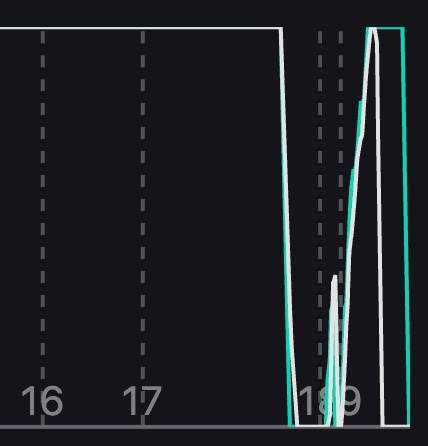
As this graph from GP Tempo shows, Russell comes off the gas around 70 metres before Antonelli – which costs him heavily as the gap between them expands by 0.4 seconds (which is one third of the overall deficit around the whole lap) in the remaining time it takes them to cross the line.
The offset here is interesting because of the circumstances in play.
Because both drivers will have arrived at the final chicane with empty batteries, and run at the full 350kW coming out, their points of lift off before the line are directly related to how much energy they have managed to harvest through the final chicane – so it is clear Antonelli has done a better job here.
And that snapshot given to us by the exit from the final corner may well explain what is going on around the rest of the lap where Russell is clearly losing time on the straights.
Straightline losses
If we look at Russell and Antonelli's fastest laps using the F1TEL graph below, Antonelli's top speed is a step ahead – and most of Russell's time is lost when at full throttle.
From the exit of La Source up to Les Combe, Russell goes from being three tenths up to 0.175s down. Is a clue to this the wheelspin that Russell encounters on his way out of the hairpin at the start of the lap?
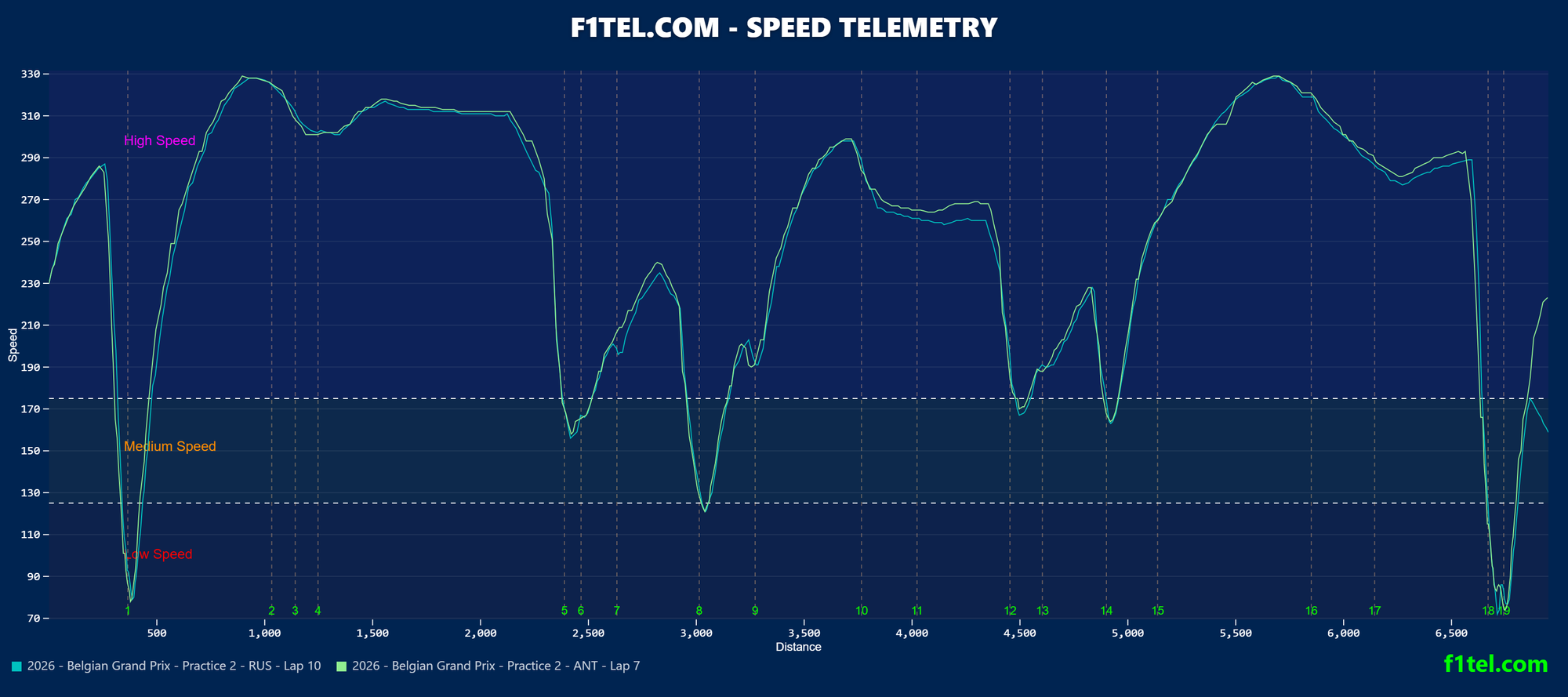
Another 0.175s is lost between Turns 6 and the entry to Turn 8 (where again there seems to be a lift off correction), and then between the entry of Pouhon and the entry of the Fagnes Chicane, where a speed deficit of up to 8km/h loses him nearly 0.2 seconds.
More time then bleeds on the run down through Blanchimont and towards the chicane where again the speed differences are notable.
That so much time is lost on the straights fits in with what we saw out of the final corner – that Russell has less energy at his disposal because he has not harvested as much as Antonelli.
This was made clear in radio conversations with his engineer Marcus Dudley who pointed out that Russell had not got to the top of his battery pack at Turn 14 – the final chance to harvest before the long run down to Blanchimont where a lack of energy gets punished with a lack of top speed.
The key then is for Russell and Mercedes to understand why the difference is there?
In FP1, Mercedes discovered a problem with one Russell's fuel flow meters, which had left him down on power compared to Antonelli. That matter was sorted for second practice.
The FP2 deficit appears more to be down to something else – which could be related to the characteristics of the current generation of cars that Russell does not like.
Judging the grip
Thanks to F1 2026's rules, energy deployment on straights is so interlinked with how a car performs in a corner. The cars do not like sliding around a lot, with wheelspin and an aggressive driving approach. All that does is needlessly waste energy.
Being smooth and consistent is the key, and that requires a mastery of perfectly judging grip levels to maximise energy harvesting. Fall outside the window, you don't recover as much or you deploy too much on the way out and the lap is ruined.
Shovlin admits this was an area that Mercedes had got wrong across both cars in FP1. The team had anticipated there being more grip than there was in reality – and contributed to its struggles as it was not running as much downforce as it needed.
In the afternoon, Russell was not as on top of the change of grip as Antonelli, which helped compound some of the problems he was facing.
Straight after his soft tyre run, Russell complained about sliding a lot. Shovlin explained: "If the corners are slower, it affects the deployment. And, when you're at an energy-starved track like this one, like Silverstone, those differences are really magnified."
Get those corners more under control with the entries and exits and then the straights that follow after will be better too.
Context matters too
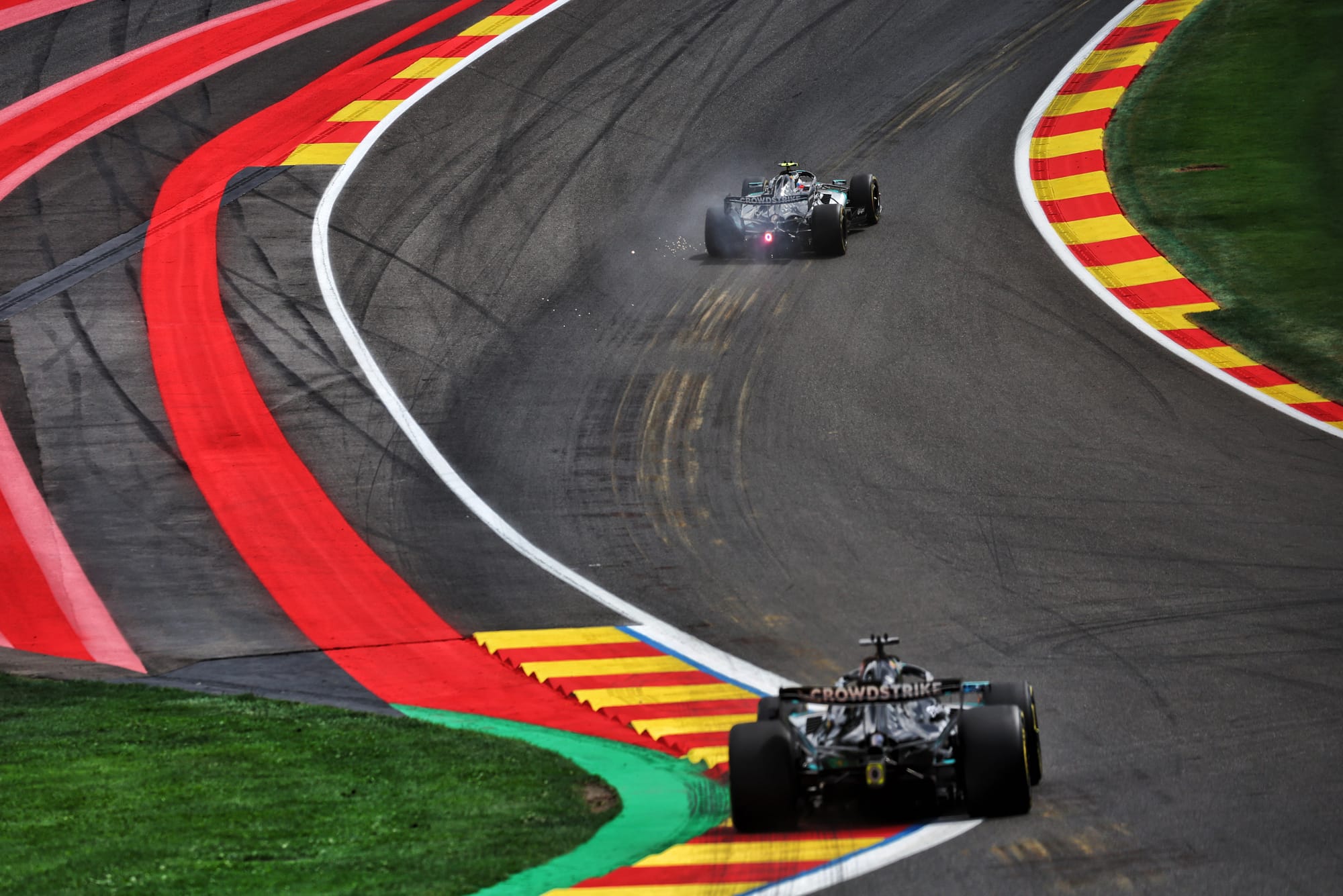
There is another important element in play in putting that 1.2 seconds deficit into context as well.
It is that Russell's sizable deficit to Antonelli is based on just a single soft tyre run that had gone wrong even before it had really got going – so was not properly representative.
Shovlin said: "It was only one lap - so if that doesn't go well, you look like you're off the pace.
"He felt he didn't have the tyres ready for the start of the lap, which leads to a bit of a loss.
"There's a few corners where it looks like he might have underestimated the grip level - but given the first session that we had it's not a big surprise."
The answers then to Russell's straightline deficit and the top speed gap to his team-mate may well then come in how he approaches the corners and getting on top of the changing grip levels.
And the perfect snapshot for us to see if he has mastered it on Saturday will be in spotting just where both Mercedes drivers lift off the throttle at the end of their laps.