The reality of funding the world's oldest racetrack
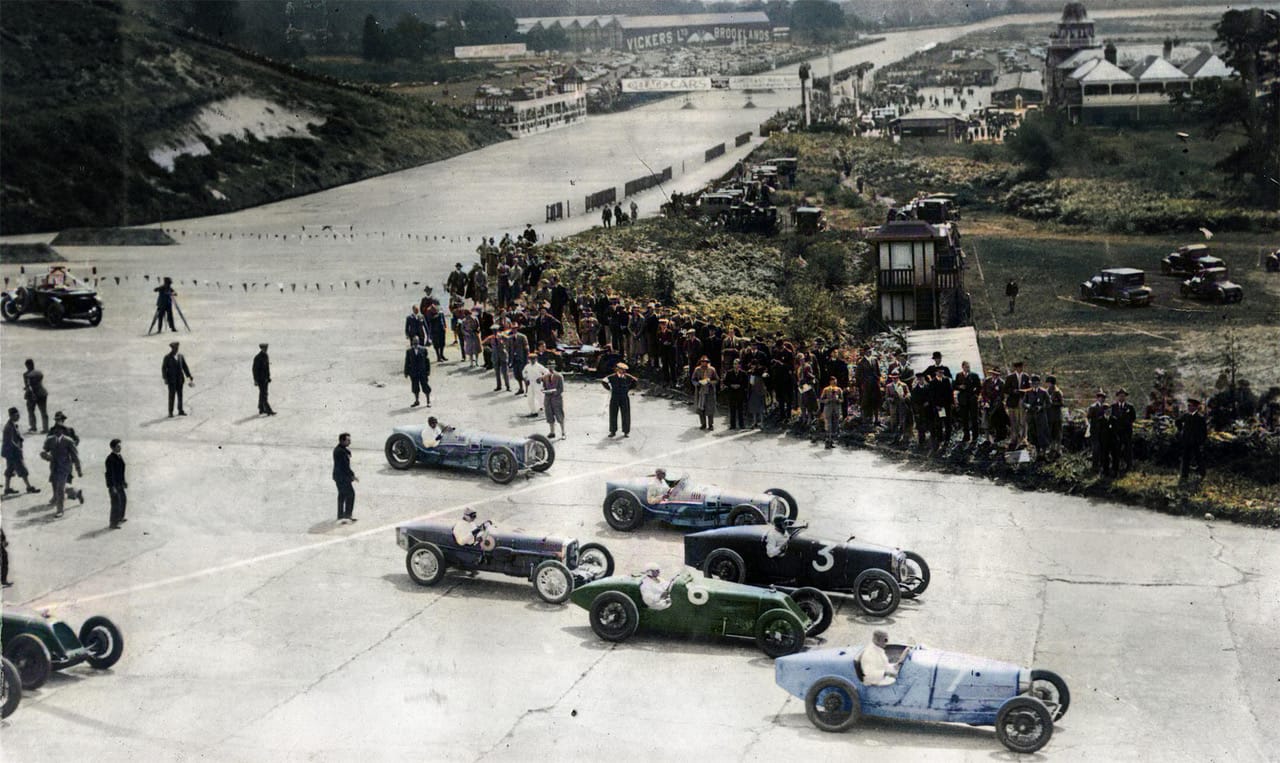
How does the world's oldest purpose-built racetrack stay relevant, interesting and, most importantly, financially stable after 119 years?
Brooklands Museum celebrates 100 years since it hosted the first British Grand Prix in 1926 with a new exhibition and a landmark event in August.
The Grand Prix Centenary event, set to take place on August 8, is sold out - which is an impressive accomplishment for a circuit that hosted its last race in 1939.
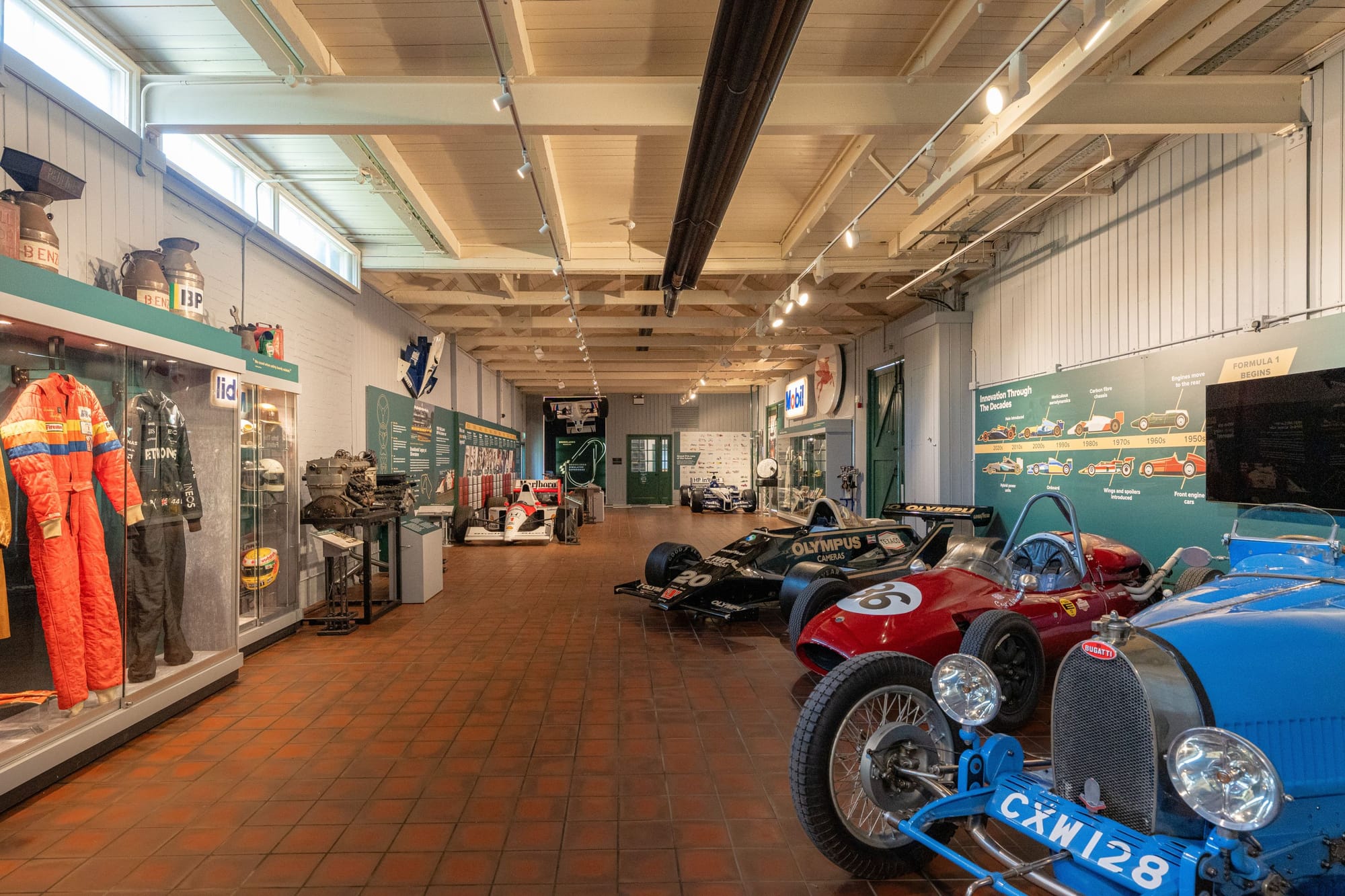
However, Brooklands hosts a museum detailing Britain's motorsport history - plus a new exhibit on the first British GP - within the banks of its old circuit, as well as a collection of aircraft and numerous exhibits charting the history of Brooklands as a crucial aircraft construction facility during the World Wars and then an airfield.
Its relevance to British history is clear, but Brooklands could well have faded into obscurity if not for the work of the Brooklands Museum Trust.
"The museum was set up in the mid-1980s but it really opened to the public in 1991, and it's run by a charity," explains Brooklands vice president Allan Winn.
"We have to remind people on a constant basis that we're a receiving charity, not a giving charity, so we have always had the challenge of raising enough money to keep the place going and more importantly keep on improving it."
In 1999, for example, the building that holds the new British GP exhibition (the Jackson Shed) was derelict.
Winn adds that the clubhouse at Brooklands was the only restored building when the museum first opened, and one-by-one the trust has secured funding to restore other buildings including the hangars that hold its Hawker Harrier and Vickers Wellington aircrafts, the second of which was designed at Brooklands in the 1930s.
More buildings are set to be restored, but, as Winn says: "It's always been challenging. We can cover the running costs through people coming in through admissions, through an enormously successful membership programme where people are effectively buying an annual ticket, but they're also supporting the museum by doing that in a direct way."
Trading profits from Brooklands's on-site events space also helps fund the site, but Winn says that Brooklands has to go further.
"Yes, people say, 'Go to the lottery'; we do go to the National Lottery.
"The lottery has been absolutely brilliant, and also they've been really adventurous in seeing new ways of supporting heritage so, for instance, the Napier-Railton [racing car built in 1933] was the first moving object that the lottery ever funded. Until then they thought heritage was buildings, and so they had to rewrite their internal rules."
In 2015, the National Lottery's heritage lottery fund (HLF) granted £4.681million to Brooklands Museum to revamp its aircraft factory and racetrack.
"They've helped us buy aeroplanes and they helped massively, but every time you raise money from the lottery you've got to provide the matching funding from other sources," says Winn.
That's because the National Lottery grants typically come with such match-funding requirements. The recipient must match - to a specified ratio - the money received from the National Lottery to receive the money.
"And that's the biggest single challenge we have is attracting the other half of whatever capital fund you're trying to raise: getting that from the private sector, from individual donors, or from industry. It’s very difficult to actually get money directly from industry these days but that's what we have to do," says Winn.
The Arts Council and the local Surrey Council have also donated to Brooklands while the National Lottery's HLF has continued to grant money - with £194,500 donated to Brooklands most recently this year.
Winn's tone is constructive rather than frustrated.
He says that when he took over as chief executive in 2003, Brooklands had an "established corporate giving programme" with around six automotive and aviation manufacturers paying an annual sponsorship fee.
"Now, that all dropped away in the early years of this century," he adds.
"That had dropped away well before COVID and it certainly wasn't helped by things like the 2008 [financial] crash.
"So we went into COVID in a fairly strong position; we'd had 20 years of rising attendances every year, breaking the record."
The pandemic added uncertainty, as it did for almost every business, but Brooklands bounced back well with support from the National Lottery - which granted £250,000 through its Heritage Emergency Fund - the Arts Council, and private donors.
The Brooklands Museum Trust's most recent filing to the charity commission of England and Wales shows that, in 2024, it had a total income of £5.74m but a total expenditure of £5.92m.
Of that income, £816,280 was from donations and legacies, and a massive £3.02m from charitable activities; of its expenditure, £4.36m was spent on achieving its objectives as a charity (charitable expenditure) and £1.57m was spent on raising funds and other expenditure.
Chief executive of Brooklands Museum, Alex Patterson, says that a limited budget is a positive, "because it pushes you to do the best you can, and you have to make choices on that side of it".
"But it's difficult. As a charity, running a 32-acre site, 20-plus buildings, a car collection of over 40,000 collection items, an archive of over 40,000 [items], seven large aircraft liners, your money's tight, and you can't manage to spend it on absolutely everything. So you have to make choices and do it.
"Our visitors are very loyal. We're slowly building our visitor numbers, but we need to give them something new, a reason to come back."
Brooklands's responses come in the form of that new British GP exhibition and its following centenary celebration in August.
"For us, to be able to update our story and show relevance and connection to the future is so important as a business, to be able to bring people back and give them that exposure and understanding," concludes Patterson.