Aston Martin unveils 16-part F1 car upgrade for Hungarian GP
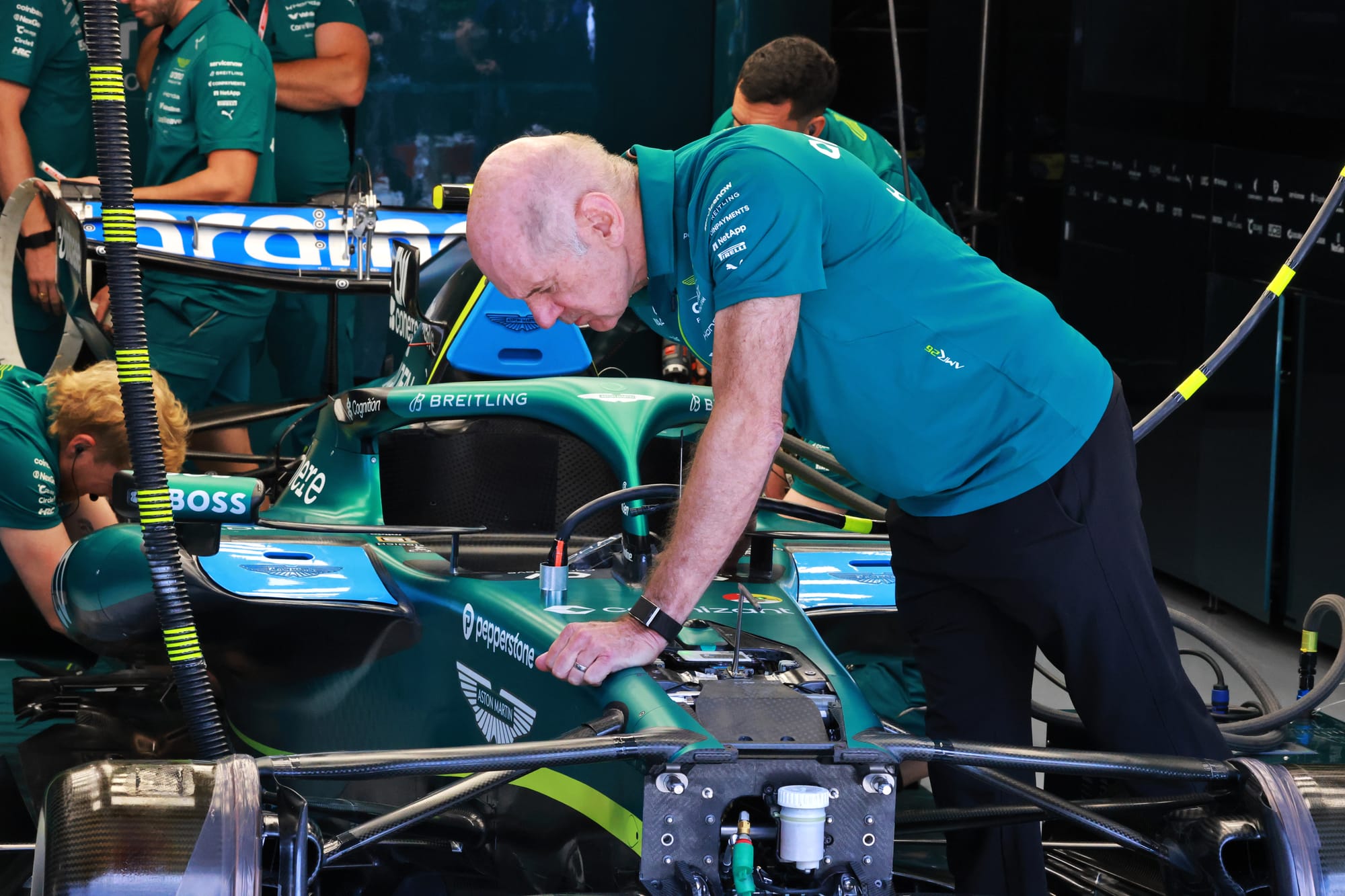
Aston Martin’s long-awaited B-spec F1 car upgrade has been outlined ahead of the 2026 Hungarian Grand Prix.
The team’s upgrade descriptions essentially herald the arrival of a brand-new car with another extensive upgrade package set to land at Zandvoort.
There were 16 upgrades declared at the Hungaroring. The nose and front wing were grouped as “a package to improve the performance of the front end of the car in combination with the other car updates”: a reshaped front wing and front wing endplates plus a “longer, thinner nose”.
External front brake ducts have been shaped to complement the front wing to manage flow around the front wings.
Four floor updates were categorised together “as a package to increase the load on the floor”. The floor body has seen changes to “all of the permitted surfaces” while floor leading edge vanes and the floor edge ahead of the rear tyre have also been modified. The diffuser has also undergone a holistic update.
Next, Aston Martin declared upgrades to the sidepod inlet - “revised in line with the bodywork package” - and the coke section and engine cover, which have undergone “subtle changes”. The sidepod and engine cover have been updated to enhance airflow to the rear of the car and complement the new floor.
The team described its new cooling louvres as “conceptually similar” - presumably to the rest of its car. The rear suspension and rear corner have seen “subtle changes” and were developed in tandem.
As for the rear wing, its dimensions have been "redistributed between the three elements” with winglets added to the trailing edge of the rear wing’s flap. That forms part of the rear wing updates that “increase corner mode load while reducing straight mode drag” as well as aligning with the rest of the car’s updates.
The rear wing brace and rear wing endplates have been completely redesigned.
McLaren upgrade part one
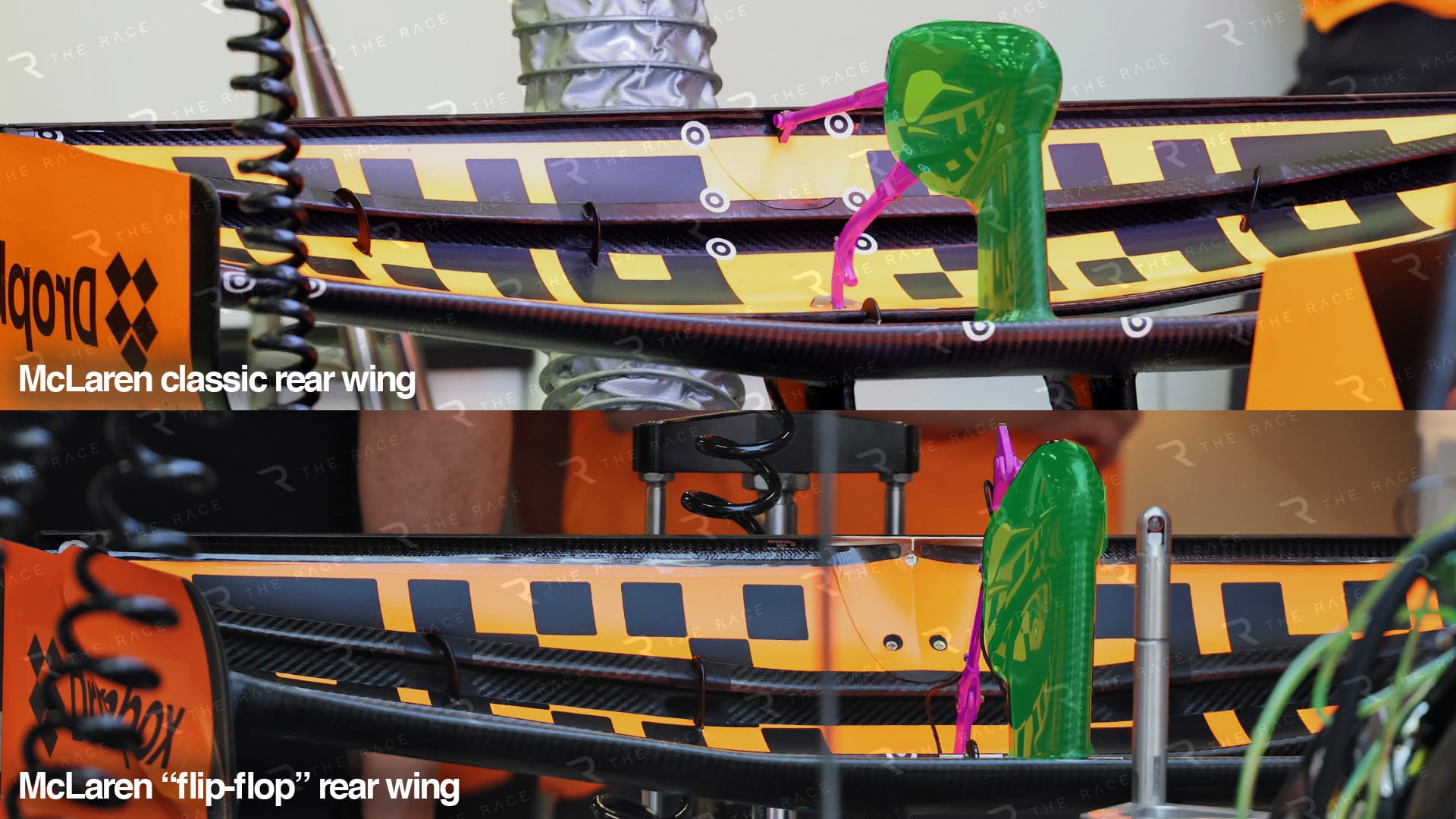
McLaren’s list of declared upgrades was smaller - but also represents the first of a two-part development package that will carry over to Zandvoort.
The team brought revisions to the rear wing endplate, as well as a new floor and board. Furthermore, it revised “front corner furniture” to improve airflow around the front tyre and improve brake cooling - with a larger front brake cooling exit - as well as a revised rear corner to improve aerodynamic load.
Further rear wing overhauls
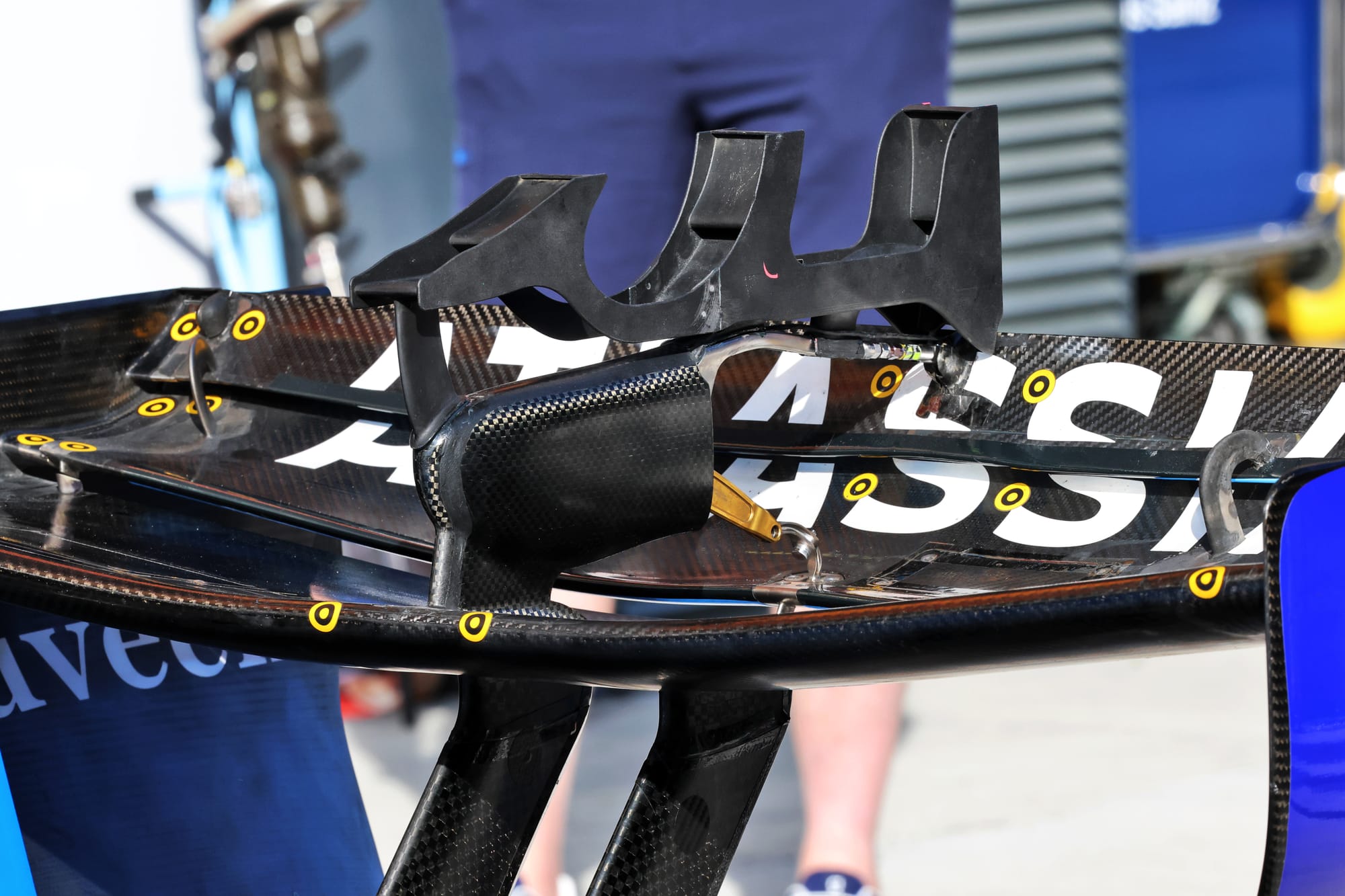
Given Hungary’s layout, numerous teams brought rear wing updates.
Mercedes added an additional central winglet and tail winglet - the latter merged into its rear wing brace - for extra downforce and drag as well as a wider engine cover exit for better cooling.
Red Bull revised the camber and chord of its rear wing flaps and revised the rear wing pylon for more load and stability. The Red Bull’s diffuser has also been expanded for more local load.
Ferrari has added trailing edge devices to its rear wing, reshaped the endplates, and given itself an “optional winglet cascade” for more downforce if needed.
Williams (above) has introduced new flap geometries and modified floor winglets near the rear corner.
Racing Bulls meanwhile has added rollhoop winglets as well as updating rear wing flaps and geometry.
Haas has modified its straight mode fairing and added an “aggressive” Gurney flap to the rear wing.
Audi’s rear wing endplates have been changed and Cadillac has enlarged front brake cooling ducts.
Alpine, meanwhile, has not declared any circuit-specific or general updates.