Everything we learned from F1's Hungarian Grand Prix
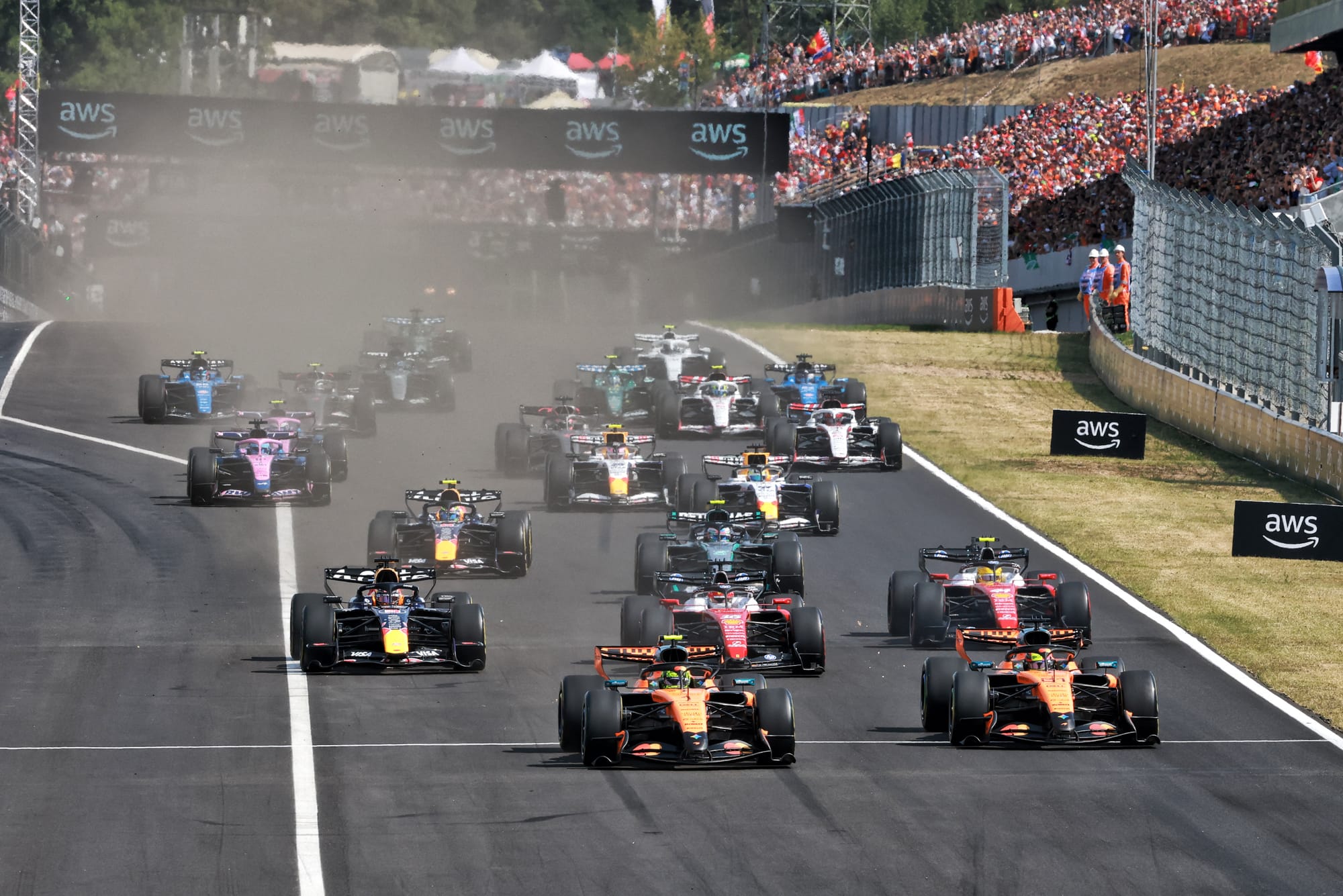
All the main Formula 1 title contenders tripped up in one way or another in this year's Hungarian Grand Prix, while Aston Martin's 'B-spec' chassis made a big impression despite not really fighting for points.
Here's what we learned from the final race before the summer break.
Ferrari's had its most painful 2026 miss
Ferrari team principal Fred Vasseur could not hide his disappointment after the Hungarian Grand Prix when, on a weekend where his squad had the potential to finish 1-2 (and had been in those positions after Friday), it came away without a place on the podium.
Just as success in F1 is about getting a lot of details correct, so too can failure be the result of myriad small errors cascading a team into deeper trouble.
It was this story of its Hungaroring weekend that perhaps made it Ferrari's most painful defeat of all this season - because it had everything in its hands to do so well. The SF-26 looked to be super-fast and would likely have given race winner Lando Norris a tough time if it had found some clean air.
When Ferrari does its post-weekend analysis, it will know that its alternative run plan in qualifying, the communication error that earned Lewis Hamilton an impeding penalty, poor starts, giving up track position, tardy pitstops and a pitlane speed limit offence were all things that it should have done better with.
If Ferrari wants to win the championship this year, it cannot let opportunities like this slip through its fingers.
Russell can't catch a break despite glimmer of hope
While a rev control problem on the grid triggered George Russell's nightmare start that continued his run of disappointments, there was at least a small glimmer of hope about one issue that has dogged him.
Off the back of the dark place he found himself in after the Belgian GP, where deployment problems had left him despondent, some software tweaks by Mercedes plus running on a more energy-rich circuit meant he was no longer scratching his head about straightline-speed deficits.
Whether those energy woes are fully put to bed won't be known in full until F1 next goes to a properly energy-starved track (Monza is not so far away), but there is at least more hope now that the worst may be behind him.
However, as that start showed, this seems to be a year where if something can go wrong for Russell it inevitably will.
Reflecting after the race about his level of exasperation, he said: "I've never had a season like this in my whole career, let alone my F1 career."
Why Red Bull has a 'degradation' issue
When we talk about 'degradation' in F1 it is often linked to tyres and how best to manage temperatures or wear over the course of a race.
Red Bull found out the hard way in Hungary that its RB22 is susceptible to a bit of aerodynamic degradation, too, after Max Verstappen bemoaned how its worse and worse handling had left him battling something "completely undriveable" before his Q3 spin.
Speaking on the team radio immediately after the session, Verstappen had said: "Mate, the car is just completely broken aerodynamically, it's just getting worse and worse. What a joke. What. A. Joke, honestly. What a s**t weekend."
The root cause of his problem appears to be that the RB22 is very sensitive aerodynamically, so anything that affects how the airflow is manipulated around the car can have big consequences in terms of its balance and feel.
Verstappen - who of course went on to finish second - appeared to have picked up some damage through qualifying as part of the kerb abuse that is key to a quick lap around the Hungaroring, with those broken parts affecting the aero and putting the performance out of kilter.
While Red Bull was able to make repairs for the race that made things better, a more permanent solution is either to make parts strong so they do not break or to adjust the aerodynamic mapping so it's not so sensitive and can operate at its peak around a wider operating window.
One of those solutions is much easier than the other - but comes with a weight penalty.
Aston Martin is putting the fear into the midfield
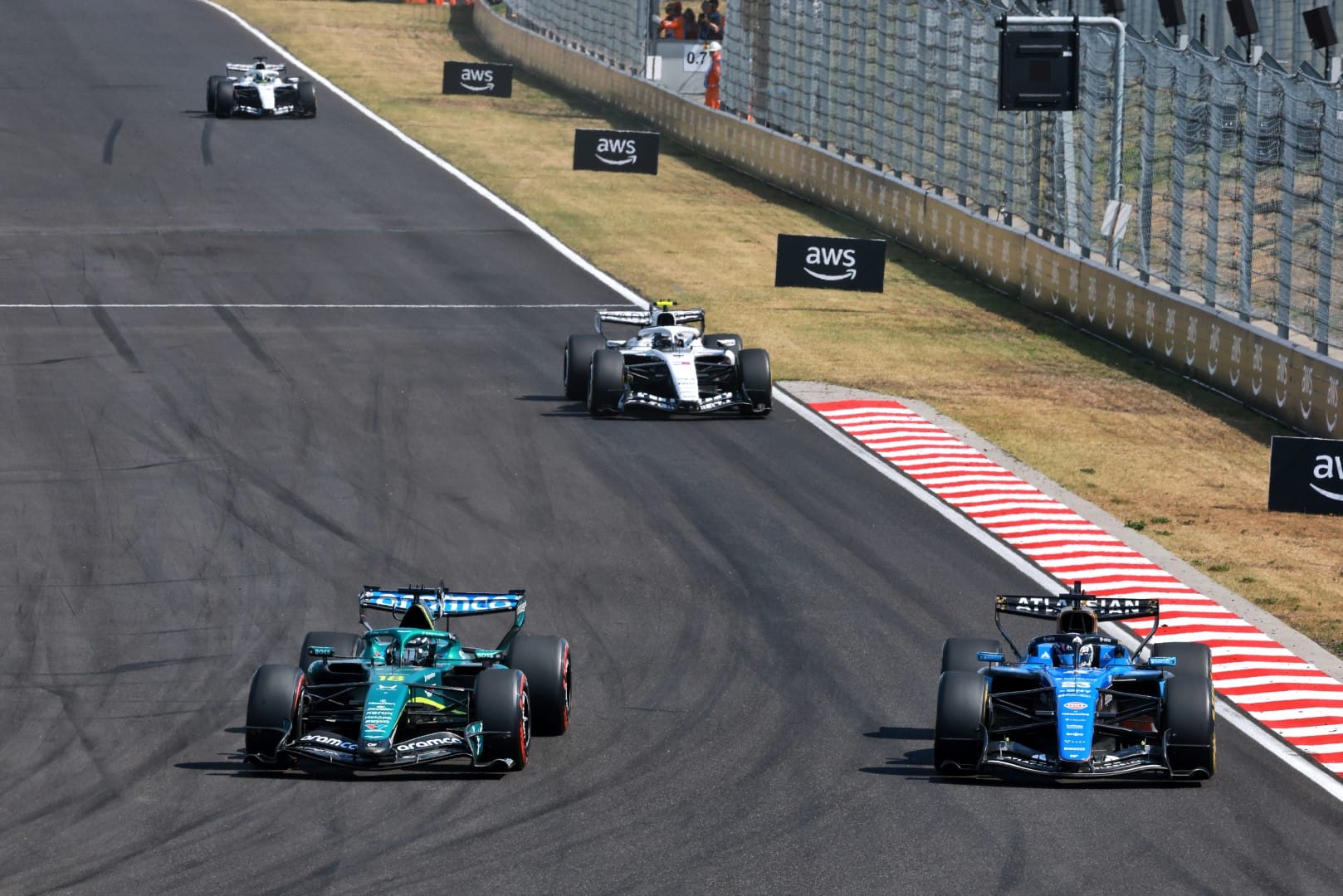
Aston Martin's main rival up to now, Cadillac, was certainly well aware coming into the weekend of the threat posed by the green team's 'B-spec' upgrade. But the Hungarian GP laid bare the fact that it's not just Cadillac that needs to worry.
"We have to give respect to Aston Martin; I don't think our [upcoming] Baku upgrade is at the level of what they were able to put on the car," said Williams driver Alex Albon.
"Unfortunately, it feels like the Aston is going to be fastest for the rest of the year now. I think we're going to be helped out by some circuits down the straights but otherwise, if it's a corner-focused circuit, we're going to be on the back foot."
Team-mate Carlos Sainz also mentioned it at various points during the weekend, as did both Haas drivers. But Aston Martin's infusion of downforce is even giving Alpine something to think about.
"They look really strong in the corners," said Alpine driver Franco Colapinto. "Then on the straights, they are really slow and they are losing a lot of laptime. But in the corners, they are definitely a lot quicker than us."
All these teams were fighting well out of the points this weekend - and all need to improve. But suddenly Aston Martin looks the likeliest to actually do it.
It's Honda's turn now
As is clear even from above, almost every conversation about the Aston upgrade has come with the caveat of 'it's still terrible on the straight'.
This is supposed to be addressed, at least partly, by a highly anticipated Honda upgrade that will run for the first time during a filming day in Hungary before competing at Zandvoort after the summer break.
Fernando Alonso joked there was now "some pressure" on Honda to make a step, and it was clearly only half a joke.
"Nah, I mean, we are one team, we work together," he then insisted. "We know our weakness and we try to help each other.
"It's a long way to go. We understand that, we are aware of that. But this hopefully is the first step and both factories are gaining confidence and trust in what they do."
A step in power will go a long way in helping reinforce that "confidence and trust".
Cadillac's biggest 2026 weakness isn't solved
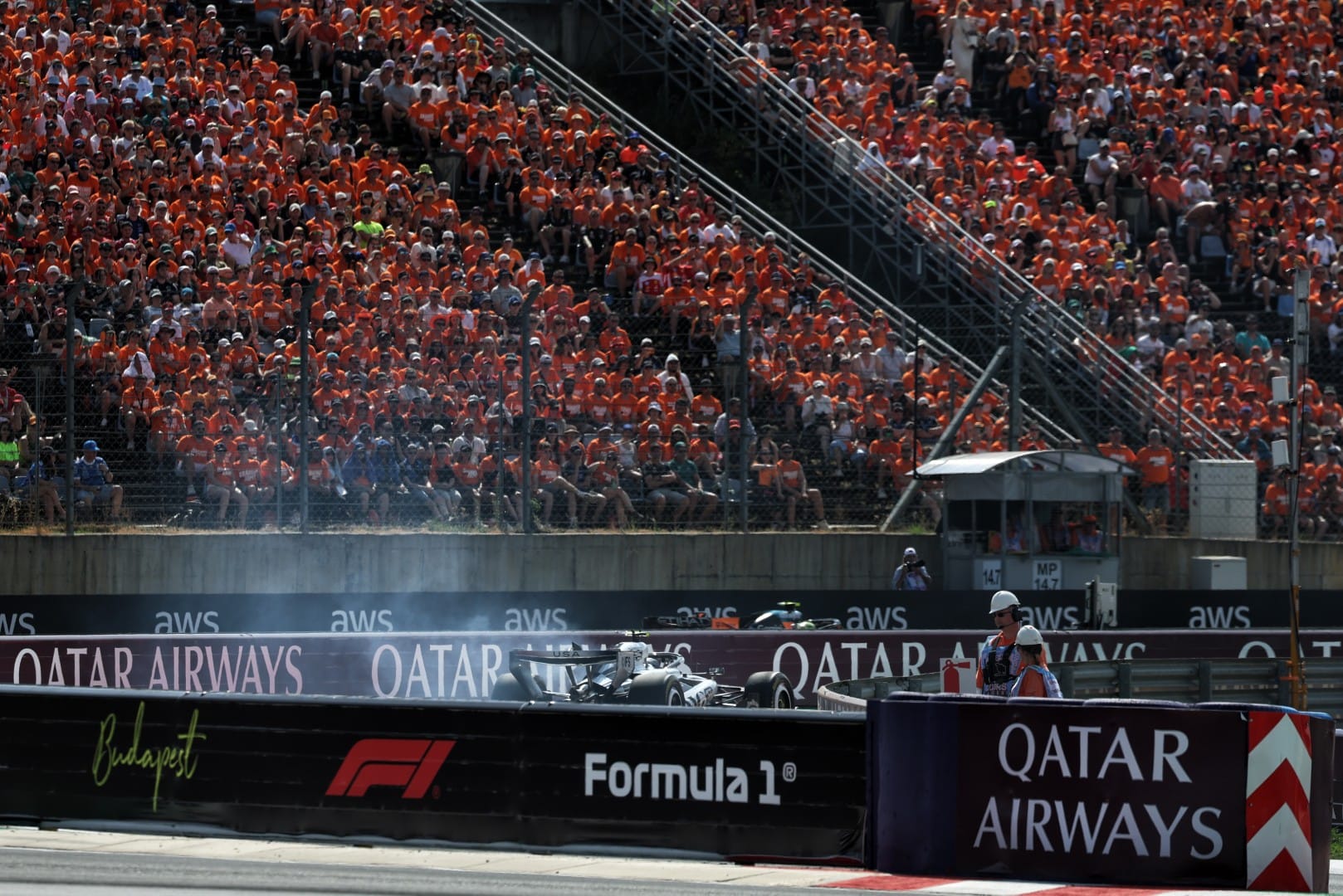
A second reliability-related double-DNF in a four-race span was difficult to swallow, even if - as Sergio Perez reiterated - "obviously, being a new team, you kind of expect all these issues".
2026 DNFs or non-starts
Aston Martin - 11
Cadillac - 9
Rest of field - 6 or fewer
What will be a little more alarming is that the problems appear to be concentrated in specific areas.
On Perez's end, it was a second suspension-related exit in two weekends. For Valtteri Bottas, he said pre-weekend that the Cadillacs probably weren't going to be able to finish without their Hungaroring brake cooling upgrade, then still retired because of brakes.
"The brake issue started, we had to start doing lift and coast. Then we thought we kind of recovered, the team told me to reduce the lift and coast, and then suddenly everything was on fire," he recounted.
"That new front duct was trying to address this issue, trying to prevent it from happening. But clearly we still need more airflow in the brakes."
Haas is consigning itself to one-car weekends
Up until this weekend, though team principal Ayao Komatsu kept emphasising it was happening to both drivers, the Haas car parts consistency issue was much more of a talking point on Esteban Ocon's side. And team-mate Ollie Bearman cautioned on Thursday that his evident performance advantage over Ocon through 2026 was perhaps flattering to whatever the real gap is.
Bearman's graciousness was well-timed because it was he who toiled badly at the Hungaroring while Ocon suddenly felt at ease.
"Getting the car healthy, getting the maximum out of the car this weekend felt good," said Ocon. "There is a lot of stuff on my side that took long, but they are finally on my car as well, which I'm very happy about."
But Ocon also conceded that Bearman was suddenly having "exactly similar problems" as he had had before. "We know that's an ongoing issue."
"We're seeing that the car is not performing as it should," Bearman said. "I feel like I've done a good job, I've done my maximum and tried to get the most out of the car, but the feeling has been, like I said, nothing like what I had in Spa and we're measuring big deltas in terms of loads compared to that event and compared to the other car.
"It's been a horrible, horrible weekend and it's just a sign of how poor we are in terms of consistencies, because if it's not me - which it has been this weekend, and maybe one or two others - it's Esteban's car that is suddenly missing 10-15 points of load.
"So you're kind of just hoping you're going to be on the good side and if you are, you're going to have a decent weekend, and if you're not, you're going to have a really, really long one. We had the long one."