US GP chief's theory for F1 ticket sales boom
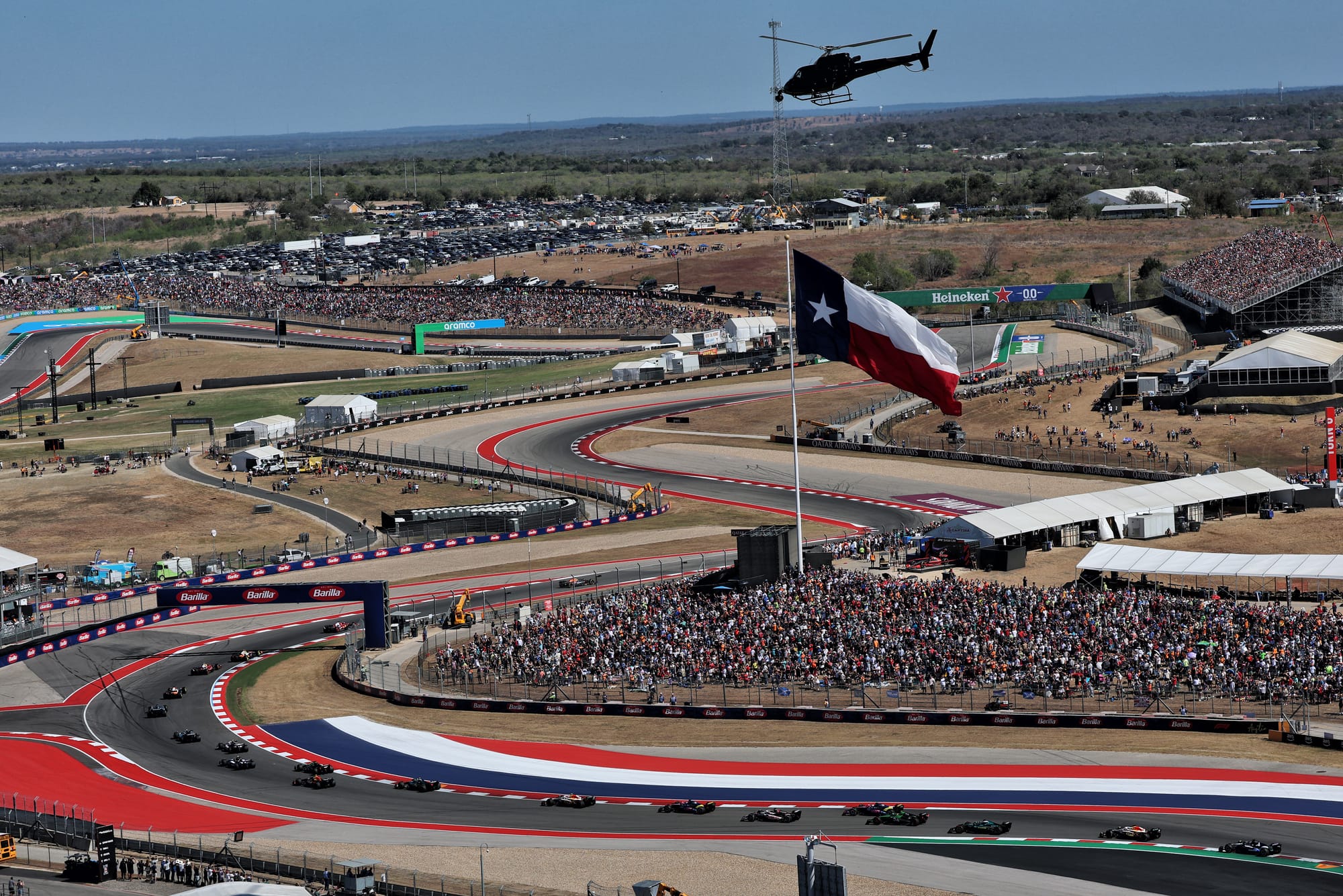
United States Grand Prix boss Bobby Epstein says he has seen no evidence of fans being turned off by the 2026 rules – and has a fascinating theory about why Formula 1’s ticket sales are still booming.
Despite this year’s new regulations being controversial off the back of criticism from drivers, they do not appear to have dimmed interest from those wanting to attend races.
Epstein, who is chairman and founder of the Circuit of the Americas (COTA), says ticket sales for the US GP on October 25 are tracking towards a record crowd at Austin that could be its biggest ever.
This follows a trend this season of six of the 11 races held so far having broken their all-time records.
As well as Australia (484,000), Canada (360,000), Austria (320,000), Belgium (400,000) and Hungary (310,000) all hitting their best ever figures, the British Grand Prix established a new all-time record for the most attended F1 race in history with 564,000 people through the gates.
With 11 sell-out crowds, overall race attendance so far is tracking at 3.7 million – which is 6% up on the similar period last year.
Epstein believes there could be a simple explanation for what F1 has over other sports when it comes to bringing more fans in year on year.
It is that there is a lack of the kind of physical capacity restriction that typical sports stadiums have.
“Because we're not confined by the boundaries of a sports field, we're able to continue to grow the on-site experience,” he said, when asked by The Race about the secrets to F1’s ongoing boom in sales.
“We can add more programming and more things for people to do, and I think that then allows the fan to bring a friend, and that friend can get engaged, and that just continues to work.
“It's much harder to do just in a seated arena or stadium.”
Epstein suggests the upper limit ultimately just depends on how many people a track can get in and out without the logistics breaking down.
That is why he thinks planned highway improvements around COTA will allow it to ramp up ticket sales even more over the next few years.
“We've had good meetings with the highway department, and they've assured us within two years they're improving the roads to get out of here, which would allow us to add 15-30,000 more people per day with additional lanes," he explained.
“We'd love to see that happen because we've got the demand. We're already the most well-attended, largest single weekend sporting event in America annually, and so we'd be happy to extend that lead.”
Part of COTA’s efforts to increase interest this year is the addition of a new Grand PrixView Thursday – which will allow fans to experience a pitlane walk for $20, watch F1 Academy and explore attractions around the venue.
Action matters more than rules
While F1’s 2026 regulations have not been a hit with all fans, especially the more hardcore audience, Epstein says that there has been no sign of a reluctance by people to attend the US GP – which he says would be a first indication of concern for him.
“It hasn't hurt our ticket sales this year,” he said about the impact of the new regulations. “We're actually on pace for a record year. We are seeing massive demand, and could easily break our prior year record.
“So, from that standpoint, that's the first place I'd look and say, how are the fans responding?
“I think a lot of our fans are fans of our event as much as they are of the sport itself, so some of that [criticism] is probably anticipated noise that you have from a year where you have a major overhaul in the rules.
“You're going to have that noise and it'll level itself out. I think most fans are aware of that.
“From the promoter standpoint, if suddenly I saw our ticket sales had fallen off, I would sound some bells and alarms and wonder what's going on.
“But I think what we're seeing is massive interest in the event, and so I'm not as focused on the rules and regs that affect the competition.”
Epstein felt that the top line element that fans wanted to see was action – and that the best driver and car came out on top rather than results being too ‘quirky'.”
“For the majority of the crowd, they want to see on-track action,” he said.
“I think for the long-term health of the sport, it can't be quirky.
“I think F1 and the FIA are aware of that, and I think they continue to make adjustments to ensure that the competition stays genuine.”
Why an F1 return after Vegas wasn’t on cards
Despite rumours circulating at the Hungarian GP that Austin was one of the options for F1 to finish the season if the final races in Qatar and Abu Dhabi cannot happen, that has been ruled out.
F1 CEO Stefano Domenicali made clear on Wednesday that speculation over Austin was wide of the mark because the idea is to finish in Europe after the race in Las Vegas.
Epstein said that the idea of a return to Austin after Las Vegas had never been broached with him – and was not something that he would have been particularly interested in.
“I wouldn't want to see our track host an F1 race and not have the massive crowds in the scene,” he said.
“I think it's part of what makes it so special, and I don't think logistically you can put that together in such a short back-to-back with our US Grand Prix. I wouldn't want people to have to choose between the weekends.
“I'm very happy with our mega, mega weekend as it is, and that's the way it should always be. I don't want it to be less than that.
“But I would say if it helped F1, we'd be here to do that, and we want to do whatever we can to make them a success. I understand that sometimes, just as we saw during COVID, circumstances dictate you do things a little differently than you otherwise think ideal.”