F1 teams rejected fix for a big 2026 driver complaint
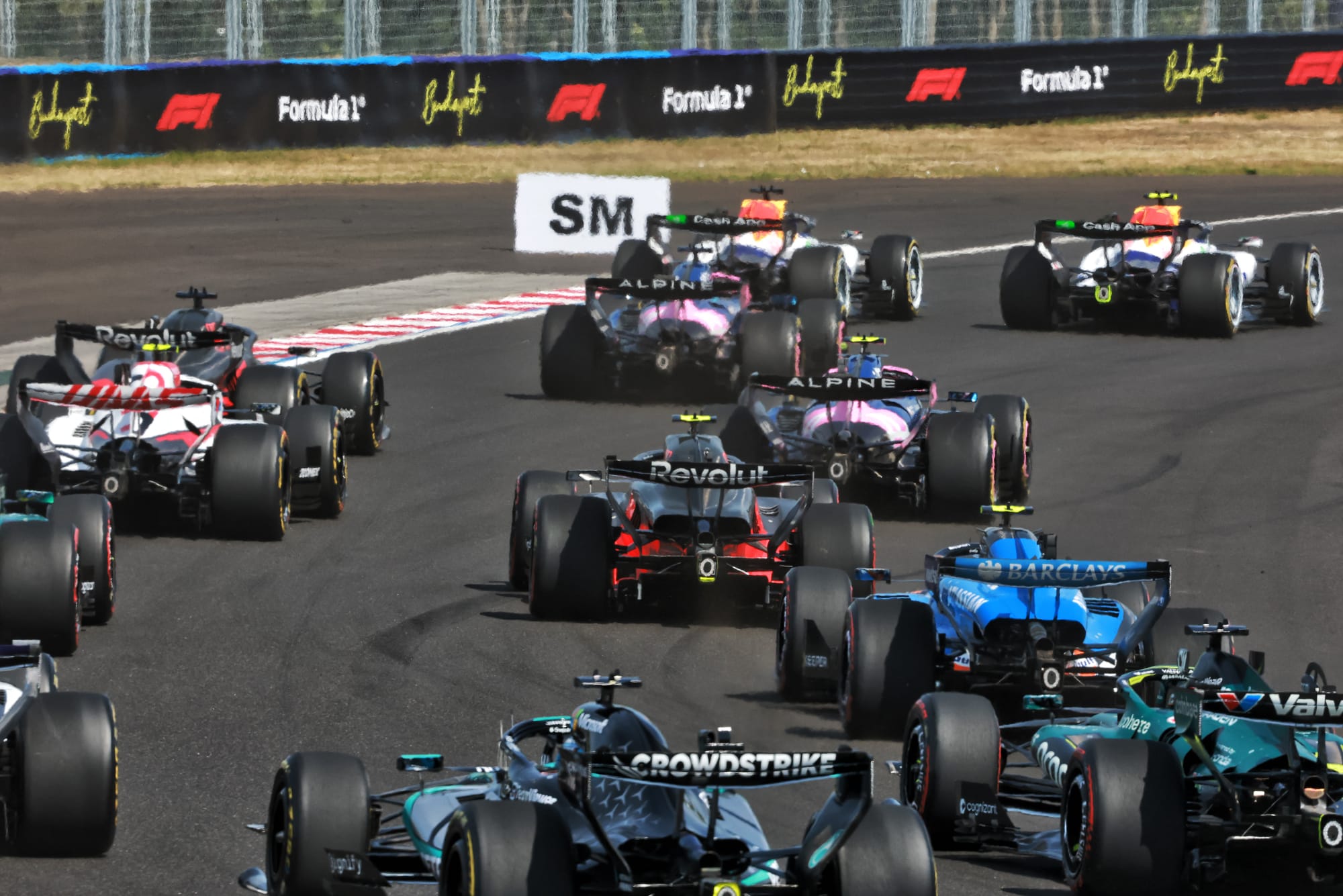
Formula 1 teams have rejected a rule change proposal that would have allowed Pirelli to address drivers' complaints and bring tyre pressures down.
One frequent complaint aired by drivers this year is that the minimum tyre pressures mandated by Pirelli for the 2026 cars are too high. This is making the cars more difficult to drive, as the tyres offer less grip, and drivers are more susceptible to locking up on corner entry.
The tyres are also both harder to fire up at times and more delicate to look after.
Earlier this year, Haas driver Ollie Bearman likened it to driving with "balloons".
"We have so much air in these tyres now, and it's just an absolute nightmare," he said at the Barcelona Grand Prix. "The deg is huge, a lot of overheating over a single lap.
"We have so much power under the right foot and so little grip with those huge balloons as tyres that we have."
A consequence of active aero
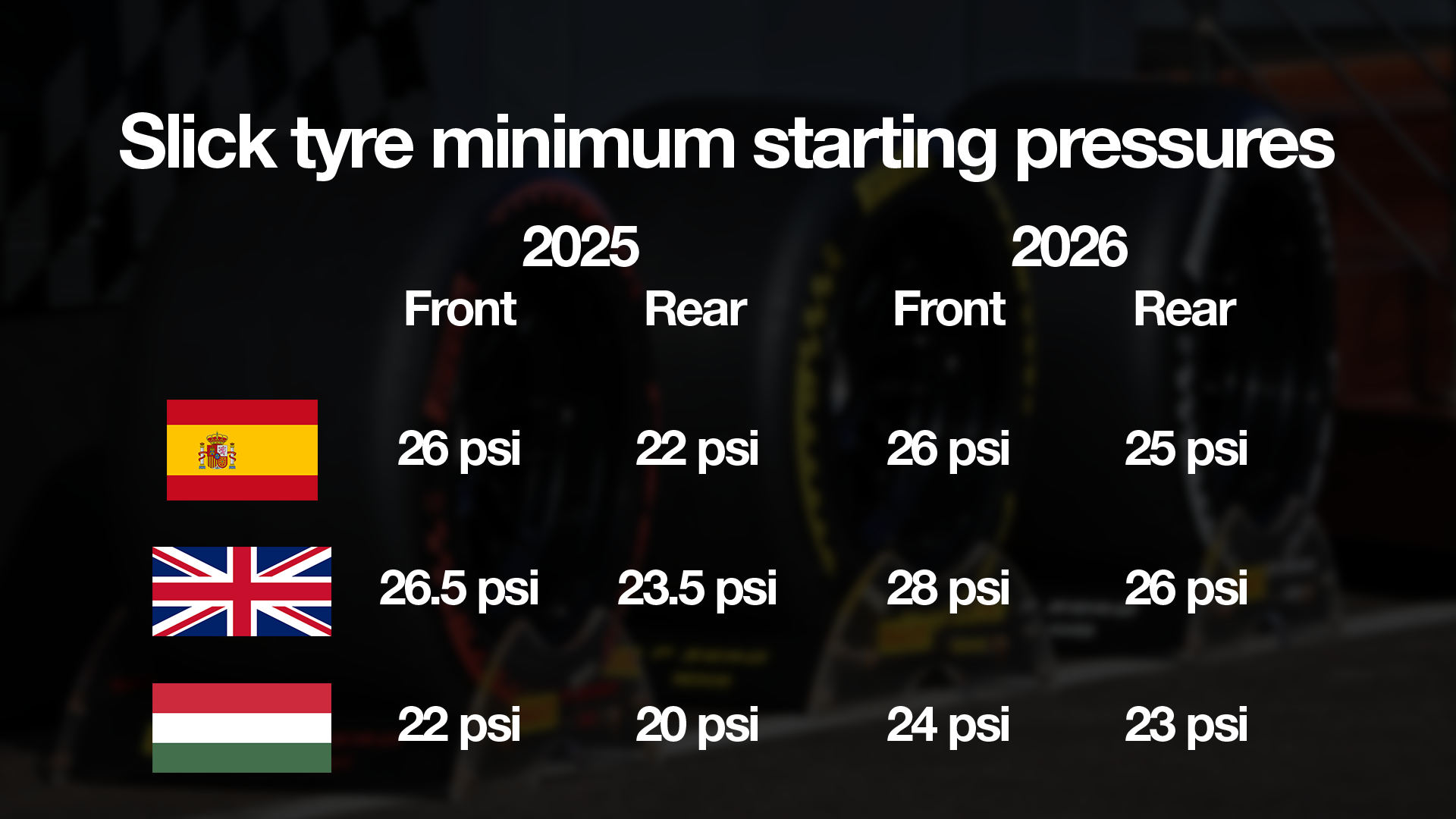
The elevated tyre pressures, which are frequently around 3-4psi higher than last year depending on track configuration, are a consequence of F1's new active aero rules.
The change in downforce levels between straight mode and corner mode has an impact on the vertical load that the tyres have to endure.
And it is about being mindful of the consequences of active aero going wrong, and a car getting stuck in high downforce mode, that has triggered the current situation.
If a car's wings stay in corner mode down a straight then, with maximum downforce at high speed, there would be extreme loads placed on the tyres that could eventually risk failures if the pressures were too low.
The higher pressures are therefore a failsafe measure to avoid the possibility of things going wrong should active aero fail.
The rule proposal
Pirelli is well aware of the driver complaints and it recently proposed an idea that would have allowed it to reduce pressures for the second half of this season.
It was for a rule to be introduced whereby if a car suffered a failure with its active aero and could not activate straight mode then it would be unable to stay out on track.
The proposal was that if a car was stuck in corner mode for five laps then it would be shown a black and orange flag, which is used to notify a driver that they have a dangerous problem or a mechanical issue.
The driver would then have to go into the pits and, if the problem could not be fixed, they would not be unable to continue in the race.
If this rule was in play, so there was no risk of cars ever running for an extended period in corner mode down the straights, then that would have been enough for Pirelli to reduce the tyre pressures to a level that would have made drivers happier.
Implementation of this rule could have come as early as the Dutch GP, the first race after the summer break.
The black and orange flag idea was viewed as workable by the FIA but, because of F1's governance processes, it required a super majority of support from teams to be approved.
Such backing was not forthcoming though, with teams feeling that the change was unnecessary and a majority not in favour when it was discussed.
It is understood some teams did not want to alter the tyre pressures mid-season because it could have impacted their competitive fortunes.
It is suggested others did not want to risk a good result automatically being ruined by an active aero failure that could potentially be battled through to still make the finish and score points.
No change
The failure to get support for the change means that the current high pressures will remain in play until the end of the year - and most likely through to 2027 as well.
Pirelli chief engineer Simone Berra said he was not "particularly surprised" that teams voted against the plan, even though it was something drivers had called for.
"The majority decided to keep the higher pressure and for us, it's fine," he said.
"We have explained multiple times that the reason [for the high pressures] is the SM [straight mode] condition, which is not happening so often.
"It is just a matter for us to define which procedure to take into account [when picking the tyre pressures], and we are going to take the worst-case scenario."
Berra reckoned that if the black and orange flag rule had come into effect that tyre pressures could have been reduced back to where they were last year.
"It can be significant," he said, when asked about how differently pressures would be pitched if Pirelli did not need to be mindful of active aero failures.
"It depends on the circuit, basically. It can be a range of 1-3psi, more or less, on the front and rear axle. But it would be possible to lower more the rear axle."