Our verdict on F1 2026's biggest disappointments so far
Who or what has been the biggest disappointment of Formula 1's 2026 season so far?
That's what we asked our team; here's what they said...
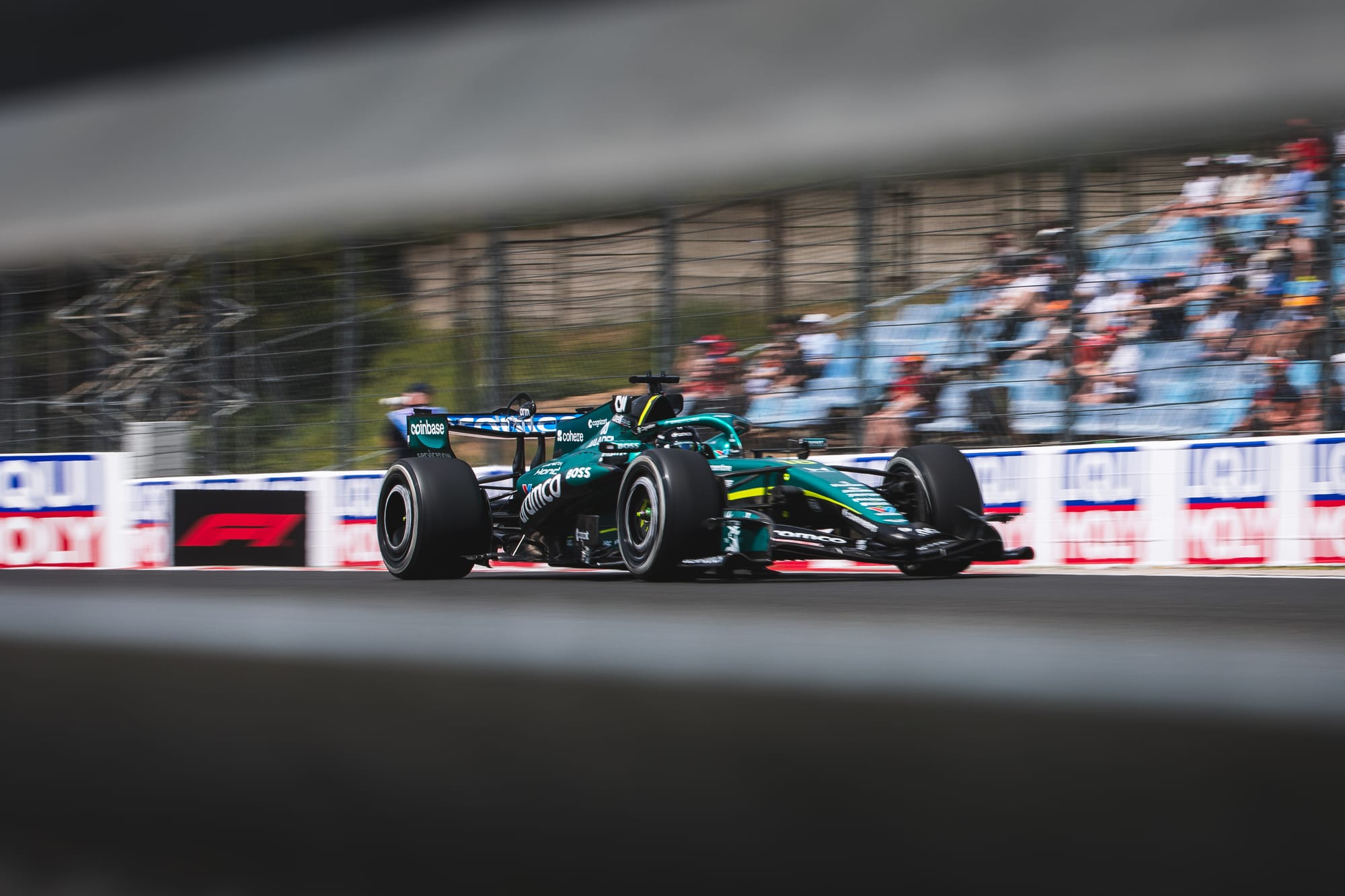
Edd Straw: It has to be Aston Martin-Honda, given it wasn't long ago that it was seen as a team with the potential to emerge as a race-winning force thanks to the overhaul of the regulations. For it to have made it 11 races into the season with a grand total of one point to show for it is below even the lowest of realistic expectations.
The interesting question is whether the raft of car and power unit upgrades, which started promisingly in Hungary, can turn things around enough for Aston Martin to pass the baton over to Williams.
The current trajectory suggests this could be the case, which at least means there's some reason for encouragement at Aston Martin.
What makes it so disappointing is how so many promising elements have failed to fire - Newey, Honda, Alonso, the state-of-the-art factory.
The pieces are there for Aston Martin, and it has the potential to emerge as a powerhouse. For it to be scraping around at the back and only ahead of Cadillac thanks to a fluke point in Monaco is simply not good enough.
Want to have your say? Join The Race Members' Club now to tell us your biggest disappointment under this post, and we'll react to some of your choices before Zandvoort in a Members'-exclusive podcast.
Gary Anderson: There are three teams that I would like to classify as disappointments. You could add Cadillac into that, but I will give it more time to get on top of F1 before I make a judgement; it's a brand-new team after all.
1 - Williams. We have been hearing for far too long how it's regrouping, adding new people and new systems, and this year was going to be the season where that all came together. It missed the start of pre-season testing, started the actual season dismally and in reality has gone backwards from there.
2 - Haas. It now has the might of Toyota beside it, but I’m not completely sure what sort of a contribution it has made. I did think it would put it on a more stable footing, both financially and as far as R&D would be concerned, but in the end, like Williams, it has also gone backwards as the season has progressed.
3 - Aston Martin-Honda. I put Aston Martin and Honda together as, from my point of view, both are responsible for the dismal start to 2026. Yes, Hungary showed a glimmer of light at the end of the tunnel, but before Aston Martin gets to be a consistent Q3 participant, it has a lot more work to do. The Hungary B-spec took the car above Williams and Haas, but that’s partly because those also went backwards...
Valentin Khorounzhiy: From a working-in-media standpoint, in terms of personal preference, the biggest things have been F1's seeming reluctance to lean into incorporating more battery data into broadcasts (apparently through a misguided assumption that viewers don't want to understand the races they're watching) and the lack of clarity within many teams in which driver is actually performing better and how much better.
It's annoying that all our usual metrics have to be taken with a grain of salt because sometimes deployment won't work, sometimes the PU 'self-learning' won't play along, sometimes there is no parts consistency across the two cars (looking at you, Haas), et cetera, et cetera.
In terms of individual team or driver performance, while the likes of 'stealth title contender Aston Martin-Honda' and 'presumed championship winner George Russell' have absolutely been going through it the most, a word must be reserved for Williams and, to a much lesser extent, Alpine.
Clearly the Mercedes PU is a precious commodity in this early phase of the regs, but Alpine has only really exploited that advantage to the barest minimum and kind of just feels like it's settling into the role of a perennial midpacker with no greater prospects or aspirations, especially now that it's in some ways just another customer team.
And Williams's season has been catastrophic, and a clear squandering of the talents of Carlos Sainz in particular. Because of how far back it has started in these regs, I just don't see how its story in this regulations cycle is anything but a retread of the same steps that had already been trodden in the early years of the Dorilton era.
Jack Benyon: George Russell. I caveat by saying, I don’t necessarily think he is the disappointment. Clearly this formula has uncovered something in his driving that hasn’t been an issue earlier in his career.
When covering George in 2018 Formula 2, he had to fight against poor reliability and stuff going wrong with the notorious new cars that year, but the way he did it made me believe he has everything needed to be a world champion, and I still think he does.
It’s tragic that his opportunity has come just at the time he’s met with the least malleable F1 car of his career so far when it comes to how he drives.
Mathew Somerfield: The easiest candidate for this would be the new power units, as they have failed to move the needle forward when compared with the hybrid solution we had for just over a decade prior.
Regardless of the new manufacturer involvement, the regulatory framework has resulted in a subpar product that’s been damaging to the racing.
However, whilst this has been disappointing in a general sense, the real disappointment comes courtesy of Aston Martin and Williams, both of which had promise or momentum coming into 2026 that evaporated very quickly.
Aston Martin’s trials and tribulations are the consequence of a hard development pivot at a time when much of the car had already been signed off, whilst the struggles posed to rescaling for Honda have also clearly had their own repercussions.
Meanwhile, Williams missed essential deadlines and the pre-season shakedown, which inevitably put them on the back foot.
Their issues have been amplified by a car that’s overweight and what appears to have been a development U-turn for some of the car's design features, Williams having realised it had cornered itself with the previous solutions.
Oliver Card: Aston Martin for me has been the biggest disappointment of the season so far.
In some ways, it is reassuring to know that money can’t buy you everything, that even with sackfuls of cash, the most gleaming facilities, a dedicated engine partnership and the world’s greatest racing car designer, sometimes, the stars don’t align. But it has been a devastating start in this new era and hard to watch at times.
To get halfway through the season clutching a single point for a team with such technical calibre is bleak. The fact that it was inherited after a post-race penalty in Monaco, doubly so.
If you were to ask me the same question again at the end of the season, I suspect the answer might not be the same, as the green shoots of recovery seem to just be emerging.
Whilst Aston Martin is 10th out of 11 teams, it certainly cannot get any lower - and once the improved Honda engine arrives, it has the potential to become one of the most captivating comebacks since McLaren’s renaissance after its dire period in the mid-2010s.
Jon Noble: Team-wise, there is no doubt that it’s Aston Martin.
From that 20-minute spell at the Barcelona test where the AMR26 first appeared and looked amazing in black, and you wondered if Newey had done it again, its rapidly emerging problems and horrendous start to the year fell far short of what anyone expected.
Overall, everybody knew the 2026 rules were going to have their challenges, and actually some aspects of the cars and the racing have been better than I feared before the season got underway.
But what has not been so good to see is the repeated stance from F1 chiefs that everything has been perfect this year - and that any hint that there is something that isn't working simply gets the response that the fans love it.
Insisting that those who follow F1 do not care at all about the technical details – when almost everyone reading this has LOVED following the technical complexities for years – is a dismissive stance for your truly engaged audience that I do not quite understand.