Gary Anderson: Ferrari's deceptive Zandvoort upgrade explained
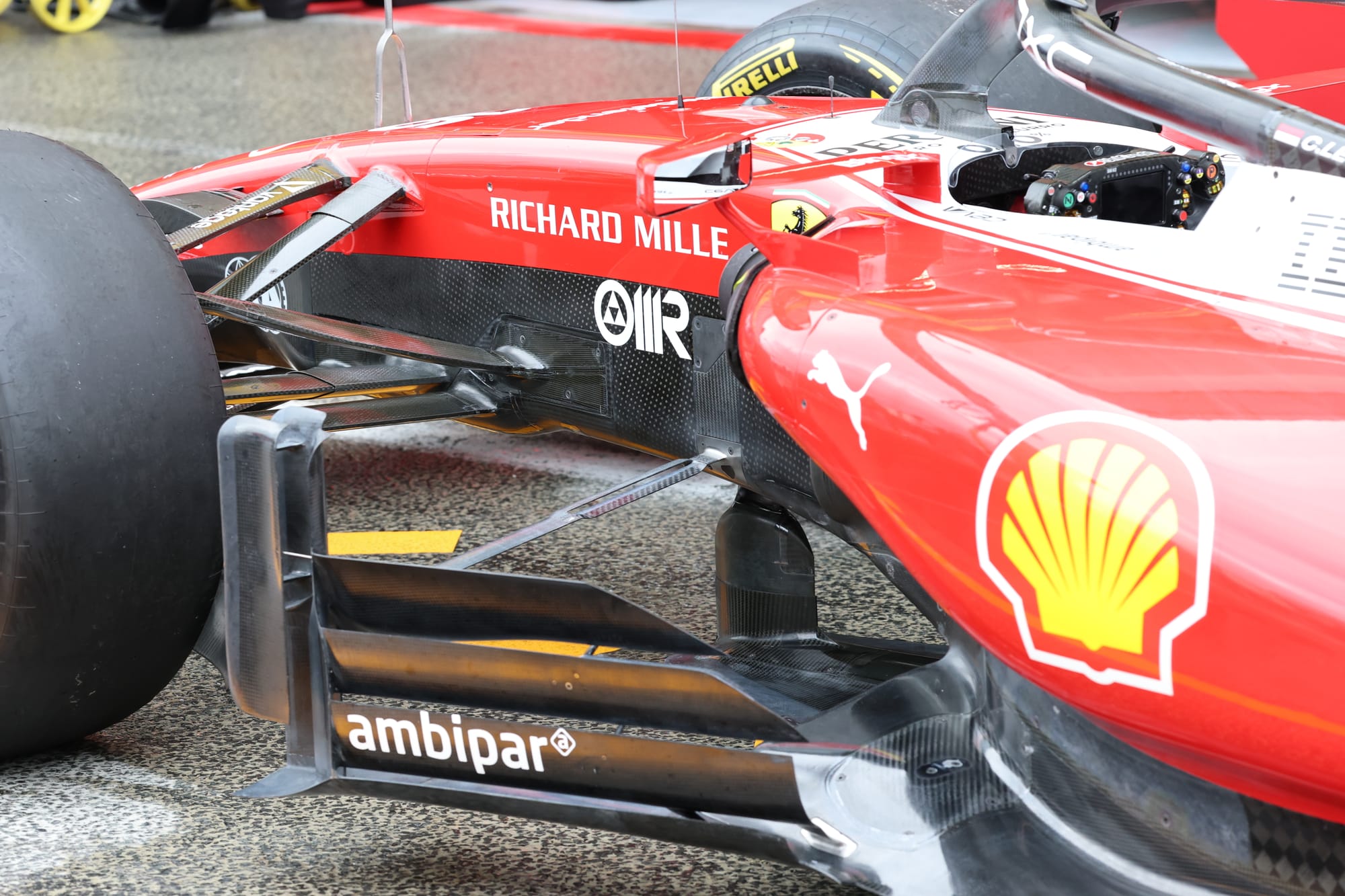
It’s all about the details in Formula 1.
Ferrari’s Zandvoort upgrade - bolted on from sprint qualifying onwards, likely because Ferrari doesn't have many spares and didn't want to risk damage in practice - might not look like much, but it is the finer details that we are talking about that optimise the overall performance. In effect, they cost very little, so they don’t break the budget as far as the all-important cost cap is concerned.
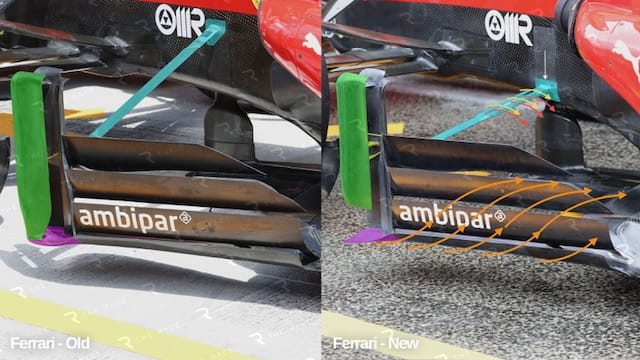
This small detail change in the bargeboard mounting system (highlighted in cyan) acts as a flow preparation device for the underfloor. So even though it doesn’t look like much, it could very well have a reasonable effect on the performance and consistency of the underfloor.
The reduction in height of the outer vertical turning vane (highlighted in green) again allows the lower section of the foot plate (highlighted in purple) to have more influence over the direction the flow is going to take at that point.
This should allow the lower horizontal vane to be more powerful, which should create a more powerful sealing system along the sides of the floor.
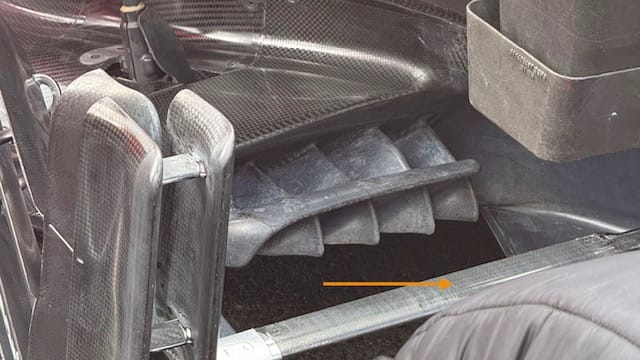
The positioning of the floor leading edge splitters will best optimise the flow coming off that repositioned bargeboard mounting (highlighted with the orange arrow).
The horizontal turning vane running across those splitters will also work in conjunction with that modified bargeboard mounting, optimising the airflow to the undersurface of the floor's leading edge.
This detail on the trailing edge of the diffuser is another way to help with the consistency of the underfloor.
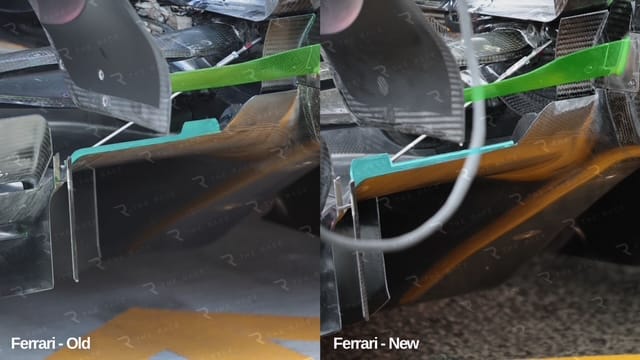
Using the increase in the chord length of the beam wing (highlighted in green) in that central section will improve the performance of the central section of the diffuser.
Moving the larger central section of the vertical trailing edge trip (highlighted in cyan) outboard will improve the consistency of that outer section where the vertical wall meets the top section. This transition is always susceptible to separation problems.
Overall, these developments are more about aerodynamic consistency as opposed to out-and-out downforce. Consistency is what gives the driver confidence, allowing them to dig deeper into their talent without getting bitten by sudden unexpected snaps, especially on corner entry.
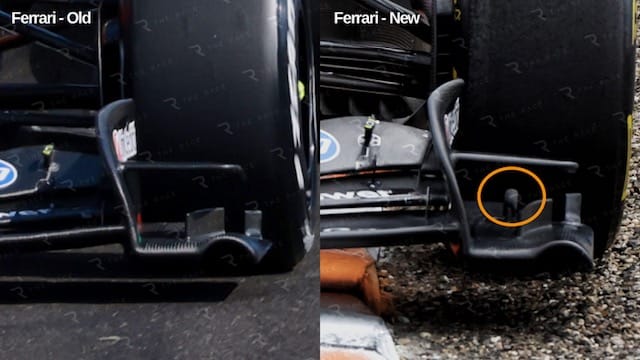
Just one additional thing I've spotted. All the teams do their best to monitor the front and rear tyre temperatures; this is critical to that one-off lap in qualifying, as it’s always difficult to get front tyre temperatures.
You can see in these two pictures above that Ferrari has been playing around with the infrared camera position (orange ellipse) to get the best reading.
The old picture has no camera; the new one is on the endplate foot, and the alternative is pictured below on the outer endplate surface.
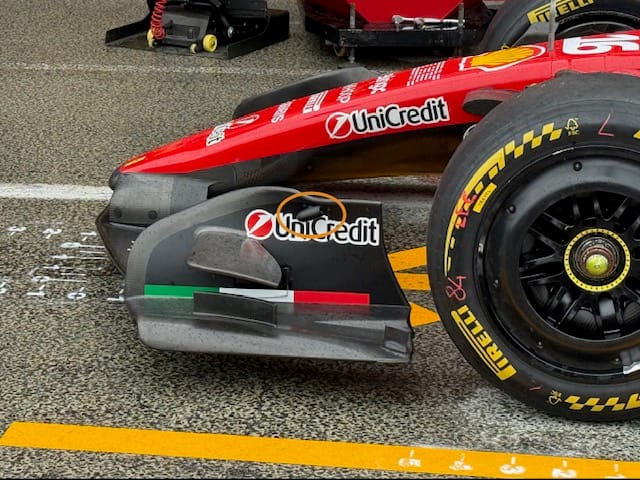
This will be the best place for the least aerodynamic compromise, as it won’t influence the outwash generated by the turning vanes mounted on the endplate foot.