The final verdict on Formula E's Gen3 era
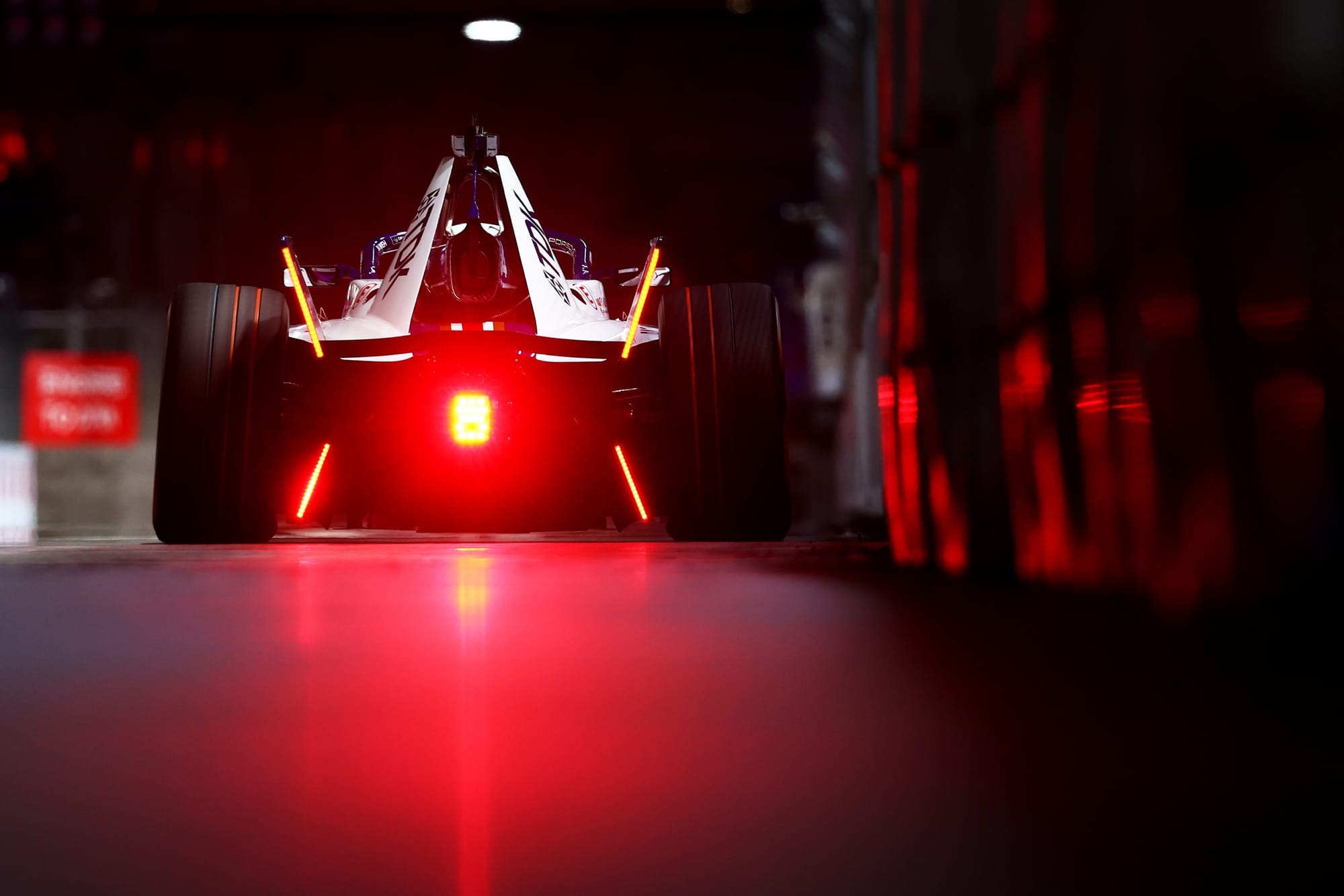
Formula E will begin its fourth era of technical regulations later this year and it will be a huge step up in power that will affect the sporting landscape significantly until 2030 at least.
How it got there is largely through the car that went before it, the Gen3, and since 2025, the Gen3 Evo. For good and bad, that car has informed Formula E's growth a great deal as the championship reaches a level of pace and power that will likely grab more and more fans' and investors' attention.
Born during the Covid-19 pandemic era, as a project Gen3 was a massive challenge for the FIA and Formula E Operations. That was one that was largely met, but along the way there were myriad difficulties and flashpoints.
A dramatic start
"Welcome to the farce." That was how one team principal greeted this writer walking through the paddock gates at Valencia in early December 2022.
The Race had heard about the issues and accidents in private testing of the Gen3 car. Theo Pourchaire had ended up atop a sandbank at Calafat; Sam Bird, in a Jaguar-run car, had escaped a scary-sounding shunt at the same track; Oliver Rowland had bruised his legs in a crash at Mallory Park; and Mahindra's Lucas di Grassi severely damaged his car at Almeria. There were others too that were not quite as damaging.
Why these accidents were happening was essentially because there were no rear traction brakes on the Gen3 cars. Through the design of the Gen3 it was deemed that regen and brake-by-wire systems would be enough. They weren't.
If the powertrains hit issues and shut down, which they frequently did, drivers were left with zero braking capability as they headed for a wall (or, in the case of Pourchaire, a sandbank protecting a field).
That salty paddock greeting from the team principal was still a shock though, because it was said with such disdain and resignation. At this point Formula E was in a real crisis, no doubt about it.
Teams were unsure about the safety of their cars; drivers were actively worried and some manufacturers were even looking at their insurance and human resource compliance policies to see if they could legally compete knowing of the issues.
All the while the opening race in Mexico City was just a few weeks away and there was no chance whatsoever of getting emergency braking systems fitted to the cars before they left Europe. Things were getting fraught. And then Sebastien Buemi wrote off his Envision-Jaguar in the Valencia test. This time it was public and all hell broke loose.
Suddenly, there was open talk of the season opener being postponed. Meetings took place almost every hour at Valencia. A solution had to be found.
Eventually it was with a secondary, solenoid-activated braking system applied for the second event in Saudi Arabia. It went some way to appeasing the teams and drivers. For Mexico City, extra Tecpro barriers were fitted to some corners. Despite this, Mitch Evans had a big shunt and for several hours Jaguar and Envision considered withdrawing. They were talked down.
There were several other issues too. A shortage of spares was one other major obstacle to overcome. The fact that around nine cars were destroyed or significantly damaged (Max Guenther's Maserati at Diriyah; Edoardo Mortara (Maserati) and Pascal Wehrlein (Porsche) at Cape Town; and a quarter of the grid at Rome!) did little to help matters, but such was the conflation of the Gen3 cars with some gnarly tracks such as Rome and Diriyah that this level of chaos felt almost inevitable in the first season of the era.
Just for extra pain, the teams and manufacturers were now working under a cost cap of €13million and €15m respectively across two seasons.
When Mortara piled into Bird in Formula E's most cataclysmic ever accident in Rome, you could see the colour draining from his Maserari team principal James Rossiter's cheeks in real time. In a way that vision kind of encapsulated a wild west-like first Gen3 season.
The fightback
"It was challenging but I think in the long-term memory of Formula E, Gen3 will be seen as a key step of the championship in terms of achieving a huge technological leap in efficiency."
That is the verdict of FIA championship manager for Formula E, Pablo Martino, who tells The Race he believes the recovery from that 2022 and 2023 period was successfully pulled off.
He's probably right, because by 2024 Formula E had more stability in all corners of the paddock. The Gen3 project had solidified, the racing was generally very good, and Formula E had a new, dynamic and engaging CEO in Jeff Dodds, who replaced Jamie Reigle in June 2023.
By the second season, the racing itself had developed past the initial inability of the cars to lay down the extra 50kW of attack mode power, largely because the spec tyres, supplied by Hankook, were so hard.
This led to a new form of racing, peloton or pack racing. As drivers managed useable energy knowing that the attack mode would lose them track position, a weird type of high-speed queuing pursuit took effect.
Races would then explode into life, and often carbonfibre shards too, when the pace quickened in relation to the energy targets being hit. Then the pace was unleashed and the action got really fraught, often resulting in cars running three or four abreast. It sometimes resembled a trippy kind of single-seater Talladega NASCAR scene.
At some tracks it worked fine but at wide-open expanses such as Portland, Berlin and Misano, it became essentially a tactical contact sport with front wings (brittle on the original Gen3 car) scattered around the place like confetti.
"Yes, we had maybe chaotic races, but it was also one of the most exciting periods in terms of unpredictability on track and multiple winners or multiple champion possibilities," appraises Martino now.
"I think the playing field across the different teams has been really narrow and the competition has been really tight between them.
"I think that's going to be remembered well, and it will be considered as an important step for the Formula E progress, especially on the evolution of the car.
"Season 9 to season 12 [the Gen3 period from 2023-26] is pretty significant on how the technology has evolved towards efficiency."
The arrival of all-wheel drive with the Gen3 Evo car for 2024/25 went a long way to fixing the lack of overtaking in the high-power mode. And with the PitBoost energy top-up stops finally coming in for that same campaign, there was extra flexibility for the FIA with the sporting format - which it diluted somewhat for 2026 as it was clear to competitors, consumers and fans that the races were just too busy and chaotic.
It is also important to remember that traction control limitations were lifted when all-wheel drive came into being in 2025, as they will be for Gen4. Deploying all the power into the wheels with no tyre slip changed the way drivers were conducting their races. This resulted in drivers such as Rowland, Wehrlein and Nick Cassidy really coming to the fore because they saw specific areas in which they could be tactically positive on gaining track position at crucial times.
The Gen3 Evo period also came with an improvement of performance from the Hankook tyres. So too upgrades to the power units themselves.
"The fundamental part was the four-wheel drive mode, but I think it was a package of improvements too," says Martino.
"Because the pure laptimes did already improve as well. It was not only on attack mode during the qualifying session. The overall race performance has improved."
The conclusion
Gen3 certainly created challenges for the teams, but they were mostly overcome.
Will it be remembered fondly? Perhaps by the fans, yes. But by the drivers? Largely not. Many actively disliked Gen3 but that was probably born from the early, troublesome days more than anything.
"We have a much more robust structure today than the one we had in Season 9 [2023] and that is good for all future development of Formula E," adds Martino.
In that sense, and in the circumstances of Gen3's birth, Martino is probably right. Gen3 feels already like a stepping stone to something really special with the potent Gen4 cars.
All kids go through awkward stages growing up. Gen3 was Formula E's later teenage years when it was still discovering itself, still making occasional embarrassing mistakes at the school disco. Now it's time to properly grow up.
"I think we have grown together as a championship," concludes Martino.
"We have built on all this knowledge. Sometimes knowledge comes because of the challenges or things that were not predicted at the very beginning.
"But overall, I think it has been a really positive four years for the championship, and no one can deny that because it has seen a huge evolution in fan base and interaction with the fans."