The aero restrictions each F1 team will face in 2026
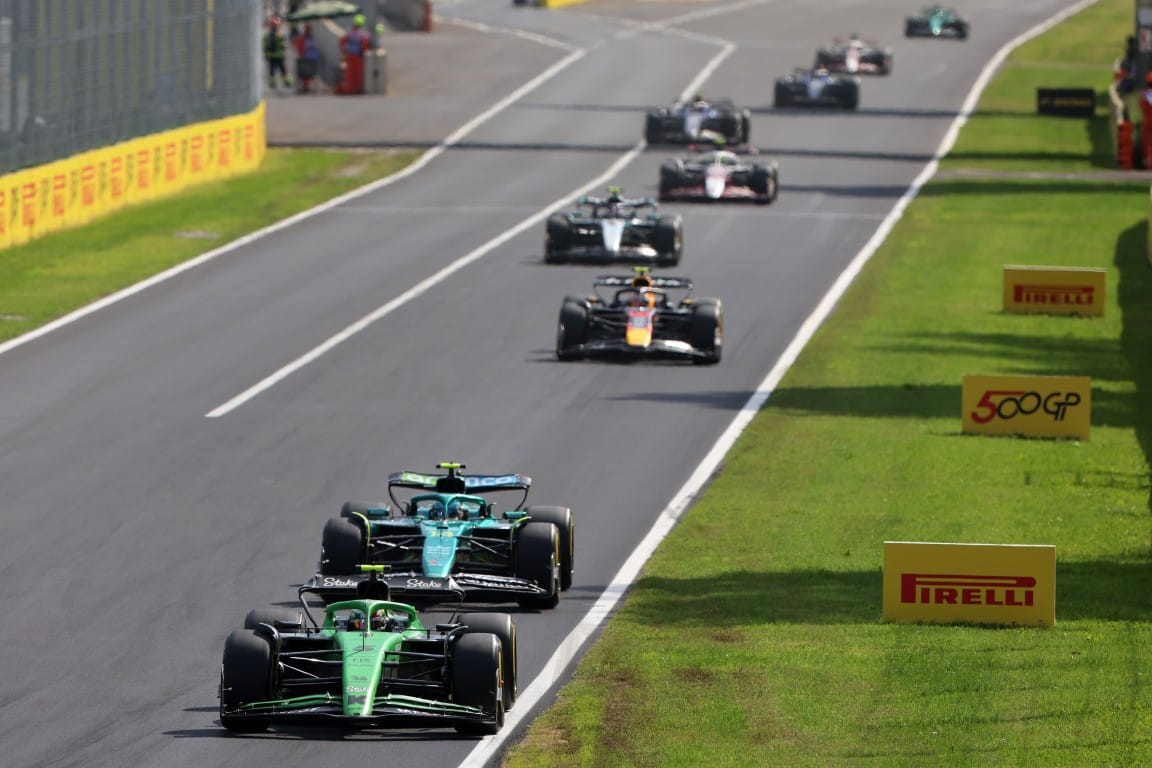
Every second of development time is crucial for Formula 1 teams right now and it will be especially so during the opening months of 2026.
The cars that turn up to the first pre-season test at Barcelona will be very different from those that the teams develop them into once they’ve seen what the competition has come up with.
That’s why the aerodynamic testing restrictions (ATR) - a sliding scale of aerodynamic restrictions introduced by F1 in 2021 - are arguably more important than ever.
Those are refreshed twice a year and are determined by the championship standings - meaning the first half of 2026 has been dictated by the final 2025 order.
So champion McLaren faces the biggest restrictions and 2025’s worst team Alpine faces the smallest, along with new team Cadillac.
But while those teams' totals were the same as in mid-2025, there have been five changes in the allocations for the next ATR period. The new restrictions are in force from January 1.
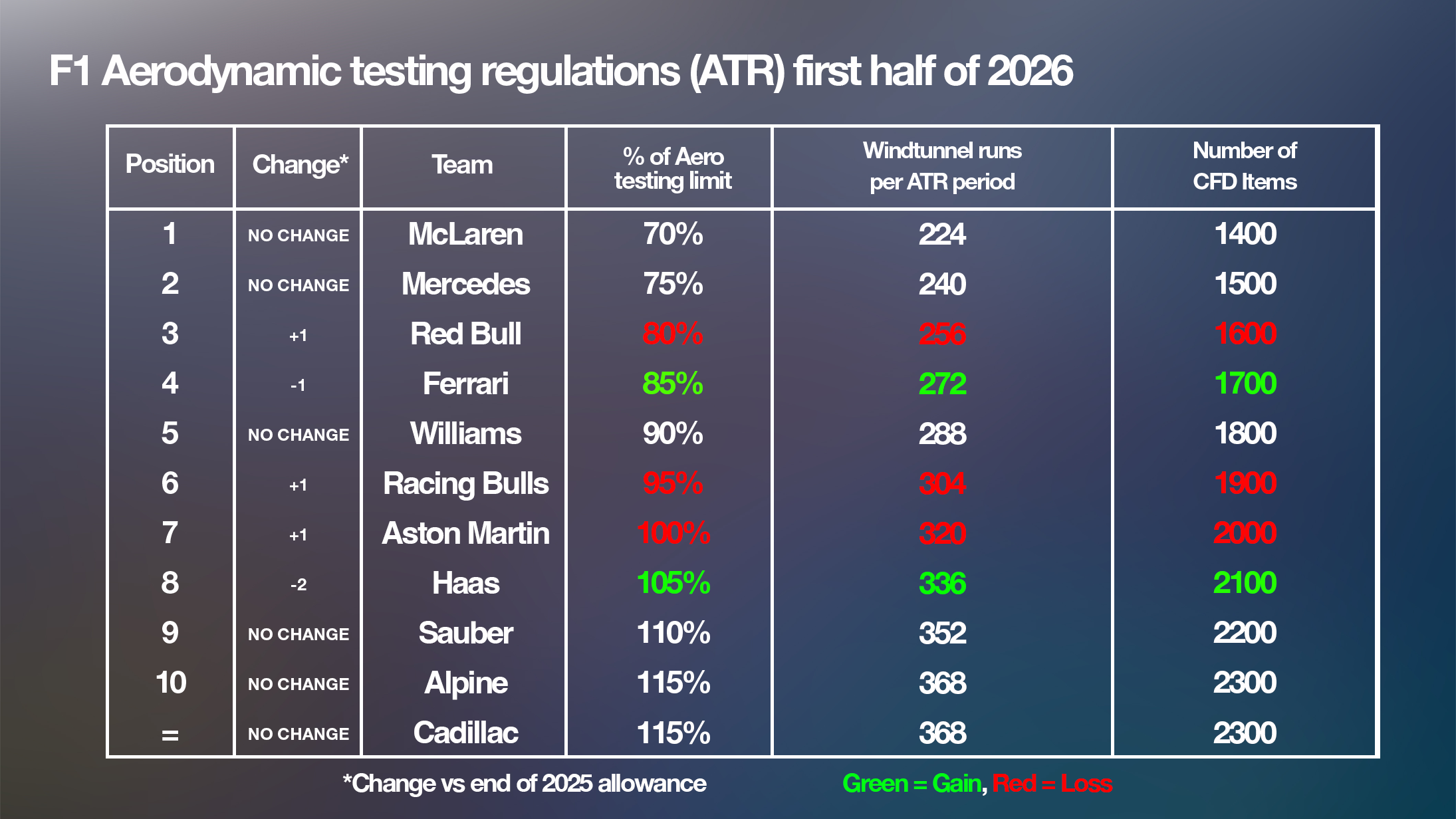
The biggest mover is Haas, as it fell from sixth to eighth in the constructors’ championship from the middle to the end of the season.
That 10% aero testing boost means it will be allowed 32 more windtunnel runs and 200 more CFD items versus what it was working with in the second half of 2025.
Ferrari also has an ATR boost as a result of slipping from third to fourth in the championship, while there are three teams that have an ATR drop for gaining a place.
Those are Red Bull (fourth to third), Racing Bulls (seventh to sixth) and Aston Martin (eighth to seventh), who each now have 16 fewer windtunnel runs and 100 fewer CFD items.
Of course, all of this is merely the restriction of the maximum that teams can do.
A bigger allowance could help a struggling team catch up in early 2026 (before the ATR resets in the middle of the year), but teams still have to make sure they’re making the most of whatever aerodynamic testing they’re allowed to do.