Alpine's terrible 2025 might have a hidden benefit
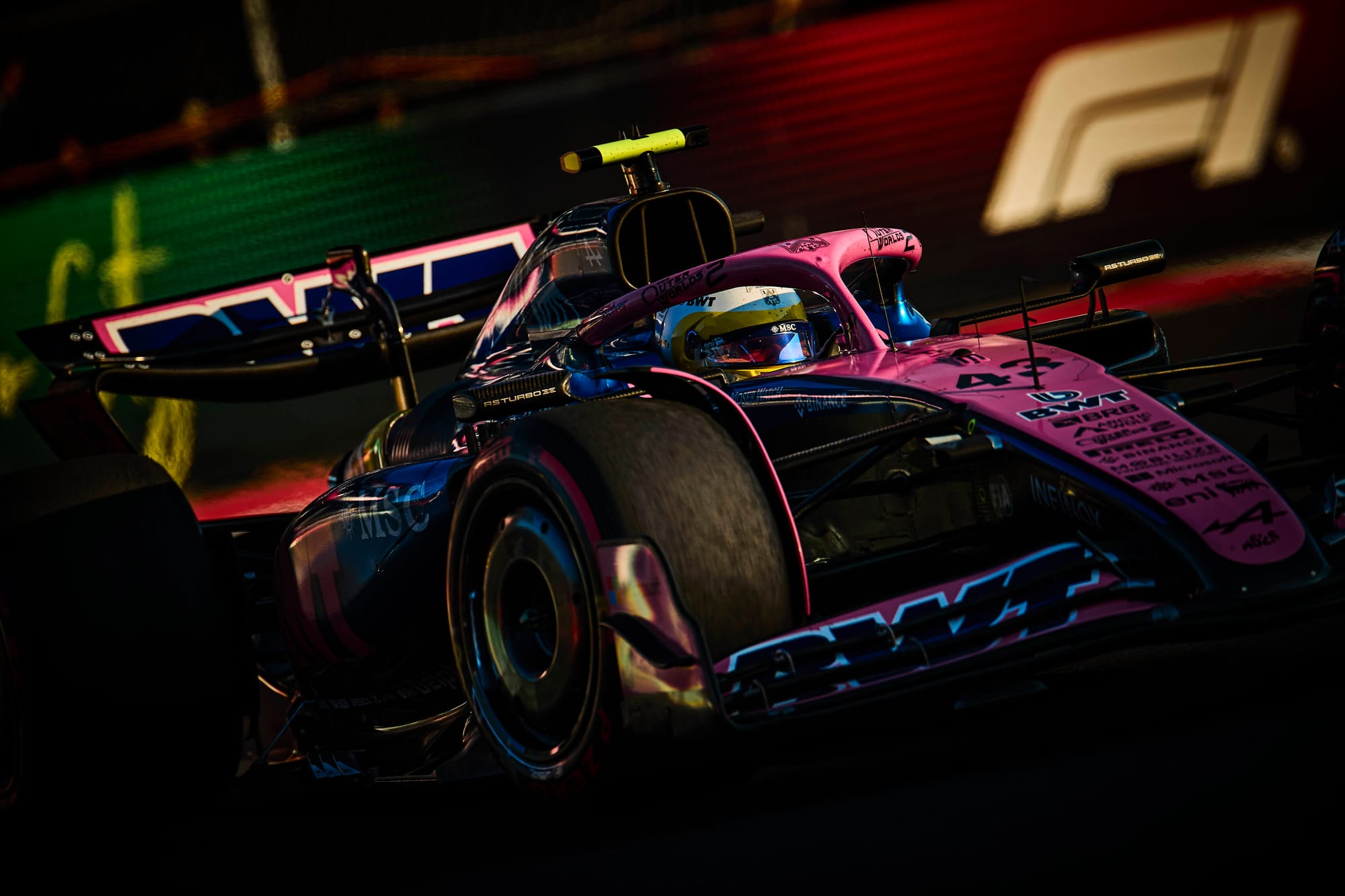
Alpine had a terrible 2025 Formula 1 season on track, but the true extent of its failure can only be fairly judged next year.
There's a chance - and so lacking in credibility has the team become in recent years thanks to its poor performances and revolving-door leadership that this cannot be taken on trust - that 2025 might even go down as a success when you consider the big picture.
Seeking the positives of defeat is a sporting cliche, a claim that often rings hollow. But there are reasons why Alpine could get significant payback for enduring the pain of a long and unfulfilling season in which it finished a distant last in the constructors' championship with a paltry 22 points.
That’s because, perhaps more than any other team on the grid, it went all in on 2026 development.
To understand the real story of its year, it's necessary to look back to 2024. The launch car was a disaster, with the team only salvaging sixth in the constructors' championship off the back of a sensational double-podium in Brazil having made genuine progress aerodynamically with its car in the second half of the year.
The key question was how much of a step would Alpine attempt to make with its car for this year knowing that the 2026 project was already well under way? The decision made was to take as big an aerodynamic step as possible with the launch car, although the work that could be done on the mechanical side was limited by having to carry over the monocoque and front suspension.
"Looking at '24 and what some of our main limitations were with the car, which were also going to be there in '25, we thought do the best job we can on aerodynamics and bring in as much more [performance] as we can,” technical director David Sanchez tells The Race.
"We knew both ends of the '24 car, the front and rear suspension, were not very good so ideally we would have revamped both. But in terms of the resource we could dedicate against the mountain of work for '26, we thought we'd only revamp one end of the car.
"In '24, the car was quite limited in traction, so we thought let's revamp the rear. We turned up at the '25 car launch with further steps on aerodynamics and new rear suspension that tried to improve our combined traction. Everything else was carryover."
The Alpine A525 looked promising and a potential midfield leader in Bahrain testing. That proved misleading, not because the car wasn't fast there - Pierre Gasly's seventh-place finish after qualifying fifth for April's Bahrain Grand Prix proved that - but because the track played to the car's strengths and hid its weaknesses.
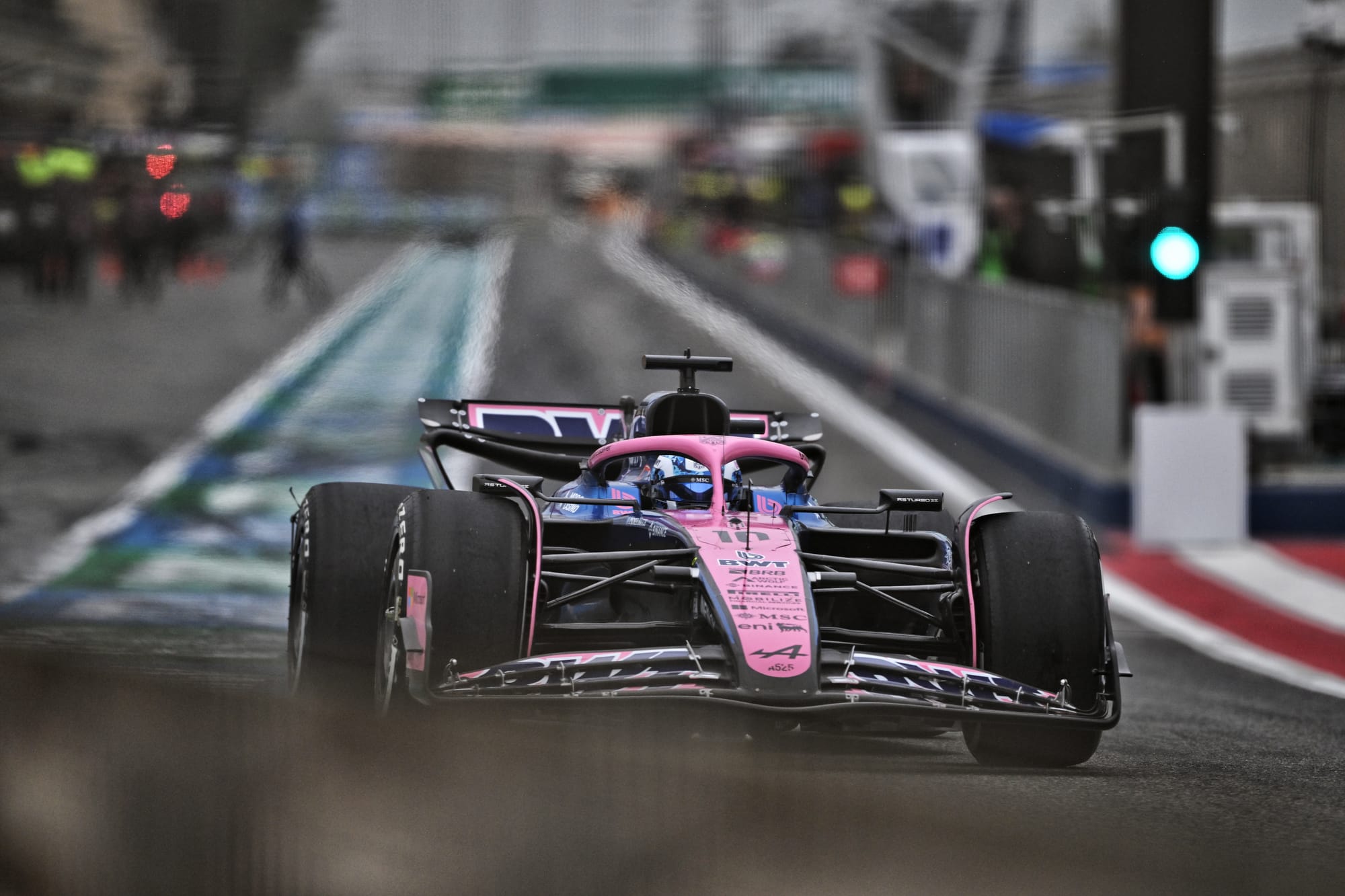
These were laid bare elsewhere because, while the car was decent in medium- and high-speed corners, it struggled more on slower tracks with bumps and a high kerb-riding demand. That wasn't helped by a Renault power unit that was relatively weak on energy recovery.
There was no solution to Alpine's problems, primarily because they were a necessary consequence of the decision made to focus fully on 2026. Fixing the problems of the 2025 car took a back seat to preventing them being replicated in the 2026 car under the new regulations. By the end of January, development work on the 2025 car had ceased - although some of the fruits of that labour didn't appear until later in the year, and it was simply about making the best of what it had thereafter.
"Our strategy was in '25 essentially we want to invest as much as possible, as early as possible, on the 2026 car because for us to try and make that step forward in trying to eradicate many fundamental limitations which take time to develop, we had to start early," says Sanchez.
"So the strategy was for the car launch we do one aero package, and that's it, we stopped there. It means by middle-to-late January, everything is done and dusted."
Where this approach didn't work as hoped was that the grid as a whole was closer than anticipated. That knowledge wouldn't have changed the strategy, but it meant Alpine had to recalibrate its expectations from being a force in the midfield to resignation it was destined for last. Although it initially hung on in that fight, after falling to last in the championship after the ninth grand prix of the season in Spain, it stayed there.
"In the first few races, it was pretty clear the field was very close, a lot closer than expected," says Sanchez. "There's been a convergence in terms of aerodynamics, and many customer teams [meaning Haas, Racing Bulls, Williams and Aston Martin] all had suspension systems and other parts taken from technical partners, so the cars were very close.
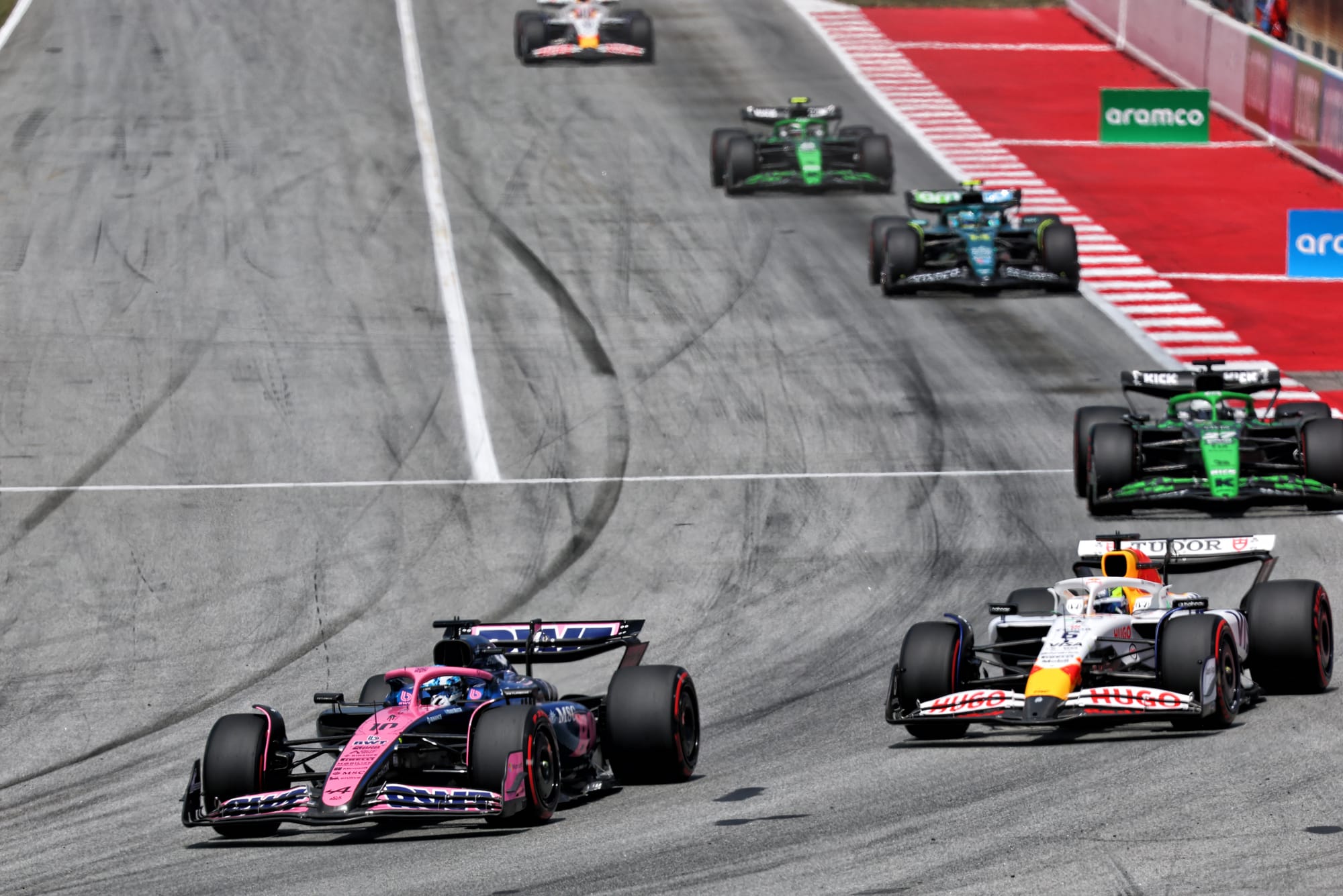
"We were a bit on the back foot with our power unit, especially on high-energy tracks, which made our life difficult, but at the start of the season could be in the mix. Then, as teams developed, probably far more than we would have expected, we gradually fell back and that's where we spent most of the season from summer onwards."
According to Sanchez, there was nothing untoward about the way the car behaved. The launch car performed broadly as expected, the Spanish GP floor upgrade worked as hoped, and the car's vices were known problems often carried over from 2024.
"In terms of the development, the correlation has been pretty good," says Sanchez. "We haven't found more or less than we expected, whether with the new car or the upgrade package. In that respect, we knew what we would get and that gives us enough hope that what we are doing next year to improve the remaining limitations should deliver what we want. So it's probably a good place to be.
"The unexpected part is seeing some teams going so late with development in-season. Some of them even arrived in Austin with a big package and I was [thinking], 'Wow, that's interesting'. Red Bull, Haas and a few others kept coming."
That's a source of some encouragement for Alpine. Every team, to a greater or lesser extent, focused on 2026 development rather than 2025, but the extent of this varied. Any resource used to improve the 2025 car, particularly in terms of the limited aerodynamic testing, unavoidably costs some progress on 2026.
That's something that didn't escape the notice of Steve Nielsen, who took over as Alpine F1's managing director at the start of September.
“When I see Haas, who have done a great job this year, putting a new upgrade on the car in Austin, I think, 'Wow, that's going to move them up'," said Nielsen, when asked by The Race if rivals upgrading deeper into the season was a source of encouragement.
"But then the warm feeling is that means they haven't had the 2026 car in the tunnel, and that does give me confidence that we should be competitive with them next year, hopefully ahead of them, because we've swapped over.
"Because teams' windtunnels are largely [identical and] they operate the same systems, they go through the same processes. It's a slow iteration, thousands of different trials, iterating towards the right solutions.
"Normally, we all have a line that's going in a similar way. The earlier you get on that line and you start it, the quicker you make progress. Getting on that late, because we've all got very similar resources, will be, I hope, a penalty for them.
"In Bahrain [testing] next year, when we all do the long runs, we'll do the maths, then we'll see."
That will be the acid test. Windtunnel and CFD runs are limited, and Alpine had more than many of its rival teams across 2025 thanks to having a sixth-placed allocation for the first half of the year before switching to the maximum thanks to being last in the championship mid-season.
However, it's not guaranteed that the extra resource conferred by the combination of the ATR allocations and Alpine's development strategy translates into more performance gained with the 2026 car than its rivals.
Alpine unquestionably made the right decision with its approach to 2026, and even rival teams who developed more in 2025 will still have allotted the majority of their development resource to next year’s car. However, it has created an opportunity for Alpine.
The question the team must now answer, and can only do with its competitiveness in 2026, is whether it's capable of making the most of that approach in terms of its design and development work.