How 2025 changed Marc Marquez - and what happens next
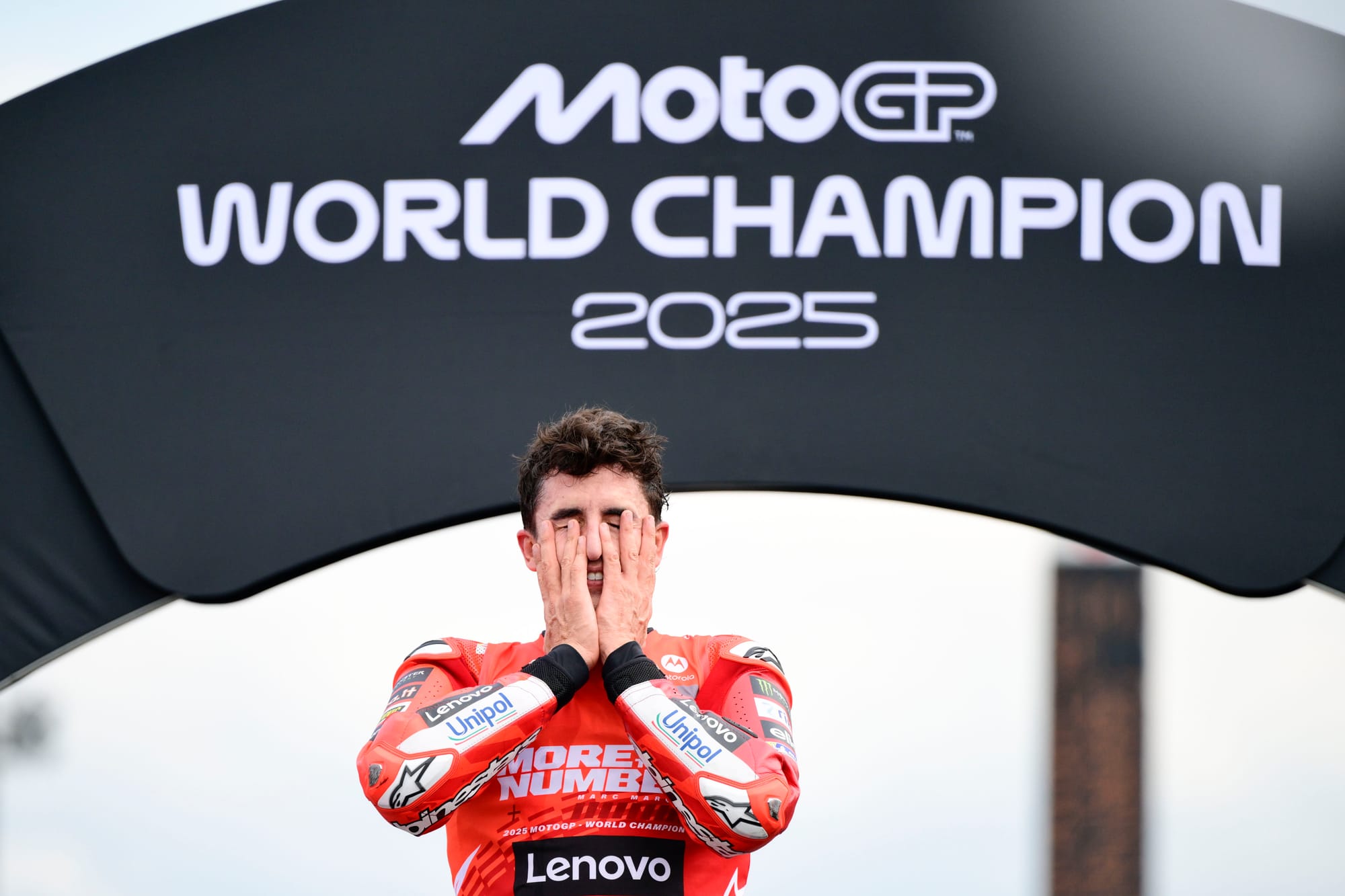
Since Marc Marquez lifted the MotoGP championship trophy at Motegi in October, it’s become almost cliche describing his return to form as one of sport’s greatest comeback stories.
Yet, given everything that the factory Ducati rider has been through since July 2020, when he crashed at Jerez and shattered his arm, it’s not exactly an inaccurate description - and one that, while he doesn’t quite embrace it because he’s unwilling to brag, it does ring true to an extent for Marquez himself.
We sat down together to bank an interview to reflect on his year at Motegi three months ago, 72 hours before his championship title became official - and, as it turned out, two weeks before his season was curtailed by another injury.
Marquez has given us some very revealing chats before at different stages of his journey from 2020 injury to 2025 champion. But this time, with that long-awaited seventh crown a near-certainty, he was starting to finally fully reflect on what it all meant. And what might come next.
"This is my second life,” he told The Race. “For sure it’s a special year. I’ll never say the most important, because the first MotoGP title, that’s something amazing. But this is the most important in my ‘second life’.”
The phrase ‘second life’ crops up again and again as we talk. It’s not a branding slogan. It’s a simple, personal truth. After a five-year stretch marked by injury, failed surgeries, and a nearly catastrophic derailment of his career, Marc Marquez is racing again - not just with speed, but with enjoyment.
Injuries are part of the job, of course, but few in the MotoGP paddock - hell, few pro athletes in any sport - have endured what Marquez has since 2020. A compound fracture to his right arm, multiple surgeries, infections, nerve damage, and ultimately the heartbreaking decision to step away from the only life he’s ever known without any guarantees he’d be able to fully reclaim it.
“In 2020 and 2021, it was a nightmare,” he says plainly. “I lost some years of my career, but I learned a lot for my personal life. And that one is longer.”
Most great champions are defined by their highs, but after the pain of the past half decade, it might be that in the future Marc Marquez is as much defined by how he survived his lows, a part of his story that he says can’t be told without mentioning MotoGP race winner, double world champion, and little brother Alex.
“For two years I stopped racing,” Marc says frankly. “But honestly? The biggest help in that moment was my brother. Not because he helped me directly, but because he was still racing. That meant I never disconnected from MotoGP.”
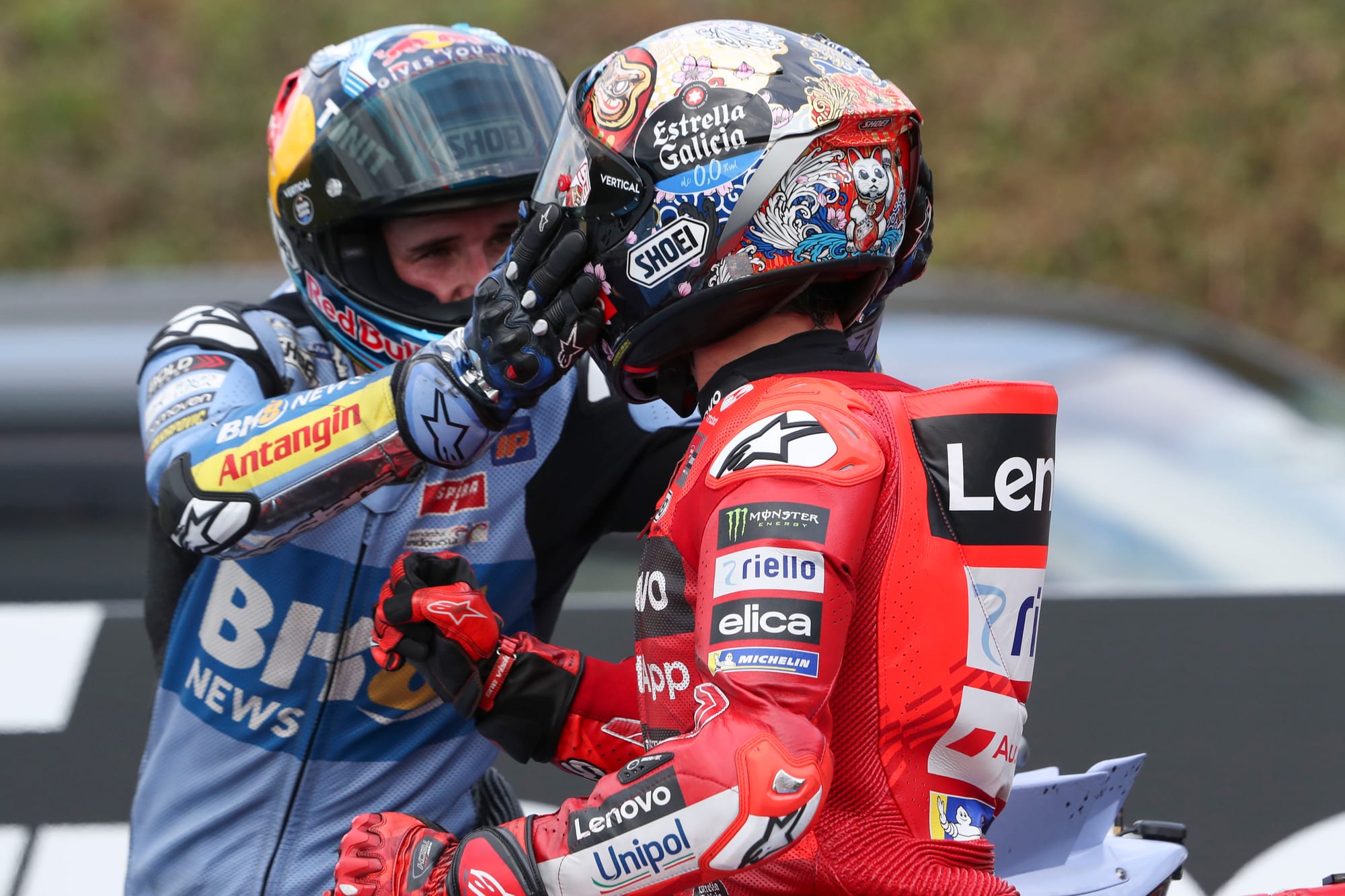
It’s a revealing insight into the man behind the machine, something that Marquez has got better at delivering as he’s matured into the character we saw in 2025.
While the physical recovery was brutal, it was the emotional struggle, the ache of absence, the haunting possibility that it might all be over, that very much seems to have left a deeper scar, one that he says needs to remind us all that despite the suit of armour he wears every weekend on track, he remains human underneath.
“Six years ago, I didn’t know what suffering was,” he admits. “I had only tasted the glory of my career, since 2010. It’s true that I had some injuries, but it was always three months, four months, then winning again.
“When you are four years with four different surgeries in the arm, then breaking other bones during that time, two times suffering from double vision, it was super difficult.
“We are humans. In this, I’m like you. You have some talents, I have this talent, and others will have a different talent, but we are humans trying to do our best.”
The key factor in this new success hasn’t just been his full recovery from injury, though; it also involved a dramatic step away from Honda, the manufacturer that had up until that point delivered everything for him in MotoGP.
Moving to satellite Ducati squad Gresini for a year as a way into the factory team might have been a humbling experience for some, but it was all a part of the plan for Marquez - a plan that he admits took a lot of personal confidence to commit to.
“It was the hardest one,” he says of the decision. “You have the physical pain, sure. But the emotional part, that made it super difficult to take the correct decisions.”
After nearly a decade of championships, loyalty, and shared success, the decision to Honda almost seemed like cutting off a piece of himself. But he knew something had to change.
“The results never arrived,” he says of his final season there. “But my priority was always the same: how to improve.”
For most of his career, Marc Marquez was the very definition of ‘all-in’. Watch any highlight reel and you’ll see it: the impossible saves, the elbow-down saves that redefined how to ride a modern MotoGP bike, the aggressive riding style that made him a fan favourite and the constant foil to both his rivals and to MotoGP’s stewards.
Not anymore. Or, at least, not always.
Now, Marc Marquez rides smarter. Not slower, not always safer. Just smarter.
“I try to minimise the risk,” he says. “Before, I was full risk from FP1 to the race. Now I try to control it. You still take risks, of course. But if you have the speed, you can manage it.”
It’s not just a trackside transformation. Off the bike, his approach to life has shifted too, something that’s been apparent in how he’s conducted himself in the paddock the past few months, more relaxed and more willing to speak his mind than he was in his Honda days.
He insists that it’s not just at the circuit, as well. He says that, post-injury, he trains differently. He listens to his body. He doesn’t bomb downhill at full speed on his bicycle just for the adrenaline anymore. “Now, I just enjoy life.”
He credits some of that to his girlfriend Gemma Pinto, who he started dating in 2023 - “an important person in my life,” he says with a grin.
“Before, I was winning, but I was living like a teenager. Now it’s a more stable life. A bit more quiet. Still instinct on track, but at home I check things more.”
Given that his teenage years ended, by his own admission, well into his twenties, and that he’s been the focus of an intense media spotlight for half his life, does he look back on his wild youth and cringe?
“Of course!” he laughs. “It’s the best and worst thing about being a top athlete. You grow up in front of cameras. People hear you say things at 18 years old and ask, ‘Why would he say that?’ But you’re 18, just off a race, heart rate 150, adrenaline maxed out. It’s normal.”
He says with certainty that the future holds more facepalm moments, too. “At 32, I know better. But at 40 I’ll look back at 32 and think, ‘What was I doing?’ That’s life.”
He’s sure about one other thing that middle age is likely to bring, too, though. Marquez says it’s highly unlikely that we’re going to see him still be racing at 40. Then again, he says he’ll never say never. It all depends; on speed, on motivation, on the grid.
“It’s super difficult to stop at the top. But one day, two guys will be faster than me. Then three. Then I’ll realise I’m not on the podium anymore. That’s the moment to stop.”
We talk about both Valentino Rossi and Casey Stoner, two champions who made very different exits from MotoGP - one perhaps a few seasons after he should have walked away with his head held a little higher and one abruptly when still at the top - and admits there’s no perfect formula.
“One would say they should’ve stayed longer, one would say they should’ve left earlier. There’s no right answer. It depends on your body, your injuries, your motivation.”
What comes after the leathers are hung up for good?
“I would like to be involved,” Marquez says. “In my life, I know MotoGP. I don’t know about opening a shop. I don’t know how to manage money. I have people who do that. But MotoGP? That, I know.”
His future may lie in coaching and management, something he’s already started to dip his toe into after splitting from long-time manager Emilio Alzamora and setting up his own management company, Vertical, with brother Alex.
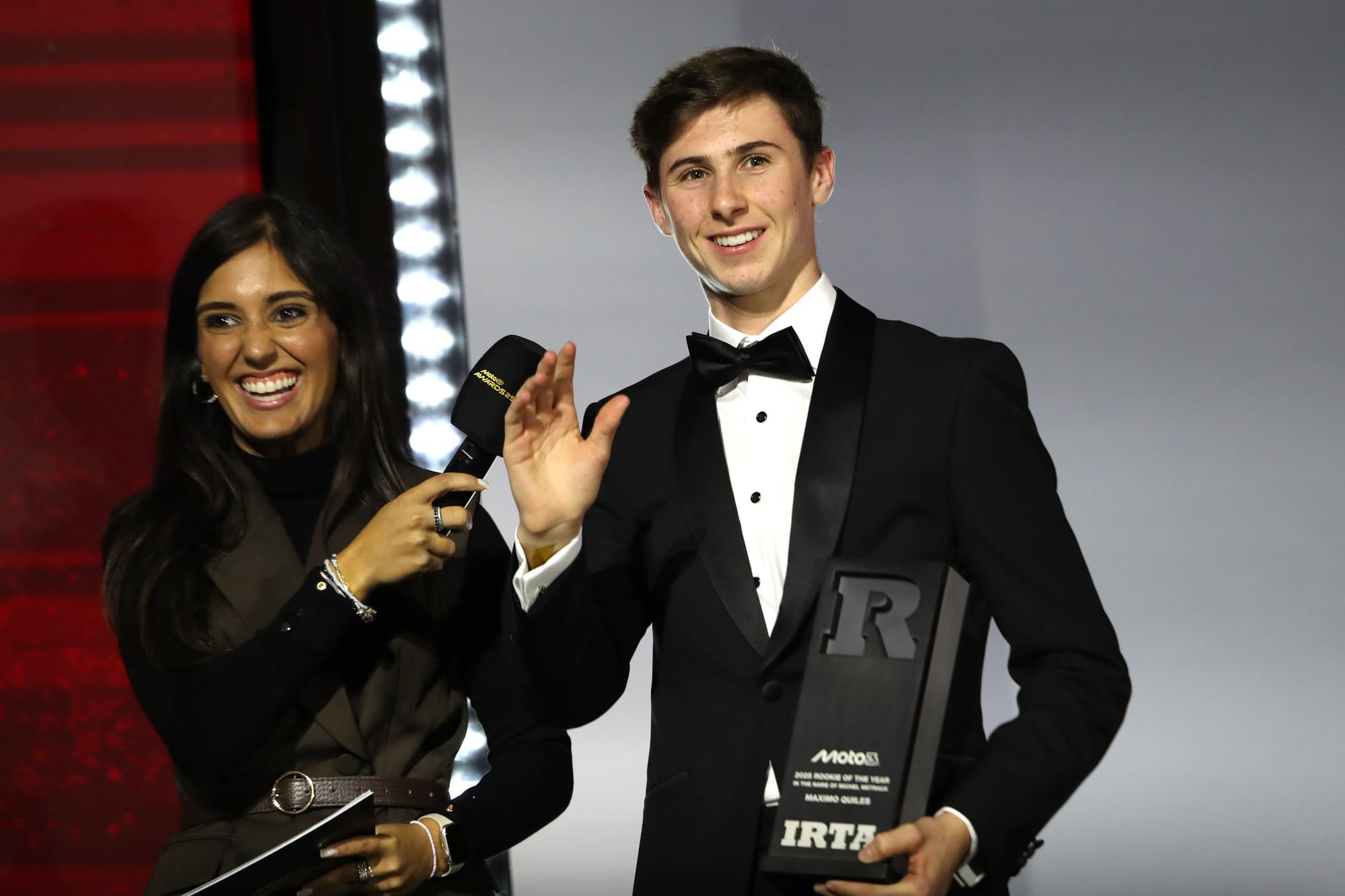
They’ve taken only one rider under their wing so far, but that kid - Moto3 race-winning rookie Maximo Quiles - is already on the path to superstardom with exactly the right mentors to make sure he doesn’t squander prodigious talent.
Whatever it is that Marquez finds himself doing in a post-racing life, one thing is for sure; it’ll be in the paddock, where he’s pumped all of his life’s passion for so long.
“If I feel motivated,” he adds. “If I feel I can contribute.”
Just a few days after our chat, all thoughts of eventual retirement are banished in dramatic style as he stands on the specially-constructed podium on Motegi’s main start finish straight to once again add his name to the top of the MotoGP trophy. Ending a drought and once again establishing himself as the master of all that he surveys by completing one of the greatest comeback stories in modern MotoGP.
“This year, I do realise what I’m doing,” he says. “Because I suffered before I arrived here. I know where I came from. It’s one more championship, yes. But inside of me, it’s more of a championship.”