The two leaders in China's mission to enter Hypercar
Slowly but unmistakably, China's motorsport ambitions are beginning to surface. For months, whispers have hinted at interest in the Hypercar class from two major domestic manufacturers: Chery and Geely.
Nothing close to a short-term arrival yet, but the foundations are looking less speculative with each passing week.
These aren't niche outfits chasing visibility. Both are pillars of the Chinese automotive sector with accelerating global aspirations. Chery has long been China's export pioneer, building a presence abroad while other brands were still inward-looking. Geely, powered by its multi-brand ecosystem and a push into electrification, is expanding even faster.
Europe has become the next battleground in that expansion, and motorsport increasingly looks like a strategic shortcut to credibility. A true US presence remains constrained by regulatory hurdles. For now, the stage is Europe and endurance racing would be a fitting platform.
So who exactly are these manufacturers, and what are the chances they end up on the Hypercar grid?
Geely's quiet manoeuvring
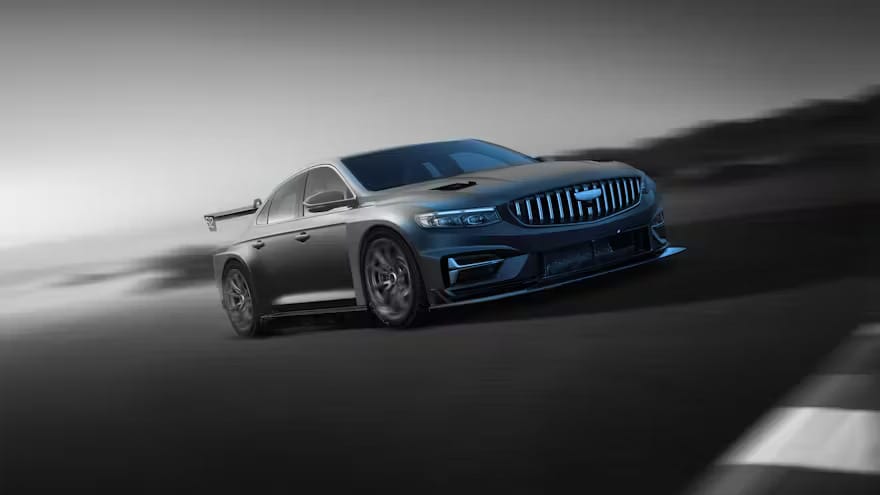
The most visible part of Geely's racing involvement is Lynk & Co, created in 2016 through a Geely-Volvo collaboration. Its motorsport footprint has remained focused on touring cars, a direction that continues in 2026 with the new Geely Preface TCR (above), which is being developed by the Cyan Racing team.
But that programme will carry the Geely name, not Lynk & Co's. And that's where it gets interesting. At the same time, Geely Holding announced that Lynk & Co Motorsport will also undergo a full upgrade from the perspective of its motorsport ecosystem.
It was added that Lynk & Co Motorsport will expand from circuit racing and sprint racing into rally events, and into endurance events that place greater demands on a car's overall performance. Hypercar suddenly looks less like fantasy and more like a milestone on a long-term roadmap.
Chery steps out into the light
Founded in 1997, Chery is a giant back home and a prolific exporter. Exeed is Chery's upmarket/premium sub-brand, under which it plans its motorsport efforts, including the Le Mans project.
Then came the surprise announcement: Chery Group claims to have signed a strategic five-year partnership with the organisers of the Le Mans 24 Hours, that would have been signed during the 2025-26 Asian Le Mans Series opener at Sepang (December 13), marking the first time a Chinese automotive group has entered a full-scale collaboration with one of world motorsport's most prestigious events.
Under the five-year plan, Exeed will progress through three stages:
- Establishing a domestic endurance racing series to build technical capability and talent
- Competing in the Asian Le Mans Series
- Forming an Exeed factory team to contest the Le Mans 24 Hours, aiming to become the first Chinese manufacturer team to do so
Chery insists the programme targets technological return rather than marketing exposure, with race-derived learning feeding into powertrain efficiency, durability, and reliability for road cars. There is talk of possible moves through the lower categories, but the ultimate goal is definitely the Hypercar class.
Where do the projects stand?
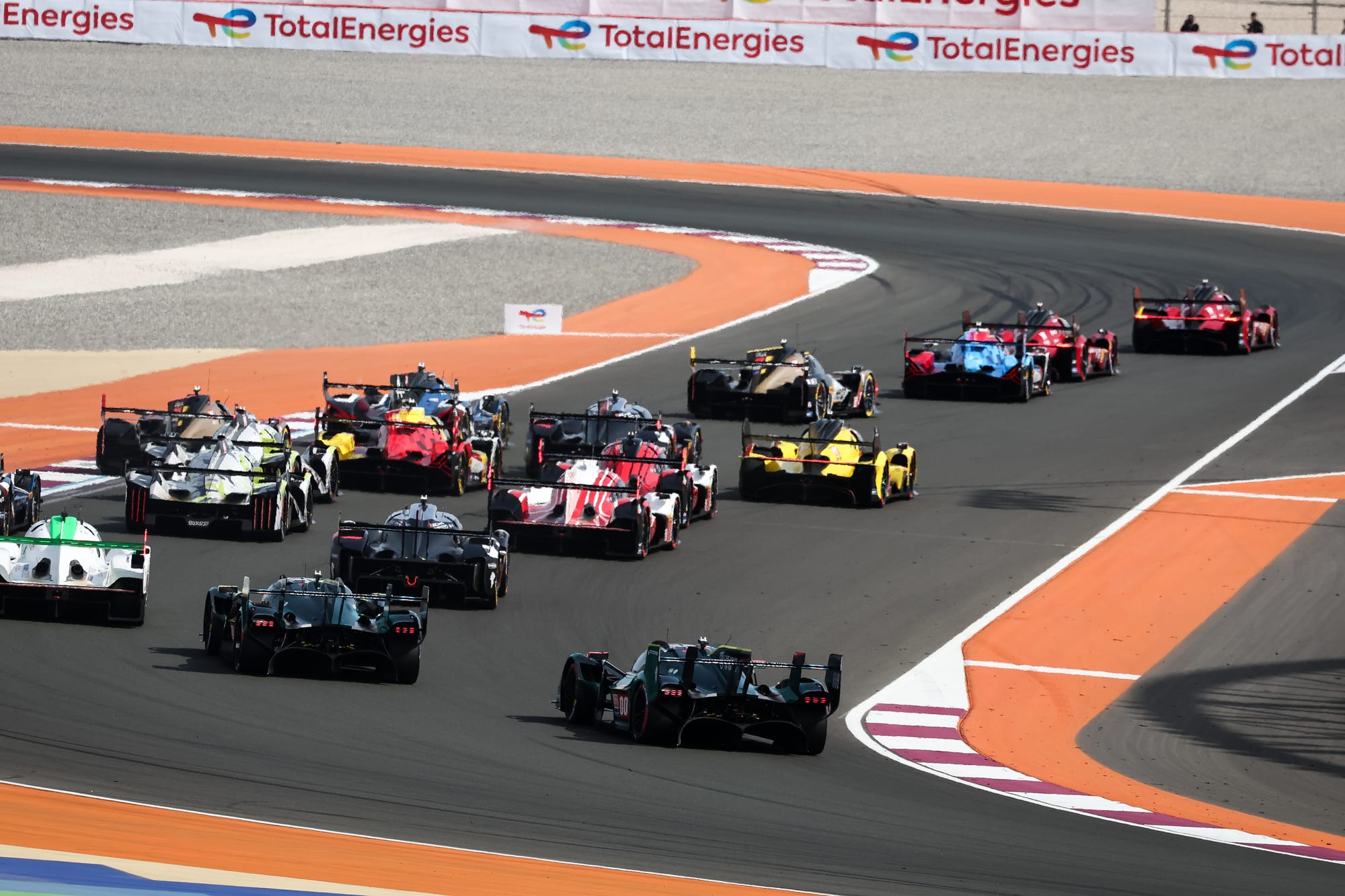
Hypercar remains a magnet for manufacturers: eight are slated for 2026 with Genesis joining, while McLaren and Ford arrive in 2027. So, when does a Chinese badge make its debut? Right now, it's anyone's guess.
Today, although no clear roadmap has been established and the only reference to endurance came vaguely in a TCR-focused press release, Lynk & Co appears to be in pole position. Some pieces have already been moved, and key paddock figures have reportedly been contacted.
In terms of communication, Chery has been far more aggressive than its rival. Perhaps too aggressive? The exact scope of the so-called agreement with the ACO remains unclear. The Race has received confirmation that a meeting took place at Sepang, where the company expressed its intention to participate in the WEC.
However, the ACO did nothing beyond what it normally does with any interested manufacturer, essentially providing Chery with the standard roadmap and outlining the regulatory steps required to achieve its goal.
The Chinese group also claimed that, as part of the agreement, Chery and the ACO would work together to develop a Le Mans-certified circuit in Wuhu, Chery's headquarters city, to support motorsport development and fan engagement in China. In reality, this is likely more about advisory support than formal certification, with the ACO offering guidance if needed.
Yifei Ye, the pioneer
The year 2025 has been a milestone for China in motorsport. Yifei Ye delivered China’s biggest international motorsport triumph to date by winning the Le Mans 24 Hours.
Chinese representation at the race stretches back over a decade. Hong Kong-based KCMG became the first Chinese-entered team at Le Mans in 2013 and scored an LMP2 win two years later. Jackie Chan DC Racing then stunned the paddock in 2017, taking an LMP2 1-2 finish and second and third overall, having led overall at one stage.
Until Ye's victory, Ho-Pin Tung's second place in that same 2017 race stood as the best finish for a Chinese driver, though the infrastructure behind the Jackie Chan DC Racing programme remained unmistakably British through Jota Sport.
By the way, the first Chinese driver to start Le Mans was Cong Fu Cheng in 2008, followed by Tung, Darryl O'Young, David Cheng, Adderly Fong and now Ye.
Beyond endurance
Another historical reminder: Ma Qinghua scored the country's first FIA world championship race win in 2014's World Touring Car Championship Moscow round, adding another in Portugal the following year.
Ma has been part of the Cyan Racing line-up at the top level of international touring car racing, now the TCR World Tour, since 2022.
Tung and Ma also both held Formula 1 reserve roles, but Zhou Guanyu became China's first F1 driver, racing 68 grands prix for Sauber between 2022 and 2024 following a third-place finish in Formula 2.
Released at the end of 2024, Zhou is now a development and simulator driver for Ferrari.
On the manufacturer side, Lynk & Co remains the only brand to secure sustained success at a global level. Its 2019 WTCR victory in Morocco made it the first Chinese manufacturer to win a top-level race, under Cyan Racing's Swedish entry - officially as a customer under TCR rules. Titles followed in 2019, 2020, 2021 and again from 2023 to 2025 in the TCR World Tour.
Now Geely intends to continue that legacy under its own name.