Ranking every F1 team in the ground effect era from worst to best
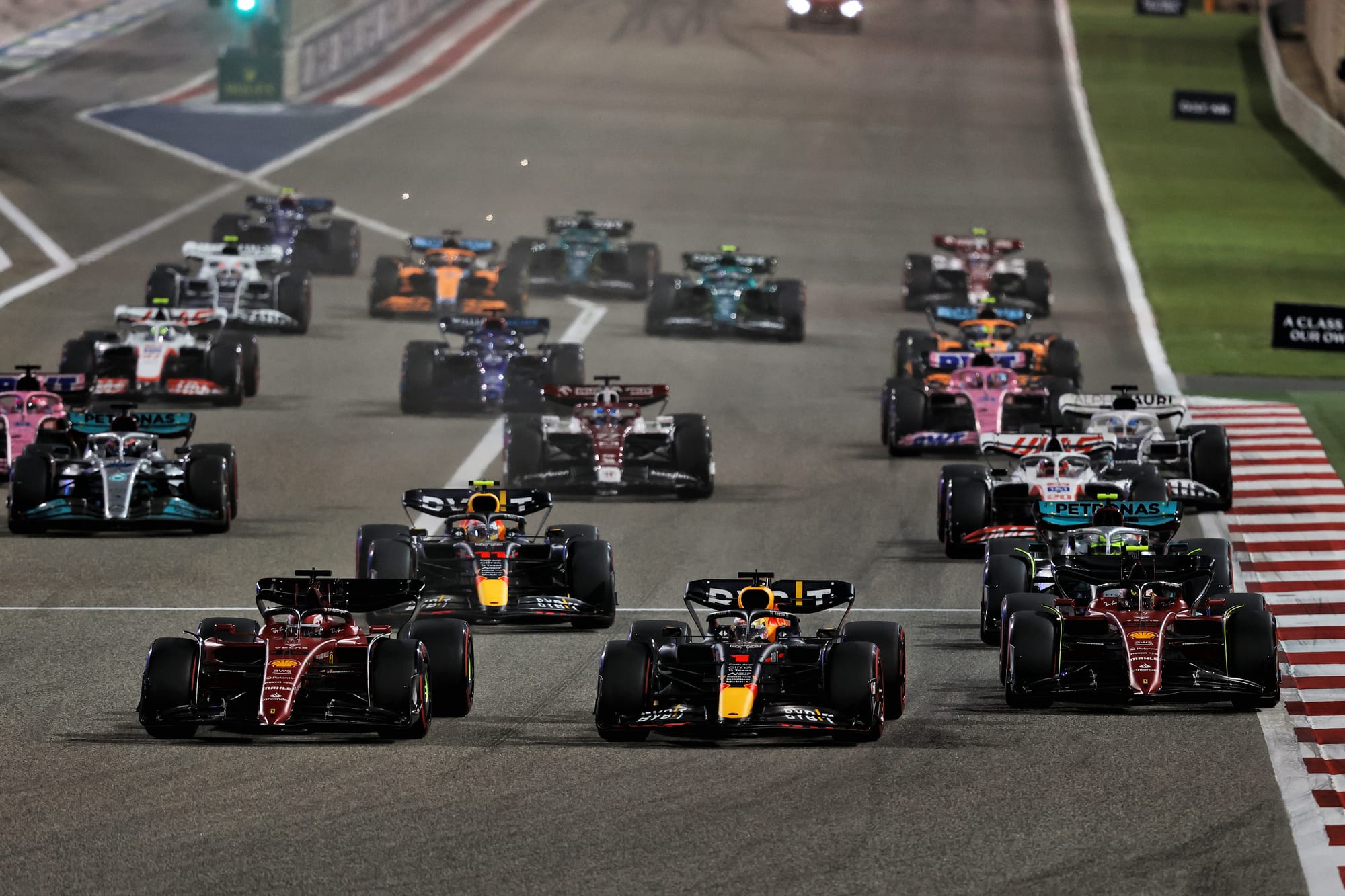
As Formula 1 heads into the new regulations in 2026, we reflect on how well each of the 10 teams performed across the ground-effect rules era that finished this year.
It's a results-based business, so the numbers carry the most weight when it comes to this ranking. However, we also factor in the overall progress made and the quality of a team's execution.
10th Sauber
Best drivers’ championship: 10th
Best constructors’ championship: 6th
Points: 145
Judged by the first nine and last 16 races of this rules regime, the team that was called Alfa Romeo in 2022/23 would be ranked far higher. It racked up 115 points across those 24 events. The problem is, it managed a feeble 30 across the 68 grand prix weekends in between that.
It launched with a car that could head the midfield early on in 2022, partly because of outstanding work on weight-saving that meant it was on the limit initially. Sadly, as others caught up on that score, it didn’t make the progress to keep up.
The nadir was a dire 2024 season in which it only scored four points. The one saving grace of that season, which was poor operationally as well as in performance terms, was that late-season upgrades showed that it had made a breakthrough.
That laid the foundations for a respectable 2025 campaign, at least once initial car troubles were solved with a trio of floor upgrades mid-season, which at least means the team heads into its Audi years on an acceptable foundation. However, the fact that it's the lowest-scoring team and performed poorly for around three-quarters of this era means it can only be ranked last.
9th - Racing Bulls
Best drivers’ championship: 12th
Best constructors’ championship: 6th
Points: 198
Why is the team that started '22 as AlphaTauri ranked below Haas, a team that scored marginally fewer points and had a lower best championship position? Primarily, it’s because it never quite got the most out of its machinery over a season.
The first two years were a struggle as the team didn’t get to grips with the regulations, although changes towards the end of ‘23 got it on the right track. That meant it produced the seventh-fastest car on average in ‘24 and the sixth in ‘25. However, you can make a case that in both of those seasons it had the potential to have finished a place higher in the championship - even if that would have been a big ask this year.
Overall, its progress was encouraging and by the final year of the regulations it produced arguably the easiest car to get into a good set-up window of any car on the grid. That’s a big achievement in a rules set where doing that was always so difficult.
8th - Haas
Best drivers’ championship: 11th
Best constructors’ championship: 7th
Grand prix pole positions: 1 (Kevin Magnussen credited with pole for Interlagos ‘22)
Points: 186
No team went into these regulations at a lower ebb than Haas, which scored a grand total of three points in the two seasons leading into it. However, it focused all of its development resources on the new rules and produced the feel-good story of the first race of ‘22 in Bahrain where Kevin Magnussen finished a remarkable fifth. It was also the only team outside the big four to top qualifying in this era.
Haas also finished the cycle strongly, producing its second-best season since coming into F1 in 2025 and often setting the midfield pace. It was also unfortunate not to finish sixth in the ‘24 championship, which it missed out on because of Alpine’s well-executed but fortuitous double-podium in Brazil.
7th Williams
Best drivers’ championship: 8th
Best constructors’ championship: 5th
Points: 190
Williams was second only to McLaren in terms of the extent of its transformation in form in this four-year period. It had the slowest car overall in 2022, but climbed to fifth in the constructors’ championship by 2025.
Its points-scoring was lopsided, with 72% of its points tally coming in 2025, but even when the car was off the pace early on, Alex Albon had a knack for picking up points here and there. In the context of overall car performance versus championship position, its seventh-place finish in ‘23 was particularly impressive for what was, in performance terms, a one-car team, as it made the most of a peaky car on its good days.
While Williams didn’t bring back the glory days, this might go down in history as the period in which it laid the foundations to do so.
6th - Alpine
Best drivers’ championship: 8th
Best constructors’ championship: 4th
Points: 380
It seems absurd to rank Alpine this highly given its dire 2025, but you cannot overlook the fact that it started with a strong fourth in the championship, was in the top six three times and was the only midfield team to produce a three-figure points season twice. It makes you wonder what might have been achieved without the distraction of revolving-door leadership.
The contrast with McLaren, which it finished ahead of in 2022, is telling. While one team made relentless progress, Alpine gradually slid backwards. Relative to the front, its average single-lap pace deficit didn’t vary by much from season to season, but while a 1.378% deficit in 2022 was good enough for fourth, by 2025 a 1.369% disadvantage meant it was comfortably last.
Alpine was the living proof that if you stand still in F1, which is exactly what it did in relative terms, you go backwards.
5th - Aston Martin
Best drivers’ championship: 4th
Best constructors’ championship: 5th
Points: 518
Aston Martin flattered to deceive during this era with that spectacular start to the 2023 season when it was second best to Red Bull. It racked up eight of its nine podium finishes that year, comfortably the second-highest podium haul outside the big four.
While it struggled to produce a car that could be competitive across a wide range of circuit configurations after that, Aston Martin bounced between fifth and seventh in the championship. It was also the only team outside the big four that could have won a grand prix on merit, with Fernando Alonso at Monaco in ‘23.
That, combined with the fact that it was comfortably the highest-scoring midfield team, means it earns its place in the top half of this ranking. That’s despite its points potential being limited by running Lance Stroll, with Alonso having to do the heavy lifting and scoring 72% of the team’s points during their three seasons together so far.
4th - Mercedes
Best drivers’ championship: 3rd
Best constructors’ championship: 2nd
Grand prix wins: 7
Sprint wins: 1
Grand prix pole positions: 8
Points: 1861
Mercedes twice finished as constructors’ championship runner-up, but was the only big four team not to challenge for a championship during the ground-effect rules cycle. Its tally of just seven grand prix victories - three of those during a golden four-race spell in the summer of 2024, reveals the extent to which it became a supporting player.
By the standards of this team, which won 15 out of 16 championships from 2014-2021, this can only be considered a failure. Misled by its simulation tools into developing a car that produced prodigious downforce that could rarely be accessed at the start of 2022, there were always problems that had to be worked through.
Mercedes made genuine progress throughout the four years, but ultimately never completely got to grips with the regulations package. The contrast with customer team McLaren was stark.
3rd - Ferrari
Best drivers’ championship: 2nd
Best constructors’ championship: 2nd
Grand prix wins: 10
Sprint wins: 1
Grand prix pole positions: 24
Points: 2010
As Ferrari limped to the end of ‘25, it was easy to forget that the team started the rules cycle as a championship threat and only lost out on its first title since 2008 by 14 points in ‘24. Yet despite being the second-highest points scorer of this era, it ultimately underachieved.
It launched with the distinctive scalloped-sidepods car that generated significant outwash, a concept that worked but lacked development potential. It changed tack and produced a ‘24 car that challenged for the constructors’ title and would likely have won it but for a floor-upgrade misstep in the middle of the season that caused porpoising troubles.
But it’s 2025 that encapsulates the underlying disappointment of Ferrari. It was justifiably tipped to be a championship winner but failing to win a grand prix despite making packaging changes conceived to open up greater performance potential. It ended it with no hope for the season and focusing its development attention on 2026.
2nd - McLaren
Drivers’ championships: 1
Constructors’ championships: 2
Grand prix wins: 20
Sprint wins: 6
Points: 1960
McLaren started this rules era with brake-cooling nightmares in Bahrain. Despite recovering, it still only finished fifth in the championship behind Alpine in 2022. What followed was remarkable.
After starting 2023 unimpressively, an upgrade package made it a podium threat and McLaren rode that upward curve for the rest of the regulations cycle.
After winning the constructors’ championship in 2024, this culminated in a superb ‘25 that yielded a title double for the first time since 1998.
It won 20 races across the four seasons but was only the third-highest points scorer, just behind Ferrari. You could make a case for it taking top spot, but it's a results-based business and its overall numbers for the four-year stretch weren't good enough for that.
1st- Red Bull
Drivers’ championships: 3
Constructors’ championships: 2
Grand prix wins: 55
Sprint wins: 13
Grand prix pole positions: 38
Points: 2659
Red Bull may have been stronger in the first half of the four-year cycle than it was in the back end, winning four of its five titles with doubles in ‘22 and ‘23, but its tally of 55 wins - 60% of the grands prix held - makes it the undisputed number one.
It started with a car that worked superbly, with a good mechanical platform and a solid aerodynamic concept that allowed Red Bull to deliver statistically the most dominant season in grand prix history - winning 22 out of 23 races in 2023 as Max Verstappen cantered to the championship. It was only in the middle of 2024, when the limitations of that concept started to be exposed by the improvement of rivals, that it started to struggle.
Even so, Verstappen was only two points away from winning the ‘25 drivers’ championship, a season in which Red Bull’s tally of ‘only’ eight wins represented its worst season.