The uncomfortable question for F1 teams if 2026 rules stumble
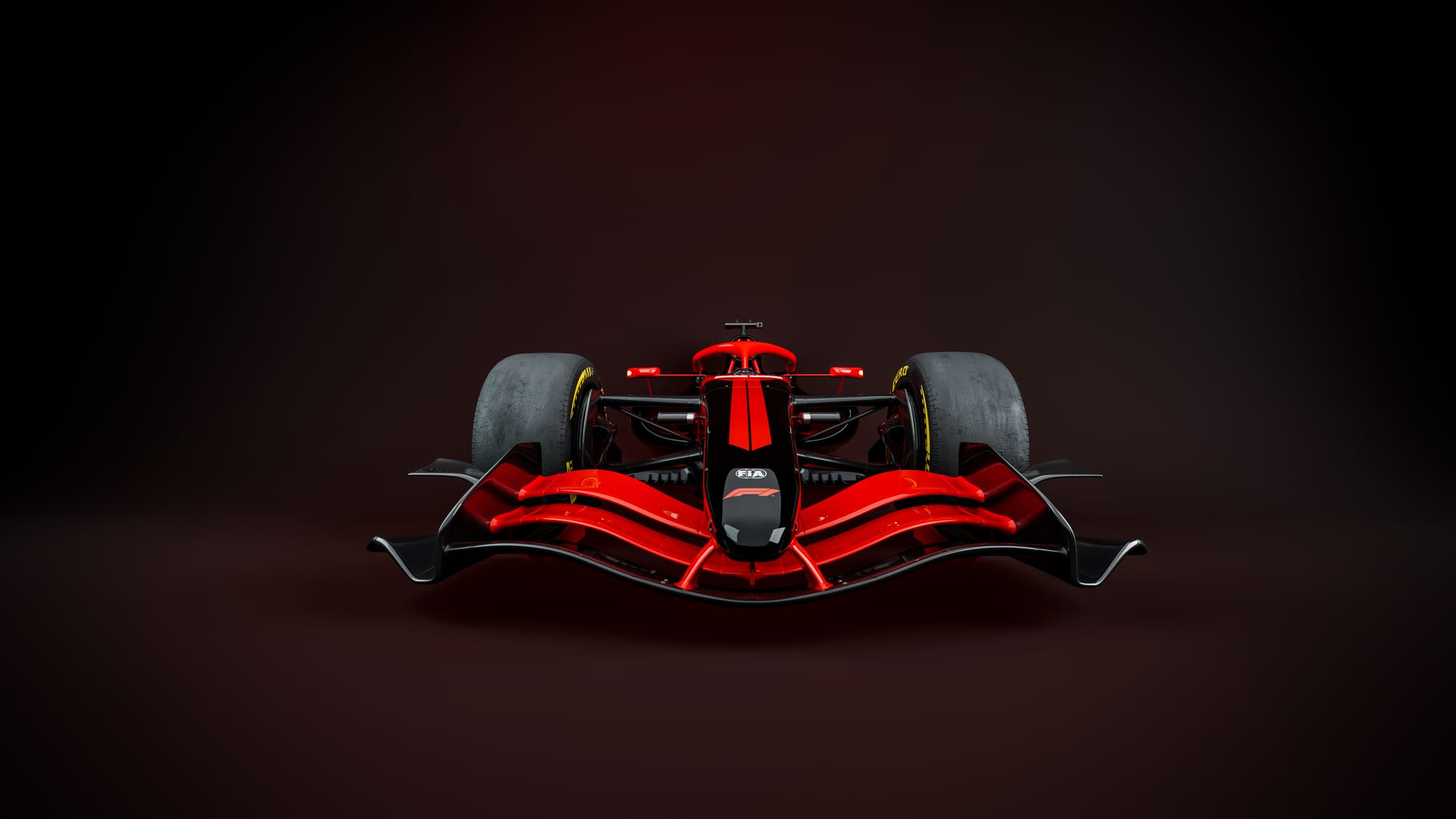
For all the excitement and positive spin being put on the new Formula 1 power units, there remains an elephant in the room over what’s coming in 2026.
Yes, the peak horsepower on offer from the internal combustion engine and battery when combined is impressive – and something that Mercedes technical director James Allison recently referred to as a thing of “fearsome beauty.”
But having this 1000hp+ on tap does not last long because compromises made in the formation of the engine rules mean the cars are going to be energy-starved a lot.
When the energy in the battery runs out (as it will do many times per lap), there is going to be no extra electrical power for the drivers. That means their 1000hp becomes around 550hp...
So all the hype about ‘overtake’ mode and ‘boost’ buttons producing exciting racing becomes an irrelevance if using them does nothing.
The situation of drivers repeatedly battling to not become sitting ducks on straights is why Cadillac technical consultant Pat Symonds recently labelled the 2026 rules process as having produced a ‘camel’ – in reference to the adage about the consequences of getting a committee to design a horse.
Speaking to Autocar about how F1 ended up in this place, the ex-F1 chief technical officer said: “Because of this sort of very democratic approach, one of the times when democracy is not good, we ended up with this camel.
“We’ve ended up with a power unit that’s sparse on energy. OK, there are ways around it, but they’re not good ways around it.”
A need for intervention?
How tricky things will get is not clear yet, but we at least do not appear to be heading to the nightmare scenario voiced a couple of years ago of drivers needing to lift and coast halfway down the straights and unusually having to change down gears in places they should be going flat out.
In fact at some tracks, where there are heavy braking zones and not too long straights, the situation may not be a cause for alarm at all. Monaco for example, may be quite spectacular.
But there are a lot of venues on the calendar that feature high-speed corners (no heavy braking to recover energy) and long flat-out sections (that will burn through the battery power quickly) – where the lack of energy and sparse opportunities to harvest are going to become painful for the drivers and potentially annoying for fans.
The fear is that the narrative of the early part of the year will all be about how well you can harvest the battery and conserve energy– with a risk of it turning F1 from the flat out spectacle it should be into an economy run.
Some team insiders doubt things will play out in a good way, and expect early headaches at energy-demanding tracks like Melbourne and Jeddah to trigger the need for intervention and tweaks to the rules.
The FIA is well aware of the potential for things to not be perfect, and already last year it put forward a proposal for the maximum battery power available to be reduced from 350kW to 200kW in the races.
While that would have meant F1 cars having a maximum output of 800bhp in race trim, the limit would at least have allowed cars to run with some extra power for longer.
But this proposal got short shrift at an F1 Commission meeting, with several manufacturers making clear they were not interested in making such a fundamental change to the rules concept that could have an impact on their competitive fortunes.
After all, for those carmakers that had made the best of the rule compromises, there was certainly not much interest in voting for something that could give those rivals who have not done a good enough job a leg up.
Mercedes boss Toto Wolff famously labelled the 200kW proposal a “joke”, although he subsequently slightly softened his stance to say that teams needed to be open-minded about the state of things once the cars were running.
However, the instant rebuff of the 200kW proposal highlights one of the fundamental problems that F1 may face if there is a major flaw in the regulations - and especially if it is one that not everybody is suffering from.
Should there be an issue that is universal on the grid then it will be quite easy to get support from teams to make changes – just as happened to help ease the porpoising concerns suffered by many at the start of the previous rules cycle in 2022.
But if F1 ends up in a situation where only some teams or specific engines are suffering a great deal, then it is harder to imagine there will be unanimous support behind making a change that will level things up.
Is it realistic to think that a manufacturer will vote for something for the health of the category even if it majorly hurts its on-track form?
So one of the potential headaches to come is not only how to rectify any problems that come from what were labelled by Wolff as potential “energy harvesting disasters” – but also getting such ideas pushed through the system so they comply with governance requirements and get the necessary level of support.
As F1 single seater director Nikolas Tombazis said recently: “We can't just tomorrow go and say, 'OK, let's change this.'
“There's a degree of also wanting to see in the winter testing how cars behave, to see whether we push some additional parameters that would make it another step, both simpler and, less dependent on energy management.
“We believe it's probably OK, but once we see also where we are in the winter testing, then if we need to have some further discussions, we have ideas in the pocket.”
That rejected move to reduce the electrical power available in races to 200kW could be one of the things in the FIA's pockets, although it is hard to know if it would gain any more support than it had last time around.
And with Tombazis having revealed that FIA's ideas to improve some of the flaws with the 2022-2025 rule set were blocked by teams, he well understands the difficulties that may come if not everyone sees eye to eye on things.
Asked about the risks of a rules solution becoming political amid divided opinions on the grid, Tombazis said: “Of course that is a challenge because, as I've said various times, we as the FIA care about the health of the sport.
“They [the teams] also care about the health of the sport, but also whether they win races. And that complicates it a bit.
“Then. when you go to the engineering level, they care about the health of the sport, whether they win races, and in addition, whether they have an interesting job.
"So that makes it even more complicated, because sometimes they may not always support the solution that is for the health of the sport.
“It makes decision making a bit complicated, but that is part of our job.”
A new rules section
There is something, however, that could bolster the FIA's hand in making any changes to F1 that it feels will address issues that are potentially hurting the series.
And it’s an element of the new 2026 rulebook that is understood to have triggered some debate among teams before being put in place.
As part of the new way that F1’s regulations have been divided up into six separate segments, a new section A has been created that covers 'general regulatory provisions'.
And in a preamble at the front, it declares that one of the core “objectives” of the rules – and therefore something that needs to be safeguarded by the FIA, is the need to “promote the competitive balance and sustainability of the championship.”
The Race understands that there were concerns in some quarters about the implementations of this wording, which had to go through the F1 Commission, because it suggests of a move away from a total meritocracy.
Instead it points to a desire for ensuring the competitive order is close to help ensure the excitement needed to keep F1 healthy.
So if F1 does face problems with the 2026 changes early on, and there is resistance from some teams to make changes, does this wording act as the mandate for the FIA to try to push things through more aggressively?
That is something we will only find out in the course of time.
The winners won't complain
There is an awful lot we are only going to find out once the racing gets underway and everyone knows what cards they have in their hands.
And much will almost certainly depend on who has got it right and who has got it wrong in terms of defining opinions.
As Lance Stroll, one of the biggest driver critics of the new rules, said last year: “It’s a bit sad that we’re going in the direction of 400km/h down the straight and half the speed in the corners.
"It’s not, I think, as racing drivers what we want. Managing energy and battery power is not as exciting as, I think, flat out pushing with lots of downforce. I think that’s where all the drivers we agree on that.
“But if we’re sitting here in Melbourne and we’re super quick and everyone else has slipped behind us in the mirrors, I mean it’s going to be a nice car to drive…”
Key to everything will likely be how loud the complaints come from those who are doing the losing.