Hamilton's planned new V8/V10s series: What you should know
While Formula 1 has hit the pause button on the idea of a switch to V8/V10 hybrids in the future, the emergence of an interesting new project that aims to put the spectacular engines right at its heart has stirred interest.
Amid a widespread acceptance that emotive power units are a core attraction in motorsport, the first hints of plans for a HybridV10 category emerged late last year when a webpage was launched.
Although sparse on details at the time, the link promised: "Real Racing. Real Talent. Real Skill. Proper Sound."
With private development work on the concept having been underway for months, and further outlines of its vision being posted on social media pages, efforts are accelerating in a bid to bring the category to life.
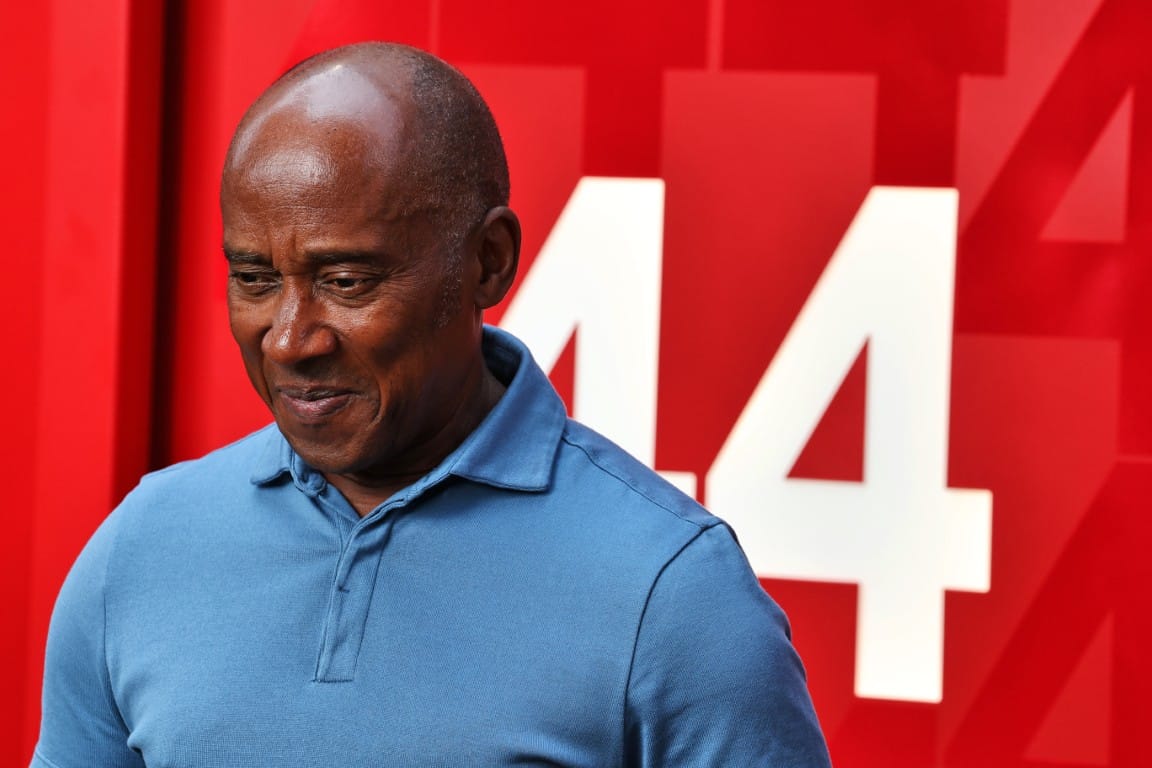
Now the full plans for the new independent motorsport series being put together by Anthony Hamilton, the father of seven-time Formula 1 world champion Lewis Hamilton, have been revealed.
Here is everything we know so far about what HybridV10 is all about.
The cars
HybridV10 will be built around two headline single-seater categories.
The first will feature cars powered by hybrid V8 engines, with the premier event showcasing a naturally-aspirated hybrid V10 class designed to deliver the kind of visceral impact that defined grand prix racing in the mid-2000s.
Each of the two series is planned to feature grids of 24 cars, with up to 24 teams involved. Teams would run only one car in each category.
The cars are to be single-make in format, with carefully managed aerodynamic developments allowed within approved limits. The goal is to produce reliable, high-performance machines that enable drivers to race flat-out, with minimal dependence on driver-assisted systems.
“My intention is to strip away complexity and put the focus back on the driver,” Hamilton told The Race.
“That means no artificial performance management – just real racing. Ultimately, I want pure, authentic racing focused on driver talent.”
While the V8/V10 presence is central, the hybrid element of the package will be important, too.
Concepts under evaluation include modern rapid-energy pitstops and innovative simple hybrid technologies that could add a strategic layer without compromising the racing spectacle.
It is proposed that the entire series will operate from a dedicated HybridV10 Campus and Centre of Excellence. This hub will provide facilities for all 24 teams, simulators, driver training programmes, STEM labs, apprenticeship initiatives and partnerships with universities and technology companies.
The drivers
HybridV10 hopes to attract the best drivers available, with the platform built around the principle that seats should be earned rather than purchased.
Drivers will be paid professionals, and the category does not intend to use pay drivers.
To manage selection fairly, Hamilton is establishing a Motorsport Draft League, designed to channel proven talent from a wide range of disciplines into the 48 available seats across the V8 and V10 categories.
To qualify for a seat in the main V10 class, drivers must be aged 20 or over and hold what will be known as a 'hybrid super licence' issued by its own 'Hybrid World Commission (HWC)'.
Eligibility for that licence will recognise outstanding results in established professional championships and categories, alongside additional criteria including simulator performance, technical understanding, fitness, discipline and professional behaviour.
This opens the door to drivers to come from varied backgrounds.
Hamilton has suggested match-ups that could, in theory, include figures from the World Rally Championship, IndyCar, NASCAR and sportscars – as well as the best of European single-seater talent.
Alongside the headline categories, HybridV10 also intends to invest heavily in the next generation.
Young drivers will be encouraged to remain in full-time education and have access to what has been labelled a ‘Sim-to-Seat’ pathway, which will offer an alternative entry route for those without access to traditional junior karting or racing budgets.
To protect prospective talents and their families, the HWC will also introduce a driver agent licensing framework. This system will regulate and accredit managers and representatives so that they follow a clear code of conduct, obey conflict-of-interest rules and operate with transparency.
The events
The initial plan is for around 12 HybridV10 festivals per year, scheduled where possible to avoid clashes with major global motorsport championships, including F1.
No circuits have yet been formally confirmed, but the idea is to focus on FIA Grade 1-standard venues and leading international tracks - particularly those outside the current Formula 1 calendar.
Options could include circuits such as Sepang, Paul Ricard, Fuji, Istanbul Park, Mugello and Kyalami, among many others.
Hamilton wants the calendar to run in a logical geographical sequence - the 'Eco Loop'. This approach is designed to minimise wasteful travel and help open doors for new and emerging markets.
The outline idea is Hybrid V10 will travel in one direction around the globe - Middle East → Asia → Europe → Africa → Americas → Australia.
Each festival would run over three days - Friday to Sunday.
Fridays will host Technology & Innovation Showcases, Saturdays will feature the hybrid V8 race plus STEM initiatives, and Sundays will stage the premier hybrid V10 event.
'This isn't right' mechanism
HybridV10 is being overseen by an independent governing and integrity body called the Hybrid World Commission (HWC).
The platform is to work alongside national sporting authorities while remaining commercially and structurally independent.
One interesting element put forward to increase the fan engagement is a real-time integrity channel called the “this isn’t right” mechanism.
The idea is to provide a formal pathway through which fans can raise concerns during any festival event regarding sporting fairness, safety or procedural integrity.
What happens next
While significant groundwork has already been completed, HybridV10 remains an early-stage project.
The next few months will focus on engaging prospective team owners, manufacturers, universities and strategic partners, and on growing the founding fan membership.
If strong progress is achieved in early 2026, detailed car design and validation will begin with partners throughout the year, with testing and pilot activity to follow in 2027.
The target window for the first HybridV10 festivals is currently 2028 or 2029 depending on car and engine developments.
Hamilton says the motivation behind the project is simple – with investors in place ready to back the project. Critical now for him to make sure it is something that fans will engage with.
“I could have attempted to keep this quiet for the next two years, then announced it, but what matters most to me is making sure this is something the fans truly want to follow,” he said.
“The investors are excited. I am excited. I want to build this with the fans. If they subscribe to what we are doing and are interested from the beginning, then we will make it happen together.”